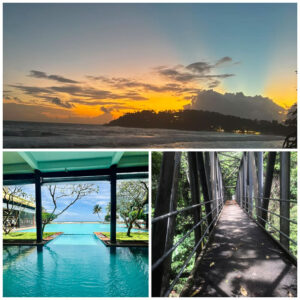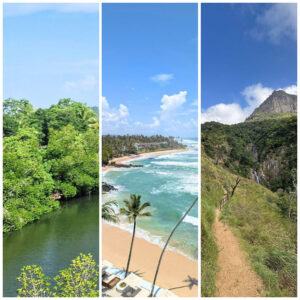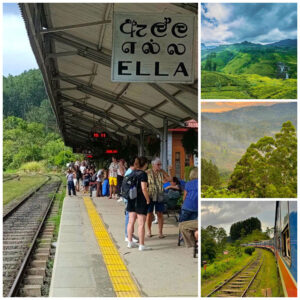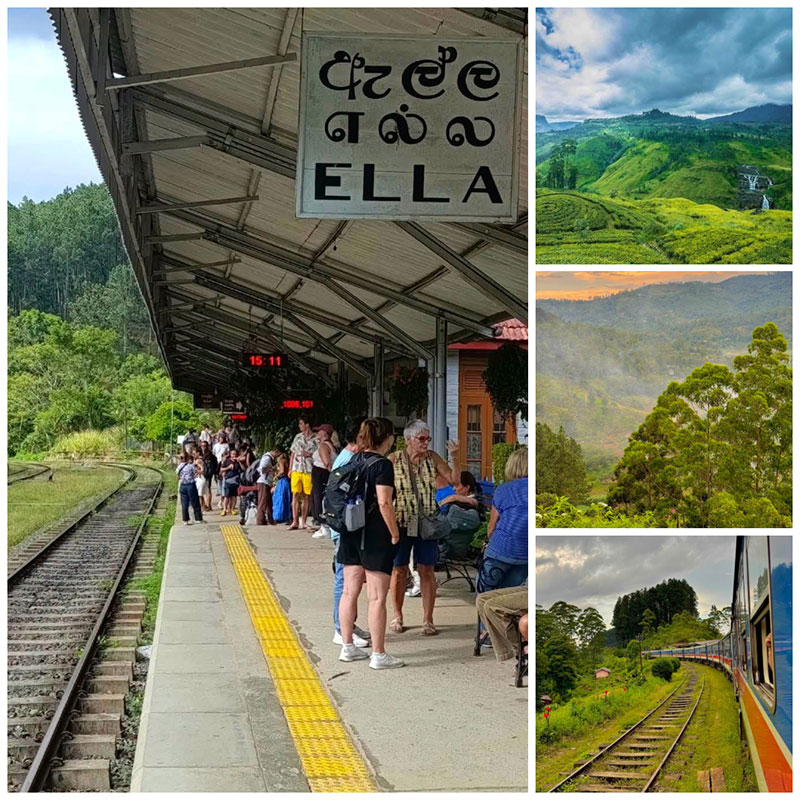
Is the Kandy to Ella Train Actually Worth It? An Honest 2026 Guide
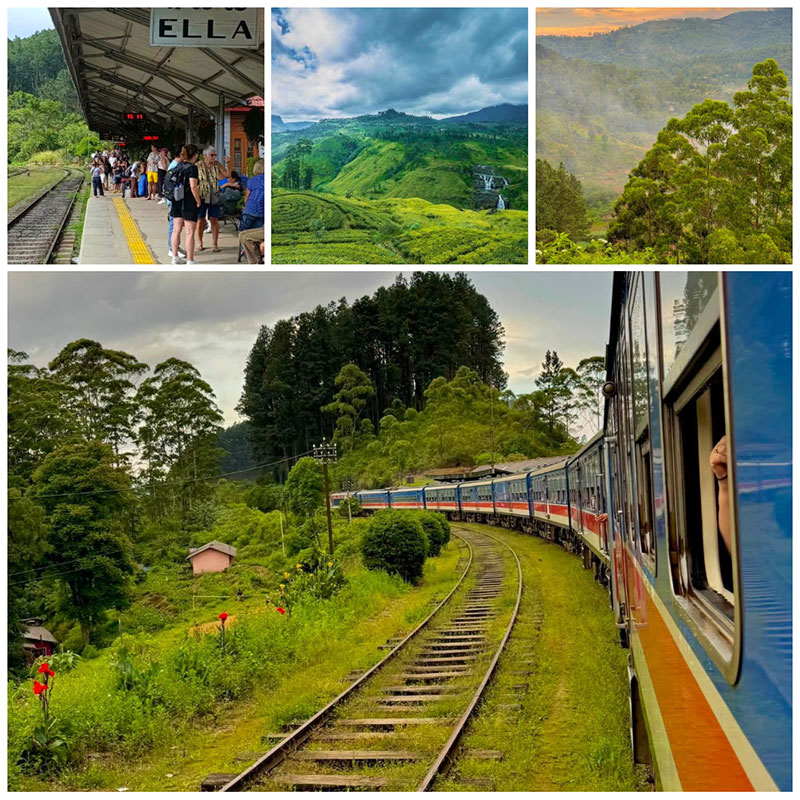
You’ve almost certainly seen the photos. Green tea plantations, misty mountains, old railway bridges, blue carriages winding through the highlands — the Kandy to Ella train is one of Sri Lanka’s most photographed travel experiences, and for good reason.
But here’s the more useful question, the one the postcard shots never quite answer: is it actually worth spending several hours of your trip on?
For a lot of travelers, yes. But — and this matters — it really depends on your itinerary, how much time you’ve got, your tolerance for a slow journey, and what you’re actually expecting to get out of it.
There’s also a 2026-specific wrinkle worth flagging up front: railway operations in the hill country have taken a hit from cyclone damage, so don’t assume the classic through Kandy–Ella journey is running as normal on any given date. Sri Lanka Railways has confirmed that services between Badulla and Nanu Oya are back up after restoration work, but recent reporting from September 2026 says the Kandy–Nanu Oya section is still closed. Bottom line: check the official railway info for your specific date before you build a day around this ride.
Assuming the route is operating when you’re there, here’s what the experience is actually like, how long it takes, when it makes sense, when a car might serve you better, and whether you need the whole route or just the best bit of it.
Quick Answer: Is It Worth It?
Yes, for a lot of people — but not simply because it’s Instagram-famous.
The Kandy–Ella railway gives you something a road transfer genuinely can’t replicate: a slow crawl through Sri Lanka’s central highlands, with the view constantly shifting between tea country, forest, mountain valleys, villages and some genuinely impressive railway engineering.
The trade-off is time and comfort. A journey running several hours can chew through most of a travel day. Trains get crowded. Delays happen. And the experience is a good deal more no-frills than the polished shots flooding your feed suggest.
So the real question isn’t “should I take this train” — it’s “what kind of traveler am I?”
| If you are… | The train may make sense if… |
|---|---|
| A first-time visitor | You want the classic hill-country railway experience |
| A slow traveler | Scenery matters more to you than speed |
| On a 10–14+ day trip | You can spare several hours for travel |
| A photographer | Changing scenery is part of the draw for you |
| On a tight 5–7 day itinerary | A car might save you real time |
| Traveling with lots of luggage | A private vehicle is probably easier |
| Traveling with very young kids | A private vehicle offers more flexibility |
| Someone who dislikes long hauls | The shorter scenic section might be the better compromise |
This isn’t automatically the “best” transport option. It’s an experience as much as it is transportation — and those are two different things to optimize for.
Important 2026 Update: Check the Route Before You Travel
Don’t skip this bit if you’re planning a trip anytime soon.
The hill-country railway took damage from Cyclone Ditwa in late 2025. Sri Lanka Railways has officially confirmed the resumption of services between Badulla and Nanu Oya, following restoration of the Ambewela–Nanu Oya section. At the same time, a travel update checked as recently as September 16, 2026 reports that the Kandy–Nanu Oya stretch remains closed, meaning a through Kandy–Ella train isn’t currently possible — the recommendation is to travel by road to Nanu Oya and pick up the train from there.
Here’s the odd wrinkle: the official Sri Lanka Railways online reservation FAQ still lists Kandy–Ella as a bookable route through its reservation system. So don’t take that listing — or an old blog post, a social media video, or a historical timetable — at face value.
For your specific dates, do this:
- Check current Sri Lanka Railways service information.
- Confirm the train is actually operating between your intended stations.
- Double-check the timetable shortly before you travel.
- If Kandy–Ella isn’t running, plan to travel by road to Nanu Oya instead.
- Then check separately whether Nanu Oya–Ella is operating for your dates.
The reservation system itself allows bookings up to 30 days ahead and currently lists several reserved classes. And since restoration work is ongoing, treat any information here — including this guide — as something worth re-checking closer to your travel date.
What the Journey Is Actually Like
The romantic version of this trip is easy enough to picture: you’re sitting by an open window as tea-covered hills roll past, the train swings around bends, disappears into tunnels, emerges above valleys, mist occasionally hangs over the mountains, small stations and villages drift by.
That part’s real.
But it’s also, at the end of the day, working public transport. Depending on the specific service and carriage, expect crowded compartments, basic seating, noise, occasional delays, limited personal space, luggage jostling for room, warm conditions, passengers standing near the doors, and vendors moving through selling snacks. National Geographic’s own account of the journey draws the same contrast — the gap between spectacular scenery and the physical reality of riding a busy local railway, crowded boarding and heat included.
That gap is worth sitting with for a second. You’re not booking a luxury sightseeing train. You’re riding a working railway through spectacular scenery — and those are genuinely two different products. For some travelers, that contrast makes the whole thing more interesting. For others, it’s exactly the reason to hire a car instead.
Why Is This Train So Famous, Anyway?
The line cuts through Sri Lanka’s central highlands — mountains, tea cultivation, forest, steep valleys, the works. The scenery shifts constantly as you climb and descend through the hill country. Depending on which section is operating for your dates, expect tea estates, mountain slopes, cloud-covered highlands, forest, waterfalls, tunnels, tiny railway stations, mountain villages, deep valleys, viaducts, and the areas around the Nine Arch Bridge and the Demodara loop.
The railway itself is part of the appeal, honestly. Rather than jumping from one tourist stop to another, you get to watch the landscape change gradually outside the window — something a highway just can’t give you.
What the Photos Don’t Show You
Photos capture the best five seconds. They skip the other several hours.
That famous shot of someone standing near an open train door — it makes the journey look effortless and adventurous. In practice, treat open doors and a moving train seriously. Don’t lean out of the carriage or put any part of your body outside for a photo. A scenic railway ride is not worth an unnecessary risk.
What the photos also leave out: waiting at stations, crowded carriages, delays, uncomfortable seats, luggage everywhere, heat, people boarding and leaving constantly, stretches where the view is honestly pretty ordinary, and long gaps between the postcard-worthy moments. None of that means the train’s overrated — it just means the real experience is more ordinary and more interesting than the highlight reel suggests, at the same time.
How Long Does It Actually Take?
Historically, the full Kandy–Ella run has typically clocked in around six to seven hours, sometimes more with delays factored in. Recent 2026 guides still describe the historic full route in that range.
But if you’re planning a 2026 trip, separate two different questions: how long did the traditional journey used to take, versus how long will your journey actually take given current disruptions. Those aren’t necessarily the same thing right now.
If the full route isn’t running, the operating scenic section can be a lot shorter. Recent 2026 guides put the Nanu Oya–Ella stretch at roughly two-and-a-half to four hours, depending on the service and conditions — a genuinely appealing option if you want the scenery without sacrificing most of a day.
Is Seven Hours on a Train Really Worth It?
Comes down almost entirely to what you want from your trip.
Chasing as many destinations as possible in a short window? Seven hours on a train can feel like an expensive use of time. More interested in soaking in the landscape, moving slowly, seeing a different side of the country? Those hours become part of the draw, not a cost against it.
Picture two travelers.
Traveler A, the fast-paced visitor: Seven days total. Itinerary already packs in Colombo, Sigiriya, Kandy, Nuwara Eliya, Ella, Yala and the south coast. Here, a long train ride eats up a big chunk of the limited time available — a private car probably makes more sense.
Traveler B, the slow traveler: Twelve to fourteen days. Loves photography, scenery, tea country, and local transport. Doesn’t mind arriving later than planned. For this traveler, the railway journey isn’t a logistical cost — it’s one of the experiences deliberately built into the trip.
Neither approach is inherently better. What matters is understanding the trade-off going in.
Train vs. Car: The Real Comparison
The useful comparison isn’t “train good, car bad” — it’s understanding what you’re gaining and giving up with each.
| Factor | Train | Private car |
|---|---|---|
| Scenic experience | Excellent, when the relevant section is running | Good, but viewed from the road |
| Travel flexibility | Limited | High |
| Pace | Slow | Faster |
| Stops | Set by the railway | Flexible |
| Luggage | Can be a hassle | Easier |
| Privacy | Low in crowded carriages | High |
| Local atmosphere | Strong | Lower |
| Comfort | Depends heavily on crowding | Usually more controllable |
| Schedule reliability | Can be hit by delays | Easier to manage |
| Photography | Excellent scenery | Easier to stop at viewpoints |
| Itinerary efficiency | Lower | Higher |
A private driver is especially useful if you want to make stops along the way or fold sightseeing into the transfer itself. The train wins if the journey itself is one of the things you actually came to experience.
What’s the Most Scenic Stretch?
This is where the shorter route comes back into play. Several current guides point to the Nanu Oya–Ella section as one of the most scenic stretches of the historic Kandy–Ella route. Nanu Oya is the station serving the Nuwara Eliya area, and from here the hill country gets particularly dramatic — tea estates, mountain slopes, forest, mist, shifting elevation.
The push toward Ella also brings you close to some of the railway’s signature landmarks. Which means you don’t have to burn an entire day on the historic Kandy–Ella route to get the essence of what makes this railway worth riding.
Full Journey or Just the Scenic Section?
If the full Kandy–Ella route is running on your dates, choose based on your time.
Go for the full journey if: you genuinely enjoy slow travel, you’ve got the days to spare in Sri Lanka, the train ride itself is a major part of the trip for you, you want to watch the landscape shift all the way from Kandy into the hill country, and you’re fine losing most of a day to it.
Consider the shorter scenic section if: you want the best views without giving up a whole day, you’re already based around Nuwara Eliya, your itinerary’s tight, the full route just isn’t running right now, or you’d rather mix road transport with a shorter rail stretch.
In 2026, this distinction matters more than usual, given the ongoing restoration work.
Which Class Should You Book?
Sri Lanka Railways’ reservation system currently offers several categories — Observation, air-conditioned saloon, second class, and third class. The right pick depends on what you’re after.
First class offers a more controlled, comfortable environment, depending on the specific carriage — though a more enclosed setup can change the feel of the ride.
Reserved second class tends to appeal to travelers who want the security of an assigned seat while still experiencing the railway with a bit more openness.
Third class delivers a more local, energetic vibe, but conditions get less predictable and more crowded.
For a multi-hour scenic ride, having a reserved seat can genuinely make a difference to your comfort. Don’t pick a class just because some blog called it “the best” — pick based on what you actually want out of the ride.
Which Side of the Train Has the Best Views?
Plenty of websites will confidently tell you to sit on one specific side. The trouble is, the best views shift throughout the route, and train direction, track conditions, seating layout and the exact service all play a role. I wouldn’t treat any “sit on the left” or “sit on the right” rule as gospel — even the guides themselves disagree on it.
A better approach: pick a seat with decent window access where you can, move around when it’s safe and practical, keep an eye on both sides, don’t block doorways, and never lean outside the carriage for a photo. The scenery keeps changing throughout, so there’s genuinely no need to stress over finding the “perfect” seat.
How to Book Tickets
Start with the official Sri Lanka Railways reservation system. Bookings open up to 30 days before travel, and you’ll need to create an account, with e-ticket details provided after booking.
Here’s the key distinction worth remembering: the reservation system listing a route isn’t the same as that route actually running on your travel date. Given the 2026 restoration situation, check current service info before you pay for anything non-refundable.
For your trip, work through this: check the official reservation system, search your exact date, confirm which stations are actually available, verify the train’s current operating status, re-check the departure time again close to travel, and keep a backup plan if reaching Ella that day genuinely matters. The reservation system also lists ticket-printing facilities at Kandy, Nanu Oya, Ella and Badulla stations.
Making the Journey More Comfortable
If you decide to go for it, a few small preparations go a long way.
Bring water. Several hours on a train goes down a lot easier when you’re not thirsty.
Pack snacks. Food availability varies station to station — bringing your own means you’re not dependent on timing.
Grab a light layer. Hill-country weather gets noticeably cooler, especially at higher elevations and when the train pushes into misty areas.
Keep luggage manageable. Big bags are far easier in a car than a packed railway carriage — if you’re traveling heavy, consider having your accommodation or driver move larger bags separately.
Charge your phone ahead of time. You’ll likely be using it constantly for photos.
Keep valuables close. Standard advice for any busy public transport — passport, wallet, phone, camera gear, all secure.
Don’t cut a connection too fine. Railway journeys run long more often than they run short. If arriving in Ella at a specific time actually matters, build in a real buffer.
Train Safety: What You Should Know
Open doors are one of the visual trademarks of this railway — and also one of its biggest safety concerns. Don’t hang out of the train or lean your body outside the carriage for a photo. Tunnels, poles, bridges and vegetation can pass extremely close to the train. Stay inside, follow staff instructions, and be careful moving between crowded carriages or boarding and leaving at stations. The goal here is to enjoy the scenery — not to recreate someone else’s Instagram post.
Who Should Actually Take This Train?
The ride suits you well if you enjoy scenic journeys, like traveling slowly, want a genuinely local transport experience, have room in your schedule, love photography, want to see tea country from the rails, don’t mind basic public transport, and can roll with delays and changing conditions. For travelers like this, it’s not just a way to get from A to B — it becomes part of the trip itself.
Who Might Prefer a Car?
A private vehicle makes more sense if you’re short on days, need to hit Ella at a specific time, are traveling with young kids, have a lot of luggage, want to build in sightseeing stops, aren’t a fan of crowded public transport, want air-conditioning and privacy, or are traveling as a group and value flexibility. A car also lets you weave stops into the journey rather than following the railway’s fixed route — genuinely useful if you want to combine transport with sightseeing.
Fitting the Train Into Your Itinerary
The railway makes the most sense when your route already runs through the central highlands anyway. Something like Kandy → Nuwara Eliya → Ella naturally accommodates a scenic rail leg.
You can also build a hybrid: Kandy → Nuwara Eliya by road → Nanu Oya → Ella by train. This trims the time spent on the railway while keeping the specific scenic stretch most travelers actually want. Just remember — given how railway operations keep shifting, plan the exact route around what’s actually running during your trip, not what used to run.
Is It Worth It for a First-Time Visitor?
For a first-timer with enough time, yes — the railway can be a genuinely memorable way to see the hill country. But “first trip to Sri Lanka” doesn’t automatically mean “you must ride this train.” It comes down to your itinerary.
Got 12–14 days? Spending several hours in tea country is easy to justify. Got five or six days and multiple regions to cover? A private vehicle likely buys you more actual sightseeing time. And there’s nothing wrong with doing just the scenic section — you don’t owe anyone seven hours on a train just because a travel blog called the full route a “must-do.”
Is the Kandy to Ella Train Overrated?
Depends entirely on what you’re expecting.
Show up expecting a luxury sightseeing train, guaranteed perfect weather, an empty carriage, and uninterrupted mountain views — you’ll likely be disappointed. Show up expecting an old public railway moving slowly through beautiful mountain country, crowds and delays and ordinary stretches mixed in with genuinely spectacular scenery — the whole thing makes a lot more sense.
The train’s famous because the landscape really is beautiful. But the experience itself isn’t a postcard. That’s probably the single most important thing to internalize before you book it.
The Best Way to Think About This
Don’t ask “is the train the most efficient way to get from Kandy to Ella.” Ask instead: “Do I want this journey itself to be part of my Sri Lanka experience?”
If yes, the train can be a genuinely worthwhile choice. If no — if you simply need to get from A to B efficiently — a private vehicle might suit your trip better. And if you want the middle ground, look at the currently operating scenic section around Nanu Oya and Ella.
Final Answer: Is It Actually Worth It?
For a lot of travelers, yes — though not for identical reasons across the board.
This journey offers something road travel genuinely can’t: slow movement through Sri Lanka’s mountain landscape, tea country, forest, valleys and railway communities. But it costs you time. The train can be crowded, delays happen, comfort varies wildly, and the famous photos don’t represent every minute of the ride.
On a longer Sri Lanka trip, that trade-off is often excellent. On a shorter one, a car may simply be more practical. And in 2026 specifically, the single most important step is checking the current railway situation before you build your itinerary around the historic Kandy–Ella through route.
If the full route’s running and slow, scenic travel appeals to you — take it. If your schedule’s tight, consider traveling by road and picking up the shorter scenic section by rail instead.
This was never about following a “must-do” list. It’s about choosing the version of the journey that actually fits your trip.
Is the Kandy to Ella train actually worth it?
For a lot of travelers, yes. The journey gives you spectacular hill-country scenery and a genuinely different way to experience Sri Lanka — nothing else quite replicates it. That said, it’s slow, and crowding or delays are a real possibility, so if your itinerary is tight, you might be better off with a private vehicle.
How long does the Kandy to Ella train actually take?
Historically, the full Kandy–Ella run has clocked in around six to seven hours, sometimes longer once you factor in delays. Current railway conditions can shift this quite a bit, so it’s worth checking what’s actually running on your travel date before you plan around it.
Is it worth burning a whole day on this train?
It can be — especially if slow travel and scenery are genuinely your thing. But if you’ve only got a handful of days in Sri Lanka, that time might serve you better behind the wheel of a private car instead.
What’s the most scenic stretch of the journey?
Recent guides tend to point to the Nanu Oya–Ella section as the standout part of the historic route — this is where the tea country and mountain views really hit their stride.
Train or car — which is actually better for Kandy to Ella?
Comes down to what you’re optimizing for. The train gives you the more distinctive, only-in-Sri-Lanka railway experience. A car gives you more flexibility, more privacy, and a lot more control over your time and where you stop.
Can you book Kandy to Ella tickets online?
Yes — Sri Lanka Railways runs an online advance seat reservation system, and its FAQ currently still lists Kandy–Ella as a bookable route. Just don’t take that listing at face value: verify current operations for your exact travel date, since restoration work is still ongoing.
Which class should you pick?
Depends on your priorities. A reserved seat buys you more predictability on a long haul; the cheaper classes give you a more raw, local-railway feel. Right now Sri Lanka Railways lists four reservation categories: Observation, air-conditioned saloon, second class, and third class.
Is doing just Nanu Oya to Ella worth it instead?
Genuinely, yes, if you want the scenic payoff without sacrificing most of a day. It’s an especially smart call right now, too, given that ongoing restoration work is affecting the traditional Kandy connection.