The 10 Best Places to Travel Solo in Sri Lanka as a Female Backpacker
Sri Lanka packs a lot into a small space. Beaches, mountains, ancient cities, wildlife, surf breaks and some of the best train rides on the planet all sit within a few hours of each other, which makes it a great fit for a woman backpacking alone. It’s manageable for independent female travellers, but it isn’t risk-free. Pick destinations with proper tourist infrastructure, stay somewhere with solid reviews, book your transport ahead if you’re arriving late, and use the same common sense you’d use anywhere.
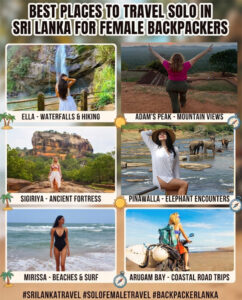
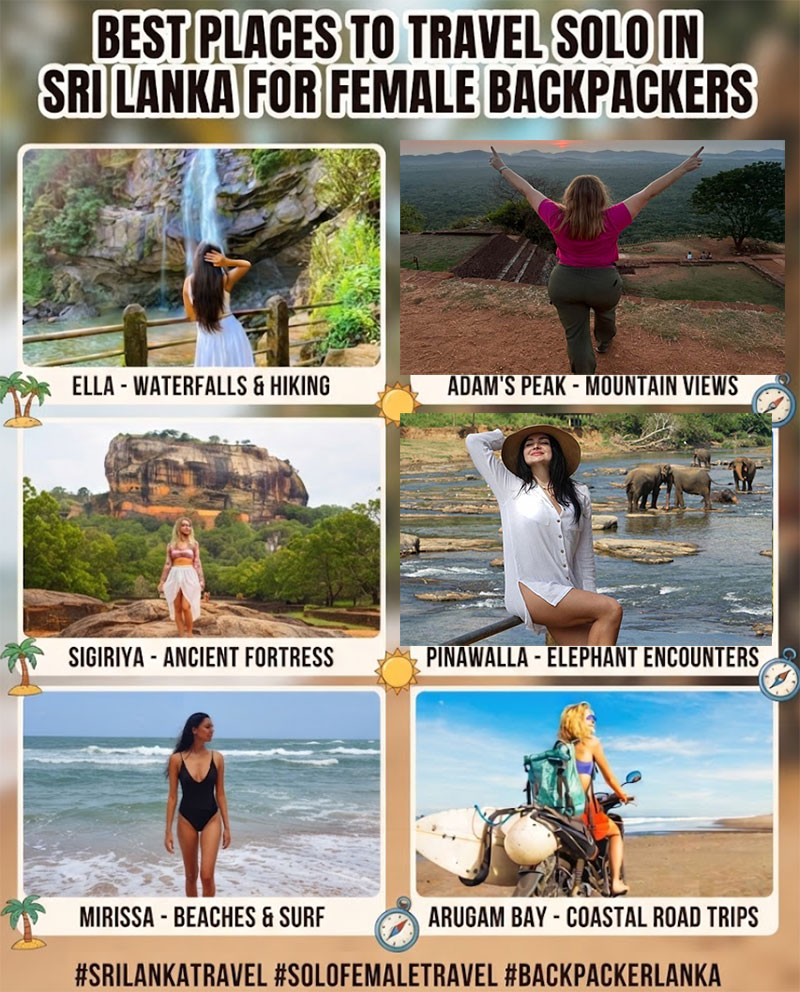
My ten picks are Ella, Hiriketiya, Weligama, Mirissa, Sigiriya, Kandy, Galle Fort, Ahangama, Nuwara Eliya and Arugam Bay. Some are very social. Some suit hikers or surfers better. Others are for culture, history or simply slowing down. Below I cover what makes each one work for solo travel, what you can do there on your own, how to meet people, what to look for in a place to stay, and how to keep the whole trip practical and affordable.
Is Sri Lanka Safe for Solo Female Backpackers?
Sri Lanka is a realistic destination for a woman travelling alone. But “safe” never means “nothing can go wrong,” and anyone who tells you otherwise is selling something.
Official travel advice flags a handful of things worth taking seriously: opportunistic theft, harassment of women, crowded public transport, road safety, dangerous sea conditions and the occasional security concern. The UK government urges caution in crowded places, on public transport, at beaches and when travelling at night. The U.S. State Department currently rates Sri Lanka at Level 2, which means “exercise increased caution.”
None of that is a reason to stay home. It just means your trip will go better if you know what you’re walking into.
What are the realistic concerns?
Here’s what I’d prepare for:
- Unwanted attention or staring
- Persistent sales approaches
- The occasional tuk-tuk or taxi price dispute
- Crowded buses and trains
- Opportunistic theft
- Poorly lit streets late at night
- Road traffic
- Strong surf and rip currents
- Getting into vehicles with strangers after drinking
- Ending up stranded with no reliable way to get home
Those are specific, manageable problems. They’re a long way from “the whole country is dangerous.”
And if something feels off, you don’t need to prove it’s dangerous before you leave. Step into a shop, hotel or café, then sort out another way to keep going.
Dress respectfully around temples
Sri Lanka has a relaxed beach culture, but religious sites expect more conservative clothing. For Buddhist or Hindu temples, bring something light that covers your shoulders and knees. A sarong or big scarf is perfect because it takes up almost no room in your pack.
Normal swimwear is fine on the beach and at resorts. When you head off the sand, throw on a cover-up. It’s an easy way to respect local expectations.
Use transport strategically
For short hops, ride-hailing takes a lot of the guesswork out. You see the pickup point and the estimated fare before you go anywhere. PickMe says its service covers tuk-tuks, cars, vans and other vehicle types, with estimated fares and real-time driver tracking. Uber also runs in Sri Lanka, including intercity options on some routes.
Where there’s no app, use a reputable tuk-tuk, ask your accommodation to arrange a ride, or settle the fare before you get in.
The 10 Best Places to Travel Solo in Sri Lanka
1. Ella: Mountain Hikes and Social Cafés
If it’s your first time travelling alone in Sri Lanka, Ella is one of the easiest places to slot into your route.
This hill-country town has a strong independent-travel culture, plenty of cafés and guesthouses, good hiking and a steady stream of backpackers. You get the freedom of travelling solo without the isolation.
Why it works. The tourist area is compact. You can hike in the morning, grab lunch at a café, and meet other travellers at your hostel or guesthouse by evening. It suits anyone who wants hiking, mountain views, cafés, photography, cooler weather, social accommodation or scenic train rides.
Best solo activities. The Nine Arch Bridge is one of the area’s best-known sights, and you can walk to the viewpoint on your own and fold it into a bigger day out. Little Adam’s Peak is far gentler than a major trek and still gives you great views over the hills. If you want something tougher, try Ella Rock, but plan your route yourself rather than trusting random strangers who offer to guide you.
The Kandy–Ella train. This ride through the central highlands is one of the country’s signature experiences. Sri Lanka Railways currently offers online seat reservations on routes including Kandy–Ella, depending on the service and availability. For a solo traveller, a reserved seat makes a long journey far more comfortable.
Where to stay. Look for a hostel or guesthouse with recent reviews, lockers, secure doors, a staffed reception or a clear check-in process, common areas, good lighting around the property and easy access to the main town. If meeting people is the goal, pick a properly social hostel. If you sleep lightly, read the reviews for noise first.
Best for: first-time solo travellers, hikers and social backpackers.
2. Hiriketiya: Surf, Yoga and a Compact Backpacker Scene
Hiriketiya is a small coastal bay that has grown into a surf, yoga, café and backpacker hangout.
Its size is its biggest strength. You don’t need a packed sightseeing plan every day. Walk to the beach, take a surf lesson, work from a café, do a yoga class or just do nothing.
Why it suits solo women. The area draws independent travellers, surfers, digital nomads and people who stay several days instead of racing through on a one-night stop. That makes it easy to start conversations. You can join beginner surf lessons, yoga classes, group dinners, café meetups, beach activities and day trips.
Surfing solo. A beginner lesson is one of the quickest ways to turn a solo day into a social one. Skip the teach-yourself approach. Book with an established surf school and use proper safety gear. Conditions change, and a beach that looks calm can still have dangerous currents.
The downside. The small-town feel that makes Hiriketiya charming works against you if you want museums, major historical sights or serious nightlife. Think of it as a place to slow down, not a base for sightseeing.
Best for: surfing, yoga, cafés, meeting younger travellers and relaxed beach days.
3. Weligama: The Best Beginner Surf Base
Weligama is one of the most practical south-coast bases for a solo backpacker. The wide bay and established surf scene suit beginners, and the transport links make it handy for exploring nearby coastal towns.
Why choose it. It gives you a good balance of beach, surfing, restaurants, hostels, cafés, transport access and social life. You can explore the surrounding south coast without changing beds every night.
Beginner surfing. If you’ve never surfed, a group lesson beats renting a board and tackling the waves alone. You get instruction, equipment and other beginners to chat with.
Weligama or Hiriketiya? Go with Weligama for a bigger, more practical base. Go with Hiriketiya if you prefer a smaller bay and a tighter surf-and-yoga vibe.
Best for: beginner surfers, budget travellers and anyone wanting a practical south-coast base.
4. Mirissa: Beach Life and Whale Watching
Mirissa is one of Sri Lanka’s best-known backpacker beach spots. It’s lively, aimed squarely at tourists and easy to combine with other south-coast stops. For solo travellers, the big plus is that you won’t feel alone for long.
Things to do solo. Spend time on the beach, explore cafés, catch the sunset, visit viewpoints, join a whale-watching trip, meet people at hostels or take short trips along the south coast.
Whale watching. Book through an established operator, not an informal offer from someone on the street. Sea conditions are unpredictable, and responsible operators take both conditions and wildlife behaviour seriously.
Nightlife and safety. Mirissa can get lively, but that’s no reason to drop your guard. If you go out at night, keep your phone secure, don’t leave drinks unattended, don’t accept drinks from strangers, know how you’ll get back to your accommodation, and avoid walking alone on isolated stretches of beach late at night.
Best for: beach lovers, social travellers and anyone who wants a lively backpacker atmosphere.
5. Sigiriya and Dambulla: Ancient Sri Lanka and Easy Day Trips
If your idea of solo travel involves history, temples, ancient cities and early-morning viewpoints, put the Sigiriya and Dambulla area on your list. It feels nothing like the south coast.
Sigiriya. The ancient rock fortress is one of Sri Lanka’s defining attractions. Start early to beat the heat and the crowds. Arrange your transport in advance, carry water and wear sensible footwear.
Pidurangala Rock. Travellers love it for sunrise views with Sigiriya Rock rising across the landscape. But don’t assume a sunrise hike is safe just because lots of tourists do it. Leave yourself plenty of time, use a reliable route and don’t take needless risks in the dark.
Dambulla. This gives you a cultural and historical counterpoint to the outdoor activities around Sigiriya. The Dambulla Cave Temple complex is part of Sri Lanka’s cultural heritage and one of the major attractions in the Cultural Triangle.
Wildlife. The wider Sigiriya and Habarana area also works as a base for wildlife trips. If you book a safari, choose an established operator and ask how they handle animal encounters. Responsible wildlife tourism puts the animals first, not the close-up photo.
Best for: history lovers, photographers, early risers and anyone curious about the Cultural Triangle.
6. Kandy: Culture, Temples and a Transport Hub
Kandy is more urban than Ella and more culturally focused than the southern beach towns. Its biggest advantage for a solo traveller is its position, right between the Cultural Triangle and the hill country.
Things to do. The Temple of the Sacred Tooth Relic is one of Sri Lanka’s most important Buddhist sites. The Royal Botanic Gardens at Peradeniya are a calmer option when you want a few hours away from the city traffic. You can also explore Kandy Lake, local markets, cultural performances, cafés and the surrounding hills.
Kandy for solo women. You’ll need a bit more city awareness here than in Ella. Traffic gets busy and some areas go very quiet after dark. Plan your evening trip home ahead of time instead of working it out at midnight.
The strategic angle. Kandy is especially useful on routes like Sigiriya → Kandy → Nuwara Eliya → Ella, or Colombo → Kandy → Ella. It works as both a destination and a transit base.
Best for: culture, history, temples and connecting different parts of the island.
7. Galle Fort: Walkable Heritage and Easy Solo Exploring
Galle Fort is a great pick if you want something calmer and more cultural than a backpacker beach town. The historic fort area is small enough to cover on foot, which makes it ideal for solo travellers.
Why it works alone. You can go at your own pace without organizing a full-day excursion. Spend a morning wandering the old streets, stop for lunch, browse small shops, visit galleries and watch the sunset from the fort walls.
What sets it apart. Unlike a surf town, Galle Fort gives you history, architecture, cafés, boutiques, photography and relaxed walking. It also slots easily into a south-coast route.
Best for: first-time solo travellers who prefer culture and walking to nightlife.
8. Ahangama: Cafés, Surf and Longer Stays
Ahangama has become popular with travellers who want a mix of surfing, cafés, wellness, creative spaces and longer stays. It suits people who don’t want every day to feel like sightseeing.
Why stay. It’s a good fit if you’re after surfing, cafés, creative communities, beach time, yoga, a longer stay and a less traditional resort experience. It also works as a base for exploring other south-coast towns.
The solo advantage. Longer stays make solo travel easier socially. Spend four or five nights in one place and you start seeing familiar faces. That does more for you than switching hostels every night.
Best for: digital nomads, surfers, café lovers and longer stays.
9. Nuwara Eliya and Horton Plains: Cool Weather and Nature
When the coastal heat gets too much, head up into the central highlands. Nuwara Eliya has a cooler climate and a completely different landscape, surrounded by tea country.
Why go. It suits travellers who want cooler temperatures, tea-country scenery, walks, photography, gardens and access to highland attractions.
Horton Plains. Horton Plains National Park is a more serious nature experience than a short Ella hike. Mountain weather can turn quickly, so check current conditions before you set out.
Solo hiking advice. Don’t assume hiking alone is safe just because a trail is popular. Before you go:
- Check the weather.
- Tell your accommodation where you’re headed.
- Carry enough water.
- Start early where it makes sense.
- Keep your phone charged.
- Stick to marked routes.
- Skip risky stunts for photos.
Best for: nature lovers, hikers and anyone wanting cooler weather.
10. Arugam Bay: Social Surf Travel in Season
Arugam Bay is one of Sri Lanka’s best-known surf destinations, and it matters most if you’re travelling during the east-coast surf season.
Why solo travellers like it. The town draws surfers and independent travellers who often stay for days or weeks. That builds a natural social scene around surf schools, hostels, cafés, restaurants, beach activities and group excursions.
The catch. Don’t just add Arugam Bay to every itinerary regardless of the season. Its appeal is highly seasonal, and its location makes it inefficient if your trip centres on the south and the central regions. With only a week, it probably means too much travel. With two or three weeks, in the right season, it gets a lot more attractive.
Best for: surfers, long-stay backpackers and anyone visiting the east coast in season.
Choosing the Right Destination
| If you want… | Best choices |
|---|---|
| To meet other backpackers | Ella, Weligama, Hiriketiya, Mirissa |
| Surfing | Weligama, Hiriketiya, Ahangama, Arugam Bay |
| Hiking | Ella, Horton Plains |
| Ancient history | Sigiriya, Dambulla |
| Culture | Kandy, Galle Fort |
| Beach relaxation | Hiriketiya, Mirissa |
| Cafés and longer stays | Ahangama, Hiriketiya |
| Cooler weather | Ella, Nuwara Eliya |
| Easy solo walking | Galle Fort |
| A first solo trip | Ella, Weligama, Galle Fort |
Five Essential Safety Tips for Female Travellers
1. Get connected early. Mobile data makes independent travel much easier. You’ll lean on your phone for maps, contacting your accommodation, ride-hailing, translation, online bookings, emergencies and sharing your location. Use a reputable local provider or a suitable eSIM, and keep a power bank in your day bag.
2. Be deliberate with tuk-tuks. They’re a big part of getting around Sri Lanka, but don’t hop into one just because the driver approached you. Where you can, check an app fare first. If you flag one down on the street, state your destination clearly, agree the price before you leave, confirm the price covers the whole ride, keep your destination visible on your phone, and walk away if the driver makes you uncomfortable. Official UK advice also recommends agreeing a price beforehand or using a taxi app, and it notes occasional reports of harassment of women travellers at night.
3. Avoid unnecessary late-night travel. You don’t need to fear being outside after dark, but solo travel rewards good planning. Steer clear of isolated beaches at night, unlit roads, unfamiliar shortcuts, lifts from strangers and long solo walks after drinking. If you’re arriving somewhere late, arrange your transfer before you land whenever you can.
4. Choose accommodation for security, not just price. The cheapest bed isn’t always the best value for a solo woman. Check recent reviews for cleanliness, staff availability, lockers, door security, location, noise, late-night access and whether women regularly stay there. A social hostel can be great because you can join others for activities without giving up your independence.
5. Save emergency numbers. Sri Lanka Tourism’s official hotline is 1912. SLTDA says it can give tourism information and connect visitors with the Tourism Police for complaints, including harassment and service issues. SLTDA also lists 119 for police emergencies, 1990 for the Suwaseriya ambulance and 0112-421451 for the Tourist Police. Save them before you need them.
How Much Does Solo Backpacking Cost?
Your daily budget depends heavily on where you sleep, how you travel and how often you use private vehicles. Someone in dorms, eating local food and riding public transport spends far less than someone using private cars and upscale restaurants.
These figures are planning estimates, not fixed 2026 prices. Accommodation, exchange rates, transport fares and seasonal demand all shift.
| Expense | Approximate backpacker range | Budget strategy |
|---|---|---|
| Hostel dorm | $8–$15+ per night | Compare recent reviews, not only price |
| Local food | $5–$10+ per day | Eat rice and curry, kottu and local meals |
| Public transport | $2–$5+ per day on travel days | Use trains and buses where practical |
| Activities | Highly variable | Compare group tours and direct booking |
| Private transport | Can raise costs significantly | Share rides where appropriate |
| Total basic backpacker budget | Roughly $25–$45+ per day | Depends heavily on route and activities |
Don’t treat the lowest figure as a promise. A solo traveller who books private cars regularly will spend much more than someone on trains and buses. The solo premium is usually transport: a private car costs about the same whether one person or four are in it, so you carry the whole bill.
Getting Around as a Solo Woman
Trains. They can be the highlight of a backpacking trip. The railway’s reservation platform currently lists services including Kandy–Ella and several other major routes. For popular scenic journeys, check availability early. Keep your belongings close, especially in crowded carriages. And don’t lean out of moving train doors or windows for photos, since official advice warns about serious accidents involving passengers hanging outside moving trains.
Buses. They’re cheap and reach most of the country, but they can be crowded and driving standards vary. On your first solo trip, daytime journeys are usually easier than unfamiliar late-night routes.
Ride-hailing. PickMe works well for short trips in cities and tourist areas. You enter your pickup and destination, see an estimated fare and track your driver. Uber also operates in Sri Lanka, though availability varies by location.
Private drivers. A driver makes sense when you’re short on time, travelling with several people, linking remote destinations, carrying lots of luggage or making multiple stops. On a strict backpacker budget, you probably don’t need one for the whole trip.
A Practical 10–14 Day Route
You don’t have to see the whole country on a first trip. Here’s a route that works:
- Days 1–3, Sigiriya and Dambulla. Start with the Cultural Triangle: Sigiriya, Pidurangala, Dambulla, local food and an optional wildlife excursion.
- Days 4–5, Kandy. Visit the Temple of the Sacred Tooth Relic, Kandy Lake and the Royal Botanic Gardens.
- Days 6–8, Ella. Take in the Nine Arch Bridge, Little Adam’s Peak, cafés, tea country and, if you fancy it, Ella Rock.
- Days 9–11, Weligama and Mirissa. Head south for surfing, beach time, cafés, sunsets and social hostels.
- Days 12–14, Hiriketiya or Galle. Pick Hiriketiya for surf and a relaxed backpacker feel, or Galle for history, architecture and walking.
This is deliberately not an “every attraction in Sri Lanka” itinerary. A solo trip gets exhausting fast when every second day means checking out, hauling your bag and hunting for the next bus.
What to Pack
Lightweight clothing, comfortable walking shoes, sandals, swimwear, a lightweight cover-up, a sarong or scarf, a small day backpack, a reusable water bottle, sunscreen, insect repellent, a power bank, a universal adapter, basic first-aid supplies, copies of important travel documents, a secure money pouch, rain protection and modest clothing for temples.
The scarf or sarong deserves a special mention. It does several jobs and barely takes up space.
Common Mistakes to Avoid
- Trying to see too much. Sri Lanka looks small on a map, but road travel takes much longer than you’d expect. Choose fewer bases and stay longer.
- Booking the cheapest bed without checking reviews. Saving $5 isn’t worth staying somewhere isolated, insecure or badly run.
- Arriving after dark with no plan. Especially in your first few days, arrange the final transfer before you get there.
- Assuming every beach is safe for swimming. Waves and rip currents can be powerful, and official advice warns that many beaches have dangerous surf or rip tides at certain times of year.
- Treating friendliness as a guarantee of safety. Sri Lankan hospitality is a real highlight, but it doesn’t replace your own judgement.
- Overpacking. A small backpack makes everything easier.
- Spending the whole trip with other tourists. Hostels are great for meeting people, but leave room for local food, neighbourhood walks, temples, markets and quieter moments.
When to Visit
Sri Lanka has no single nationwide “best season.” Different coasts and regions have different weather patterns, so let your itinerary decide your dates. If you’re focusing on the south and west coast, research conditions there before you book. If you’re heading east to Arugam Bay, check the seasonal surf conditions. In mountain areas like Ella and Nuwara Eliya, the weather can change fast even when the coast looks perfect, which is why I wouldn’t build a whole trip around a generic “best month.”
Check current weather and official travel advice right before you leave. Current UK guidance, for example, warns that heavy rain can raise the risk of flooding and landslides and disrupt transport.
Why Sri Lanka Suits First-Time Solo Backpackers
The big draw is variety. You can start with ancient history in Sigiriya, move into the mountains, ride through tea country, hike around Ella and finish on a surf beach.
The country also has a well-established independent-travel network. Places like Ella and the southern surf towns have hostels, guesthouses, cafés and activities where solo travellers naturally cross paths. So solo travel doesn’t have to mean being alone every minute. You decide when to go it alone and when to join others, and for a first solo trip, that balance is hard to beat.
The best places for a female backpacker in Sri Lanka aren’t necessarily the ones with the biggest attractions. They’re the ones that match how you want to travel.
- Ella for mountains and social backpacking
- Hiriketiya for surfing, yoga and a compact beach community
- Weligama for beginner surfing and practical travel
- Mirissa for beach life and a livelier atmosphere
- Sigiriya and Dambulla for ancient history
- Kandy for culture and central hill-country connections
- Galle Fort for heritage and easy walking
- Ahangama for cafés, surf and longer stays
- Nuwara Eliya and Horton Plains for cooler weather and nature
- Arugam Bay if surfing and the east coast fit your season
Most of all, don’t let the idea of solo travel convince you that you have to be fearless. Good solo travel isn’t about ignoring risk. It’s about understanding it, preparing for it and knowing when to change your plans. Approach Sri Lanka with realistic expectations, sensible transport choices and respect for local culture, and it can be an excellent first solo destination in Asia.
If you’ve travelled solo in Sri Lanka, share your favourite destination or hostel in the comments. Your tip could help someone plan a better first trip.
FAQ
Is Sri Lanka safe for solo female backpackers?
Sri Lanka is generally a manageable destination for solo female backpackers, but it is not risk-free. Travellers should take normal precautions around personal belongings, transport, isolated areas, nightlife, crowded public transport and ocean conditions. Official travel advice also recommends caution regarding harassment, theft, road safety and certain security risks.
What is the best place in Sri Lanka for a first-time solo female traveller?
Ella is one of the strongest choices for a first-time solo traveller because it combines established tourist infrastructure, hiking, cafés, accommodation and opportunities to meet other travellers. Weligama, Hiriketiya and Galle Fort are also strong options depending on whether you prefer beaches, surfing or culture.
Where can solo backpackers meet other travellers in Sri Lanka?
Ella, Weligama, Hiriketiya, Mirissa, Ahangama and Arugam Bay are among the strongest choices because of their hostel, surf, café and independent-travel communities. Staying at a social hostel and joining group activities can make meeting people easier.
Is it safe to travel around Sri Lanka by train alone?
Many solo travellers use Sri Lanka’s railway network, but you should still protect your belongings, choose appropriate seating and avoid travelling in ways that leave you isolated or exposed. Sri Lanka Railways provides advance seat reservations on several major routes, including Kandy–Ella.
How much money does a solo backpacker need in Sri Lanka?
A basic backpacker trip can potentially be planned around roughly $25–$45+ per day, excluding international flights, depending heavily on accommodation, transport and activities. Private cars, premium accommodation, nightlife and organized excursions can increase the daily cost substantially.
What should female travellers wear in Sri Lanka?
Normal beachwear is suitable on beaches and at appropriate resort settings. For temples and more conservative areas, shoulders and knees should be covered. Carrying a lightweight scarf or sarong is a practical way to adapt your clothing during the day.
Is Hiriketiya or Weligama better for solo travellers?
Weligama is generally the more practical choice for beginners and travellers who want a larger surf destination with transport connections. Hiriketiya is better suited to travellers who prefer a smaller bay, surf-and-yoga atmosphere and slower pace.
What emergency number should tourists save in Sri Lanka?
Sri Lanka Tourism’s tourism hotline is 1912. SLTDA also lists 119 for police emergencies and 1990 for the Suwaseriya ambulance service.
Editor – Jursika