
Good news first: the dress code at Sigiriya is relaxed, much more so than at Sri Lanka’s Buddhist temples. Shorts, T-shirts and light outdoor clothing are all fine at the rock fortress. It’s an archaeological and heritage site, not a temple that demands covered shoulders and knees.
That said, what you wear still matters. You’ll deal with heat, sun, insects, uneven stone paths and a climb of roughly 1,200 steps, including some steep metal staircases. Go for breathable clothes, secure walking shoes and sun protection. If you plan to visit the Dambulla Cave Temple or another religious site later in the day, pack a light cover-up too.
Below, I’ll cover what to wear at Sigiriya, what to skip, how temple rules differ and how to pack so the day stays comfortable.
Can You Wear Shorts at Sigiriya?
Yes. The rock fortress is an outdoor archaeological site, so nobody expects you to cover your knees the way you would at Buddhist temples, Hindu kovils, mosques and churches.
Very short shorts are more of a comfort problem than a etiquette one, though. The climb means stone steps, metal staircases, sun and plenty of rough surfaces to brush against. Mid-thigh shorts, lightweight trousers, leggings or a long skirt usually work better.
If a temple is on your list for the same day, bring a sarong, a scarf or a pair of lightweight trousers. At Sri Lankan religious sites, visitors are generally expected to cover their shoulders and knees, take off their shoes and remove their hats before entering sacred areas.
Are Sleeveless Tops and Crop Tops Okay?
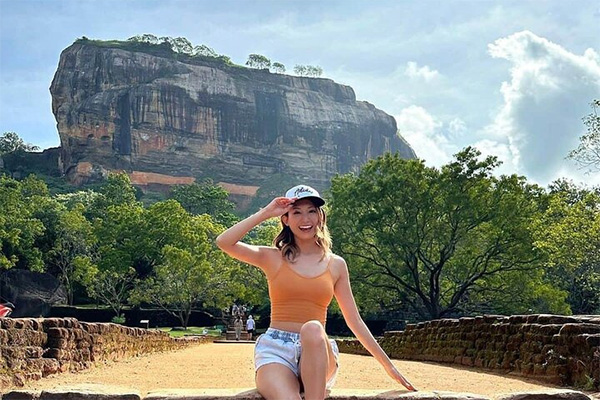
Sleeveless tops are generally fine at Sigiriya itself, especially in hot weather. The main rock fortress area has no temple-style rule about covering shoulders.
Even so, a light T-shirt, a breathable long-sleeved shirt or a removable cover-up is often the smarter pick. The upper sections have little shade, and the sun can be fierce. A thin long-sleeved layer also helps against insects and sunburn.
Skip anything that restricts your movement or turns uncomfortable once you’re sweaty. And if you’re heading to Dambulla, the Temple of the Sacred Tooth Relic, Anuradhapura, Polonnaruwa or any active place of worship, carry a shirt, shawl or sarong to cover your shoulders and knees.
Is Sigiriya Worth Visiting? An Honest Guide to Sri Lanka’s Lion Rock
Best Shoes for Climbing Sigiriya
Wear closed-toe walking shoes or trainers with good grip. Of everything you put on, this matters most.
The route includes:
- stone steps and uneven paths
- narrow walkways
- steep metal staircases
- exposed sections near the rock face
- surfaces that can get slippery after rain
Flip-flops, sliders, high heels and smooth-soled sandals are poor choices. They cut your grip and make the descent harder. If you’d rather wear sandals in the lower gardens, stash trainers in a daypack and switch before the climb.
Lightweight hiking shoes are ideal if you’re combining Sigiriya with Pidurangala Rock or other walks. For most visitors, supportive trainers do the job.
What Women Should Wear to Sigiriya
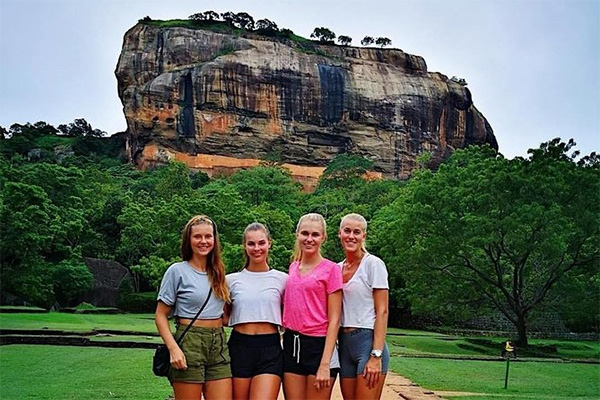
Women can wear shorts, skirts, dresses, leggings, T-shirts or lightweight trousers. There’s no formal requirement to cover shoulders or knees at the rock fortress itself.
For comfort, choose:
- breathable cotton, linen or moisture-wicking fabrics
- a T-shirt, tank top or light long-sleeved shirt
- shorts, leggings, a midi skirt or loose trousers
- a hat or cap
- sunglasses and sunscreen
- walking shoes or trainers
If you might step into a temple, carry a scarf, shawl or sarong. A long skirt or loose trousers also makes temple visits easier, since you won’t need a full outfit change.
What Men Should Wear to Sigiriya
Men can wear shorts, T-shirts, polo shirts or lightweight trousers. As with women, the focus is comfort and sun protection, not a formal dress requirement.
Good options include:
- knee-length shorts or lightweight trousers
- a breathable T-shirt or shirt
- a cap or hat
- sunglasses and sunscreen
- trainers or walking shoes
For temple visits, men should also be ready to cover their shoulders and knees. Long trousers or a sarong come in handy if your itinerary includes Dambulla, Kandy, Anuradhapura, Polonnaruwa or other sacred sites.
Sigiriya Dress Code vs Sri Lanka Temple Dress Code
The key distinction is simple. Sigiriya is an archaeological site, while temples are sacred religious spaces.
| Location | Shorts | Sleeveless tops | Shoes | Shoulders and knees |
|---|---|---|---|---|
| Sigiriya Rock Fortress | Generally acceptable | Generally acceptable | Wear secure walking shoes | Not a temple requirement |
| Buddhist temples | Usually not acceptable | Usually not acceptable | Remove before sacred areas | Cover both |
| Hindu kovils | Usually not acceptable | Usually not acceptable | Remove before sacred areas | Cover both |
| Mosques | Usually not acceptable | Usually not acceptable | Remove before prayer areas | Cover both |
| Churches | Often more flexible, but modest dress is respectful | Often more flexible, but modest dress is respectful | Follow local practice | Modest dress recommended |
At Sri Lankan religious sites, the most widely followed rule is to cover your shoulders and knees, remove your shoes and take off your hat before entering sacred areas. These expectations apply to all visitors, whatever their gender.
What to Wear If You Visit Dambulla or Other Temples
Plenty of travellers pair Sigiriya with the Dambulla Cave Temple on the same day. If that’s you, dress for the stricter location from the start.
Wear or bring:
- lightweight long trousers, a long skirt or a sarong
- a sleeved T-shirt, or a shawl to cover your shoulders
- shoes that are easy to take off
- socks, since temple floors and courtyards can get hot
- a small bag for shoes, hats and sunglasses
A sarong might be the most useful thing you can carry in Sri Lanka. It works as a shoulder cover, a knee cover, a light towel, a picnic mat or an extra layer in air-conditioned transport.
How Long Does It Take to Climb Sigiriya?
Most visitors should allow about 1.5 to 2 hours for the climb, counting the ascent, time at the summit and the descent. The route has roughly 1,200 steps, and the heat can make it feel tougher than that number suggests.
For the full visit, set aside at least three hours. That gives you time for the water gardens, boulder gardens, frescoes, Mirror Wall, Lion’s Paws and summit ruins, plus photos and rest breaks.
Since the climb takes a while and works up a sweat, avoid heavy jeans, thick fabrics and anything restrictive. Light, quick-drying materials are the better call.
Is It Safe to Walk Around Sigiriya?
Yes, for visitors who stick to the marked paths and follow the site rules. The main risks aren’t about crime. They’re heat, dehydration, slips, uneven ground and discomfort on exposed staircases.
To stay comfortable and safe:
- stay on designated paths and staircases
- don’t climb on ruins, walls or restricted areas
- carry water and drink regularly
- use sunscreen and a hat
- wear shoes with grip
- avoid the climb in the hottest part of the day if you can
- follow staff instructions, especially around weather, wildlife and conservation areas
Sigiriya is a managed heritage site, and the lower gardens make a relaxed walk even if you decide not to climb to the summit.
Sigiriya Packing Checklist
Bring these for a comfortable visit:
- breathable T-shirt or shirt
- shorts, leggings, lightweight trousers or a skirt
- walking shoes or trainers with grip
- hat or cap
- sunglasses
- sunscreen
- refillable water bottle
- insect repellent
- small towel or tissues
- light rain jacket during wetter months
- sarong, scarf or cover-up for temple visits
- small daypack
- camera or phone
- cash or card, depending on current payment arrangements
Leave unnecessary valuables at the hotel. A small, secure daypack beats a big bag on those staircases.
Common Clothing Mistakes to Avoid
- Wearing flip-flops for the climb. They give poor grip and little protection.
- Choosing heavy denim. Jeans get hot and uncomfortable in Sri Lanka’s humidity.
- Forgetting sun protection. Shade is limited on the upper sections.
- Assuming Sigiriya and temples follow the same rules. They don’t.
- Bringing only shorts when you’re visiting Dambulla. Carry a cover-up for religious sites.
- Wearing clothes that restrict movement. The climb calls for comfortable, flexible clothing.
- Ignoring the weather forecast. Rain can make stone and metal surfaces slippery.
FAQ
Can you wear shorts to Sigiriya?
Yes. Sigiriya Rock Fortress is an archaeological site, not a temple. Choose comfortable shorts and secure walking shoes for the climb.
What is the dress code for tourists in Sri Lanka?
Sri Lanka is generally relaxed in towns, on beaches and in tourist areas, but modest dress is expected at religious sites. At Buddhist temples, Hindu kovils, mosques and churches, visitors should cover their shoulders and knees, remove their shoes and take off their hats before entering sacred areas.
Is it okay to wear shorts in Sri Lanka?
Yes. Shorts are fine in most everyday and tourist settings, including Sigiriya. They’re usually not appropriate inside temples and other religious sites, where knees should be covered.
What shoes should I wear to Sigiriya?
Trainers or lightweight walking shoes with good grip. Avoid flip-flops, heels and smooth-soled sandals, because the route has stone steps, uneven paths and metal staircases.
Do I need to cover my shoulders at Sigiriya?
No. It’s not a general requirement at Sigiriya itself. Bring a cover-up, though, if you plan to visit the Dambulla Cave Temple or another religious site on the same day.
How long does it take to climb Sigiriya?
Allow about 1.5 to 2 hours, including the ascent, the summit visit and the descent. The route has roughly 1,200 steps, so leave extra time for rests and photos.
Is it safe to walk around Sigiriya?
Yes. It’s generally safe for visitors who stay on marked paths and follow the site rules. The main concerns are heat, dehydration, slippery surfaces and uneven ground, not personal safety.
What should I wear to the Dambulla Cave Temple?
Cover your shoulders and knees, take off your shoes before sacred areas and remove your hat. A sarong, or lightweight trousers with a sleeved top, is a practical choice.
At Sigiriya itself, put comfort first: breathable clothing, secure shoes, sun protection and plenty of water. Shorts and sleeveless tops are generally fine at the rock fortress.
For temples, follow Sri Lanka’s broader religious dress expectations: cover your shoulders and knees, take off your shoes and hat, and dress modestly. A sarong or light cover-up is the easiest way to be ready for both Sigiriya and a temple on the same day.
editor – jursika sewwandi