
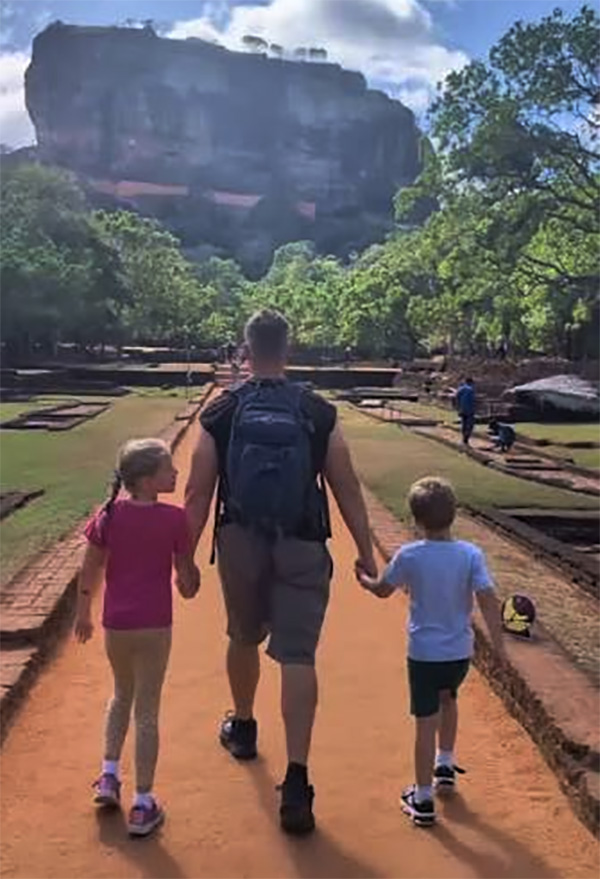
Sigiriya is worth the trip for families and older travellers, but you need to plan around the climb. The water gardens and lower archaeological areas are mostly flat. The way up to the summit is a different story: steep staircases, tight passages, and metal steps bolted to the rock face with a lot of open air around them.
Is Sigiriya Good for Children?
It can be. Plenty of families go, and older kids tend to love the adventure of it. Toddlers and very young children are another matter, especially in the heat. The route has more than 1,200 steps, and the last metal staircases feel pretty exposed if a child gets nervous around heights.
My advice is to go in without a fixed plan. Little ones can have a great morning in the gardens, the open spaces, and the views from the lower sections. Older kids who are happy on stairs can often do the whole climb with an adult keeping a close eye on them.
Practical tips for families:
- Arrive early, ideally right at opening time.
- Pack water, snacks, sunscreen, and hats.
- Pick a turnaround point before you start climbing.
- Keep kids close on the staircases and in crowded stretches.
- Never push a child to keep going if they’re tired or scared.
- If the full climb looks unrealistic, stick to the gardens and the museum.
Can Older Travellers Climb Sigiriya?
Many reasonably fit older visitors make it to the top. They go slowly and rest often. There are handrails and managed staircases, but it’s still hard work in tropical heat.
If that’s you, aim for the coolest part of the day, wear shoes with proper support, and give yourself extra time. Don’t rush. The site works as a series of stops, so you can rest at the gardens, the frescoes, and the Lion’s Paws and decide from there whether to keep going.
If you have a heart or breathing condition, a mobility problem, a recent injury, or any worry about balance, talk to a doctor before you try the full ascent. The upper route can’t take wheelchairs, and getting someone off the summit in an emergency would be difficult.
What Can Visitors with Limited Mobility See?
Quite a lot, even without reaching the top. The water gardens, boulder gardens, lower pathways, and museum area give you a solid introduction to the site’s history and how it was designed.
The gardens are your best ground-level option. They show how big the ancient complex was, how clever its water management was, and how dramatic Lion Rock looks standing over everything. You can also get views of the rock from the surrounding grounds and from the nearby Pidurangala area. Just know that Pidurangala has a rougher trail, so it isn’t a step-free alternative.
Is Sigiriya Worth Visiting? An Honest Guide to Sri Lanka’s Lion Rock
Safety on the Climb
The main risks are heat, dehydration, slippery surfaces, and discomfort on the exposed staircases. Rain makes both the stone and the metal steps slick, and midday sun makes the climb far more tiring.
Carry plenty of water and skip loose footwear. On windy sections, keep a firm hold of your hat, phone, and camera. If staff give instructions, especially when wasps or bees are active, stay calm and move away from the rock face as directed.
For emergencies in Sri Lanka, the national police number is 119 and the ambulance number is 110. Save both before you head out to remote heritage sites.
One Rule for Everyone
You don’t have to reach the summit for Sigiriya to be worth it. The gardens, frescoes, Mirror Wall, and Lion’s Paws are already an excellent day out. If the heat, fatigue, fear of heights, or mobility gets to be too much, turning back is just good judgment, not failure.
Editor – Jursika sewwandi