
Discover what to do in Galle Fort, Sri Lanka—walk the Dutch ramparts, see the lighthouse and clock tower, explore colonial streets, and find where to eat and stay.
What to Do in Galle Fort: History, Sights, Food, and Travel Tips
Galle Fort is one of the best places in Sri Lanka to explore on foot. It’s a walled seaside town where colonial ramparts, narrow streets, cafés, churches, and ocean views are all a few minutes apart. The highlights: walk the ramparts at sunset, see the Galle Lighthouse and Clock Tower, step into the Dutch Reformed Church, browse the boutiques, and eat around the restored Old Dutch Hospital.
This guide covers what Galle Fort is, where it is, who built it, why it matters, and how to get the most out of a visit, whether you’ve got two hours or a full day.
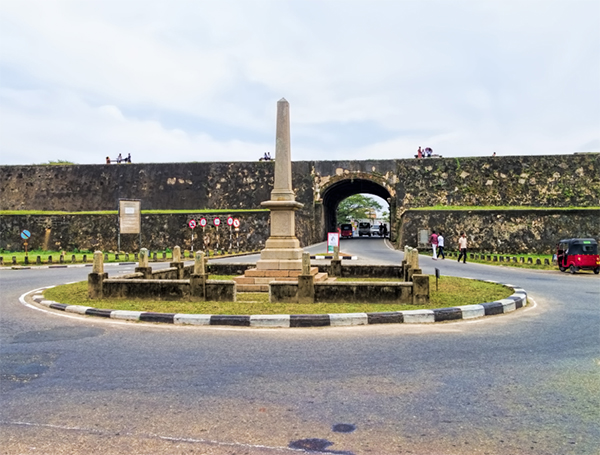 Main Gate to the Galle Fort, with a roundabout and central obelisk monument in front of the arched entrance.
What Is Galle Fort?
Galle Fort is a historic fortified town on Sri Lanka’s southwest coast, inside the city of Galle in the Southern Province. Don’t picture a ruin. People still live here, and inside the walls you’ll find homes, hotels, shops, restaurants, schools, and places of worship.
Its official name is the Old Town of Galle and its Fortifications, and it has been a UNESCO World Heritage Site since 1988. UNESCO calls it the best example of a fortified city built by Europeans in South and Southeast Asia, one that shows European architectural styles meeting South Asian traditions.
Locals often call it Galle Kotuwa, which means Galle Fort in Sinhala. You may also see it written as the Galle Dutch Fort, Dutch Fort Galle, or just the fort of Galle.
Where Is Galle Fort?
Galle Fort sits in Galle, on Sri Lanka’s southwestern coast, roughly along the island’s southern shoreline beside the Indian Ocean. It overlooks Galle Harbour and forms the historic old-town core of the wider city.
| Practical detail | What it means for visitors |
|---|---|
| Location | Galle, Southern Province, Sri Lanka |
| Setting | Walled peninsula beside Galle Harbour and the Indian Ocean |
| Access | Walkable from Galle’s central bus and railway areas |
| Layout | Compact, pedestrian-friendly grid of streets inside the fort walls |
Road and rail connect Galle well to Colombo and other southern-coast towns. Once you’re in Galle, you can usually walk to the fort from the main transport hubs. A short tuk-tuk ride is handy if you’re hauling luggage or the day is hot.
Who Built Galle Fort, and When?
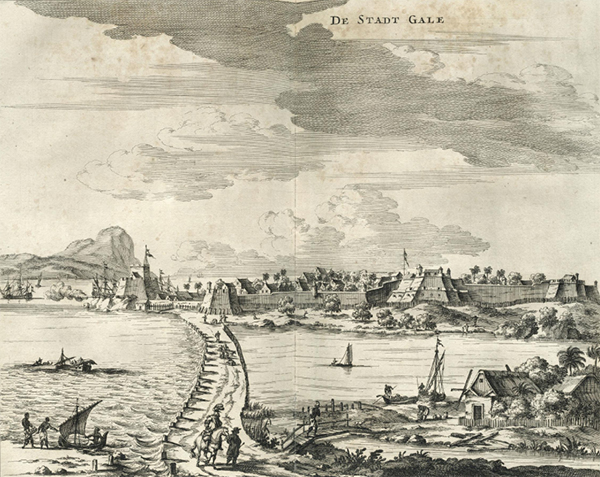
The Portuguese set up the first fortified settlement at Galle in the 16th century. Sri Lanka’s Central Cultural Fund dates that initial fortress to 1588. But what you see today is mostly the work of the Dutch, who rebuilt and expanded the place after capturing Galle in 1640.
The Dutch turned Galle into a major stronghold and kept developing its defences through the 17th and early 18th centuries. According to the Central Cultural Fund, Dutch engineers and architects built the surviving fortification system between 1663 and 1729. UNESCO makes a similar point: Galle reached its peak under Dutch colonial rule in the 18th century.
The short version:
- Portuguese: built the earliest fortification in the late 16th century.
- Dutch: rebuilt and greatly expanded the fort from the mid-17th century.
- British: took control of Galle later in the colonial period and left their own architectural and civic marks.
All those layers are why the fort doesn’t feel like a single-era monument. Portuguese, Dutch, British, Sri Lankan, Muslim, Buddhist, Hindu, and Christian influences all show up in its streets, buildings, and culture.
Why Galle Fort Matters
Three things make it important: its military architecture, its role in Indian Ocean trade, and its unusually intact urban character.
The ramparts, bastions, and sea-facing walls show European military engineering adapted to a tropical coast. Galle was already a significant port before the Europeans arrived, and it later became strategically important to Portuguese, Dutch, and British maritime networks. And unlike a lot of preserved forts, Galle never turned into an empty heritage site. People still live, work, worship, and run businesses inside the walls.
That living quality is central to the UNESCO recognition. The site is valued for its walls and buildings, but also for the cultural exchange you can see in its architecture and urban traditions.
Best Things to Do in Galle Fort
Walk the Ramparts at Sunset
If you only do one thing, do this. The elevated walls give you open views over the Indian Ocean, Galle Harbour, the rooftops, and the streets below.
Late afternoon is the favorite time, when the heat eases and the light goes golden. Get there before sunset if you want a quieter walk and better photos, because the walls fill up as the day winds down.
Keep an eye out for sea breezes, waves hitting the outer walls, ships in the distance, and the contrast between the old town’s tiled roofs and the ocean horizon.
See the Galle Lighthouse
The white Galle Lighthouse stands near the fort’s southeastern ramparts, and it’s one of the most photographed landmarks around. Perched above the rocks and the sea, it looks especially striking in late-afternoon light.
Think of it as a viewpoint and photo stop rather than assuming you can go inside. Access, opening arrangements, and fees can change, so check locally on the day.
Visit the Clock Tower and Main Gate
The Galle Fort Clock Tower rises above the ramparts near the Moon Bastion, and it’s a handy landmark to orient yourself on a first visit. The main entrance area nearby gives you a feel for the scale of the walls and the mix of colonial and local street life.
From here it’s easy to start a loop along the walls, drop down into the old town, and finish near the Dutch Hospital or the harbour side.
Explore the Dutch Reformed Church
The Dutch Reformed Church is one of the fort’s most important historic buildings. Its restrained colonial architecture, old gravestones, and quiet interior are a nice change from the busier ramparts and shopping streets.
It’s an active place of worship as well as a heritage site, so dress modestly, keep your voice down, and follow any visitor guidance posted there.
Visit the Old Dutch Hospital
The Old Dutch Hospital is a restored historic building that now works as a shopping and dining precinct. Sri Lanka’s Urban Development Authority notes that it was converted into that precinct in 2014 while its historic architecture was preserved.
It’s a convenient spot for a meal, a coffee, souvenir shopping, or a break from an afternoon downpour. The precinct lists opening hours of 8:00 am to 11:00 pm daily, though individual shops and restaurants may keep their own hours.
Wander the Streets and Boutiques
Some of the best moments in Galle Fort happen when you’re not headed anywhere in particular. Stroll the streets inside the walls and you’ll come across colonial-era houses, small galleries, jewellery shops, clothing boutiques, antique dealers, cafés, and local businesses.
Look for:
- Restored Dutch and British-era buildings
- Wooden balconies and shaded verandas
- Small art galleries and craft shops
- Local cafés and bakeries
- Views down quiet lanes toward the sea
Try not to treat the fort as just a photo backdrop. It’s a residential heritage neighbourhood, so keep the noise down and ask before photographing people or private homes.
Experience Galle Fort at Night
After dark, the fort feels like a different place. The ramparts quiet down, restaurant terraces fill up, streetlights glow along the old lanes, and the ocean becomes a dark presence beyond the walls.
Good evening options include:
- A sunset-to-dinner walk along the ramparts
- Dinner around the Old Dutch Hospital or at a fort restaurant
- A slow stroll through the lit-up streets
- Coffee, dessert, or a drink at a café or hotel bar
Use the same common sense you would in any city at night: stick to well-lit routes, keep your valuables secure, and arrange reliable transport if you’re heading back to accommodation outside the fort.
Where to Eat in Galle Fort
Start by deciding what kind of meal you’re after: Sri Lankan rice and curry, seafood, café food, fine dining, or just a coffee and a snack.
| Food preference | Where to focus |
|---|---|
| Sri Lankan flavours | Small local restaurants and cafés around the fort’s residential lanes |
| Seafood and ocean views | Restaurants near the ramparts and harbour-facing areas |
| Coffee, brunch, and desserts | Independent cafés and boutique-hotel cafés |
| Shopping plus dining | Old Dutch Hospital precinct |
| Special-occasion dinner | Boutique hotels and established fort restaurants |
The Old Dutch Hospital is a practical place to begin, since it packs several dining and shopping options into one restored heritage setting. For something more local, look beyond the main tourist streets. Just check recent reviews and opening hours first, because restaurants in a small heritage area change often.
Tip: Popular places can fill up in the evening, especially in peak travel periods. If you’ve got a particular restaurant in mind, reserve ahead or show up early.
Where to Stay in Galle Fort
Staying inside the fort pays off if you want early-morning walks, easy access to sunset views, and an atmospheric heritage setting. Options run from restored boutique hotels to guesthouses and larger properties nearby.
Some well-known names tied to the area:
- Galle Fort Hotel: a heritage-style option within the fort.
- Fort Bazaar: a boutique property in the old town.
- Jetwing Lighthouse: a larger hotel near Galle, known for its oceanfront setting rather than a spot inside the fort walls.
When you’re choosing, ask yourself whether you’d rather be inside the walls for atmosphere and walkability, or near the fort for more space, beach access, or resort facilities. Availability, prices, and services change a lot, so confirm current details with the property before you book.
A Suggested Walking Route
This simple route suits a first visit and takes roughly two to three hours if you skip the long meal stops.
- Enter through the Main Gate and get your bearings near the Clock Tower.
- Climb onto the ramparts and follow the walls toward the ocean side.
- Stop at the Galle Lighthouse for views and photos.
- Keep going along the sea-facing ramparts, especially near sunset.
- Come down into the old town and visit the Dutch Reformed Church.
- Wander through the boutique streets and the quieter residential lanes.
- Finish at the Old Dutch Hospital for food, coffee, or shopping.
With more time, add a museum, a longer meal, or a second rampart walk after dark.
Practical Tips for Visiting
- Entry: Galle Fort is a living public area, not a ticketed monument. The streets and ramparts are generally free to walk, though individual museums, galleries, and some attractions charge separately.
- Best time of day: Early morning for cooler walking and thinner crowds, late afternoon for sunset views.
- How long to allow: At least two to three hours. A half-day is more comfortable if you want meals and shopping.
- Footwear: Wear comfortable shoes, because the rampart surfaces and old streets can be uneven.
- Sun protection: Bring a hat, sunscreen, and water, especially around midday.
- Temple and church etiquette: Dress modestly at religious sites and take your shoes off where required.
- Photography: The fort is hugely photogenic, but ask permission before photographing residents or stepping onto private property.
- Weather: Coastal Galle can be hot and humid. Check the local forecast before heading out, particularly in monsoon periods.
Galle Fort: When to Go, What to Eat, and How to Plan Your Visit
Galle Fort rewards people who slow down. Walk the ramparts early while the air is still cool, wander the streets and duck into cafés during the day, then stay on for sunset and dinner. One full day covers the main sights. If you can spare two nights, though, you’ll have time to eat properly, soak up the atmosphere, and get to a beach or two along the southern coast.
When to Go
December to April is the sweet spot. The south coast is mostly dry, the sea is calmer, and walking the ramparts or heading to the beaches is a pleasure.
- December to February is peak season. The weather is reliably dry and the Fort feels lively, but hotels cost more and you’ll share the streets with plenty of other visitors.
- March to April is arguably the best balance. It’s warm, the crowds thin out a little, and conditions are generally good.
- May to September brings the southwest monsoon, with more rain, more humidity, and rougher seas. The Fort stays open, but sightseeing outdoors is less fun.
- October to November is shoulder season. It can be quieter and cheaper, though the weather is a mixed bag.
Timing your day
Between 7:00 and 9:00 am, the streets are quiet, it’s cooler, and the ramparts photograph beautifully. Between 4:30 and 6:30 pm you get the best sunset views, especially from the sea-facing walls and Triton Bastion. Around 11:00 am to 3:00 pm, the stone walls and streets heat up fast. Use that window for museums, lunch, a long café stop, or shopping.
How Long to Stay
Half a day to a full day is enough to see the highlights: the ramparts, the lighthouse, the Dutch Reformed Church, the Old Dutch Hospital, a few museums, and a good meal. Still, two nights is the more comfortable choice. You can catch both sunrise and sunset, try several restaurants, and avoid rushing.
Here’s how I’d match stay length to the kind of trip you’re after:
- Half a day: A quick trip from a nearby beach town. See the ramparts and main sights, have lunch, and do some shopping.
- One day and one night: Ideal for first-timers who want the full Fort experience, sunset and dinner included.
- Two nights: The best all-rounder. You get sightseeing, food, shopping, and one nearby beach or day trip.
- Three to four nights: Right if you’re using Galle as a base for Mirissa, whale watching, Unawatuna, Koggala, or other southern-coast day trips.
Eating in Galle Fort
The food scene is wider than you might expect. It runs from cheap local rice-and-curry spots to stylish cafés, seafood restaurants, boutique-hotel dining rooms, and cocktail bars. Pedlar Street is the main food street, and the Old Dutch Hospital is the easiest heritage dining spot to find.
Rice and curry
If you want an authentic local meal, look for small restaurants serving rice and curry. You’ll usually get several vegetable curries, sambols, and papadum, sometimes with fish or chicken on the side. Coconut Sambol gets recommended often for traditional rice and curry and for its homemade ginger beer. This is generally your best bet for strong local flavour without spending much. Smaller cafés around Pedlar Street often charge roughly LKR 700–1,500 for mains, though prices do change.
Seafood with a view
Galle is a coastal town, so fresh seafood is a big draw. Head for restaurants near the ramparts and the harbour-facing side of the Fort for grilled fish, prawns, calamari, crab, and seafood platters. If you want a scenic table, pick a place with rampart or ocean views and book ahead for sunset, particularly from December to March.
Cafés, brunch, and something sweet
Pedlar Street is the heart of the Fort’s café culture. Restored colonial buildings house coffee shops, gelato parlours, bakeries, brunch spots, and light-bite places. A few worth knowing:
- Pedlar Street cafés are great for coffee, breakfast, brunch, cakes, and casual meals.
- Maru Poke & Café is a lighter option, with poke bowls and fresh, healthier food.
- Pedlar’s Inn Gelato is a popular ice cream stop while you wander.
- The Bungalow sits in an old colonial house on Church Cross Street and is known for its leafy courtyard and relaxed meals or drinks.
- The Archives Galle Fort is on Pedlar Street and often recommended for its atmosphere and cocktails.
The Old Dutch Hospital
The restored Old Dutch Hospital is one of the simplest places in the Fort to eat, drink, and shop. Several restaurants, cafés, and boutiques share the historic colonial building. It works well when you want plenty of options in one spot, when your group can’t agree on what to eat, when you need shade or an indoor escape from a hot afternoon or a sudden downpour, or when you want dinner after a rampart walk.
Special occasions
For a more polished evening, pick a boutique-hotel restaurant or one of the established Fort restaurants. You’ll typically get a more refined setting, cocktails, international dishes, and sometimes ocean or courtyard views.
Where to look for what
| What you want | Where to go |
|---|---|
| Local rice and curry | Small local restaurants and cafés away from the main tourist strip |
| Seafood | Rampart-side and harbour-facing restaurants |
| Coffee, brunch, desserts | Pedlar Street cafés and boutique-hotel cafés |
| Casual drinks and cocktails | The Archives, hotel bars, and courtyard venues |
| Shopping plus dining | Old Dutch Hospital precinct |
| Special-occasion dinner | Boutique hotels and established Fort restaurants |
Practical food tips
- Book sunset dinners ahead. Popular places fill up quickly in peak season, especially December to March.
- Check opening hours. Small cafés and independent restaurants sometimes close earlier than you’d expect or change hours with the season.
- Try the local drinks. Fresh king coconut water, Ceylon tea, ginger beer, and fresh juices are everywhere and suit the warm climate.
- Look beyond Pedlar Street. The best-value, most local meals are often in quieter residential lanes rather than on the busiest tourist streets.
- Mention spice levels. Sri Lankan curries can pack real heat, so ask for mild or medium if you’re sensitive.
- Carry some cash. Smaller cafés and local eateries may prefer it, though many mid-range and upscale restaurants take cards.
Other Things Worth Knowing
Getting there
Galle is well connected to Colombo by road and rail. The coastal train takes roughly two hours and is one of the most scenic rail journeys in Sri Lanka. If you’re travelling by car or private transfer, the expressway is faster. Once you’re in Galle, the Fort is generally walkable from the main bus and railway areas. A short tuk-tuk ride helps if you have luggage or it’s the hottest part of the day.
Cost of entry
The Fort is free to enter, because it’s a living neighbourhood rather than a ticketed monument. You can walk the streets and ramparts without paying. Museums, galleries, and some attractions do charge separately.
What to bring
- Comfortable walking shoes for the uneven ramparts and old streets
- A hat, sunscreen, and water, especially from late morning to mid-afternoon
- Light cotton clothing for the humid coastal climate
- Modest clothing for churches, mosques, and temples
- A light rain jacket during the monsoon months
Photography
The best light comes early in the morning and late in the afternoon, when the ramparts, whitewashed buildings, and ocean look softer. For the classic Galle Fort shots, go for:
- The white Galle Lighthouse against the sea
- The ramparts near Triton Bastion at sunset
- The Old Gate and Main Gate
- The Dutch Reformed Church and the colonial streets
- Pedlar Street’s cafés, boutiques, and restored facades
Nearby places to add
If you’re building a broader southern-coast itinerary, pair the Fort with these:
- Unawatuna Beach: A short ride from Galle, popular for swimming, beach cafés, and relaxed evenings.
- Jungle Beach: A smaller, more sheltered beach near Unawatuna.
- Mirissa: Known for whale-watching tours and beach nightlife.
- Koggala: Famous for stilt fishermen and lagoon scenery.
- Turtle hatcheries: A family-friendly half-day option along the southern coast.
A Sample One-Day Plan
- 7:00 am: Enter the Fort and walk the ramparts while it’s still cool.
- 8:30 am: Breakfast at a Pedlar Street café.
- 10:00 am: Visit the National Maritime Museum or the Dutch Reformed Church.
- 12:30 pm: Rice and curry for lunch, for example at Coconut Sambol.
- 2:00 pm: Browse the boutiques and galleries, and poke around the quieter lanes.
- 4:30 pm: Head back to the ramparts for sunset, ideally near Triton Bastion.
- 6:30 pm: Dinner at the Old Dutch Hospital, a seafood restaurant, or a boutique hotel.
Can you suggest some budget-friendly dining spots inside Galle Fort
Galle Fort: A Practical Guide to Eating, Walking and Watching the Sunset
Eating cheaply inside the Fort
Budget dining inside the walls is limited, but it can be done. Skip the tourist-facing places on Pedlar Street and go for local rice-and-curry spots and small cafés. A filling local meal runs about LKR 300-700, while Western-style cafés and seafood restaurants cost a good deal more.
Lucky Fort Restaurant on Parawa Street is the one I’d send you to first. It’s cafeteria-style, the portions are generous, and locals and budget travellers both eat there. The simple, authentic rice and curry comes with a spread of vegetable and meat curries, sambol and papadum. A full lunch is commonly listed at LKR 300-500, though some guides quote up to LKR 700 depending on what you add. Lunch is the sweet spot, since you can eat well before heading back to the ramparts and boutiques.
Two other inside-the-Fort options:
- Heritage Café is a casual spot for a filling evening meal without boutique prices. Kottu roti is around LKR 600 and fresh juice around LKR 300. They also do Sri Lankan short eats.
- Pedlar’s Inn Café isn’t the cheapest place for a full meal, but it’s good value for breakfast, a snack or a coffee (around LKR 400) in a historic courtyard. The menu covers sandwiches, pastries and fresh juice.
Eating cheaply outside the Fort
If you really want to save money, step outside. The area around the Main Gate, the bus stand and Colombo Road has local kades (small eateries), bakeries, tea shops, short-eat stalls and rice-and-curry places. All of it is only a few minutes’ walk from the Fort, and it’s far cheaper than the heritage streets. Galle’s town streets outside the walls also have small Sri Lankan cafés and restaurants that feel more authentic and cost less than Pedlar Street.
My usual advice is to have breakfast or lunch outside the Fort, then come back in for sightseeing and sunset.
What to look for in a good kade: a glass counter displaying the curries, local customers eating lunch, plastic chairs, a busy lunchtime crowd and a handwritten menu with local prices.
Typical prices:
- Rice and curry at a local kade: about LKR 200-400 (up to roughly LKR 500 with fish or chicken). That gets you rice, several vegetable curries, sambol and papadum.
- Vegetable roll: about LKR 50-100
- Vadai or isso vade: about LKR 40-100
- Pol roti or egg roti: about LKR 50-150
- Samosa: about LKR 80
- Fresh fruit or king coconut: about LKR 100-400
- Kottu roti at a street stall: about LKR 300-550. Kottu is roti chopped up on a hot griddle with vegetables, egg, chicken or cheese. A basic vegetable or egg version is often LKR 300-600, and the chicken or cheese versions cost a bit more.
- Tea at local tea shops: very cheap
Sri Lankan bakeries are great for a cheap breakfast or snack, with fish buns, vegetable rolls, egg buns, pastries and sweet buns on offer. For breakfast, egg hoppers and string hoppers are good local choices where you can find them. Plain tea or ginger tea costs far less than specialty coffee.
Cafés worth checking near the Fort. They aren’t all ultra-cheap, but they cost less than many boutique restaurants inside:
- Brixia Café & Guest (outside the Fort) is praised for Italian-style coffee, filling breakfasts and friendly service.
- The Nest Coffee ‘n’ Shop (Leyn Baan Street / Church Street) serves coffee, smoothies, lassi, pies and vegetarian options. Some branches are inside or very close to the Fort, so check which one you’re heading to.
- Orion XO Tea & Café does tea, coffee and light meals, usually in the mid-range price bracket.
- Café 82 is one of Galle’s most-reviewed cafés and works well for an inexpensive dessert, coffee or snack.
- Local tea shops near the bus stand are usually the cheapest option for tea, roti and short eats.
Tips for eating cheaply
- Make lunch your main meal. Local rice and curry is usually better value at midday than tourist restaurants are at dinner.
- Pick rice and curry over Western food. Pasta, burgers and seafood platters inside the Fort are priced for visitors.
- Use Pedlar Street for coffee, not every meal. Many cafés there charge tourist prices.
- Walk five minutes outside the Main Gate. The market and bus-stand area has the cheapest roti, kottu, hoppers and short eats.
- Ask for vegetable rice and curry. It’s often the cheapest and most filling choice.
A realistic daily food budget:
| Meal | Budget option | Approximate cost |
|---|---|---|
| Breakfast | Roti, short eats, tea or coffee | LKR 200-500 |
| Lunch | Rice and curry at Lucky Fort or a local kade | LKR 300-700 |
| Snack | Vadai, fruit, king coconut or pastry | LKR 100-400 |
| Dinner | Kottu roti or another local meal | LKR 400-800 |
| Daily total | About LKR 1,000-2,400 |
If you eat mostly at kades, bakeries and tea shops outside the Fort, you can get by on roughly LKR 800-1,800 a day. Add a café meal or a few coffees and you’re looking at LKR 1,500-2,500. Eat at tourist cafés inside the Fort for every meal and you’ll spend noticeably more. The best approach is one local rice-and-curry meal inside the Fort plus cheap street food near the Main Gate.
Getting from the bus stand to the Fort
From Galle Central Bus Stand, walk to the Main Gate, which sits directly opposite Galle International Cricket Stadium. It’s usually a 5-10 minute walk. A tuk-tuk takes about 3-5 minutes and should cost roughly LKR 300-500, which is worth it if you have luggage or the heat is getting to you. A local bus is usually unnecessary.
Walking:
- Leave the bus stand toward the main road and look for signs to Galle Fort.
- Head toward the cricket stadium. The Main Gate is across the road from it.
- Cross carefully at the designated crossing, because the road outside can be busy.
- Walk toward the large arched entrance with the Clock Tower nearby. That’s the Main Gate, the Fort’s main land entrance.
- Once inside, Clock Tower Street and Church Street lead into the historic grid. Church Street is the way to go for the Dutch Reformed Church and Pedlar Street.
By tuk-tuk: Say “Galle Fort Main Gate” or “Galle Fort Clock Tower,” and agree on the fare before you get in. A short ride from the bus stand is commonly LKR 300-500, though traffic and time of day can shift that. Ask to be dropped at the Main Gate opposite the stadium, not at a random side entrance.
Which entrance? Use the Main Gate on the Fort’s north side, added in 1873. The Old Gate near the harbour is historic and worth seeing, but it’s not the practical first entrance when you’re coming from the bus stand.
If you’re carrying a backpack or suitcase, take the tuk-tuk. If you’re travelling light, walk, because it’s short and gives you your first look at the Fort walls.
A walking route through the Fort
This route takes roughly 2.5-3.5 hours at a comfortable pace. It starts at the Main Gate, follows the ramparts past the lighthouse and churches, and ends with Pedlar Street and the Old Dutch Hospital. The full rampart circuit is about 3 km. A relaxed walk with photo stops takes 1-2 hours before you add museums, cafés and shopping.
- Main Gate and Clock Tower (10-15 min). Start near the Clock Tower and the cricket stadium, the easiest entrance from the bus stand. Take a moment to look around, then climb onto the ramparts near Moon Bastion.
- Moon Bastion to Sun Bastion (20-30 min). Walk north along the landward walls for views over Galle town, the harbour and the stadium. Sun Bastion is one of the best places to look across the harbour, so stop for photos.
- Old Gate (10-15 min). Continue to the older Dutch-era entrance near the harbour. Look for the VOC markings and carvings, which are among the Fort’s most atmospheric details. From here, follow the harbour-side walls toward Zwart Bastion and Aurora Bastion.
- National Maritime Museum (30-45 min). Drop down into the old town. The museum is in a former Dutch warehouse and covers Galle’s shipping history, marine life and the 2004 tsunami. Short on time? Skip it and head straight for the lighthouse.
- Dutch Reformed Church (15-20 min). Walk inland to Church Street. Built in 1755, the church has old gravestones, a colonial interior and a quiet atmosphere. All Saints’ Church, a Gothic-style Anglican church, is nearby and makes a nice contrast.
- Pedlar Street (30-60 min). This is the Fort’s main shopping and café street, with boutiques, galleries, jewellery, antiques, coffee, gelato and plenty of people-watching. Grab a break at a café before heading seaward.
- Point Utrecht Bastion and Galle Lighthouse (15-20 min). Back on the ramparts, walk to Point Utrecht Bastion, where the white lighthouse stands above the rocks and the Indian Ocean. It’s the most photographed spot in the Fort. The light is best in the late afternoon, but it gets busy near sunset.
- Flag Rock Bastion (15-20 min). Continue south to the Fort’s southern tip for dramatic ocean views and one of the best sunset spots. You may see local cliff jumpers here.
- Triton Bastion (10-15 min). Another excellent sea-facing viewpoint, where you can see how the Fort protected the harbour and coastline.
- Old Dutch Hospital (30-60 min). Finish at the restored colonial building, which now houses cafés, restaurants and shops. It’s a convenient spot for dinner, coffee or souvenirs. If you’re staying for sunset, go back to Flag Rock or Triton Bastion after your meal. The ramparts are especially atmospheric then.
Direction: On a first visit, I’d start at the Main Gate and walk anti-clockwise: harbour side first, then the inland streets, then the lighthouse and open-sea side. That ends at the Old Dutch Hospital and saves the lighthouse and sunset viewpoints for later in the day. If you’d rather finish on the quiet harbour side, reverse it and walk clockwise from the Old Gate.
How long it takes
| Type of walk | Distance | Time | What it includes |
|---|---|---|---|
| Ramparts only | About 2-3 km | 45 min-1 hr | Outer walls, bastions, harbour and ocean views |
| Highlights walk | About 3-3.5 km | 1.5-2 hrs | Main Gate, Clock Tower, lighthouse, church, old streets, Dutch Hospital |
| Full sightseeing walk | About 3.5 km | 3-4 hrs | Ramparts, Maritime Museum, churches, Pedlar Street, cafés, shopping, photo stops |
| Very relaxed half-day | Varies | 4-5 hrs | Full route plus lunch, coffee, shopping and a sunset stop |
For the route above, plan on about 3 hours. Add the Maritime Museum, a proper lunch or a long shopping stop and it’s 4 hours or more. As a rule of thumb: 2 hours if you’re rushing, 3 for a comfortable first visit, and half a day to do the Fort justice.
Best time of day
Late afternoon, around 4:00-6:00 pm, is the best time for the full walk. The heat eases, the western ramparts catch golden light, and you can end at Flag Rock or Triton Bastion for sunset. My recommendation is to start around 3:30-4:00 pm from the Main Gate, take your time through Pedlar Street or the Dutch Reformed Church, and reach the western bastions by sunset. Many day-trippers start leaving around 5:00 pm, so the Fort feels calmer in the last hours of daylight.
- 6:00-9:00 am: Cooler weather, fewer tourists, soft morning light and a peaceful atmosphere. If you want fewer crowds, aim for 6:00-7:00 am. You’ll miss the sunset, though.
- 11:00 am-3:00 pm: Good for museums, cafés and shopping. Avoid the full walk then, because the coral-and-stone ramparts have very little shade and get hot, especially on sunny days.
Whenever you go, bring water, a hat and sunscreen, and wear comfortable shoes.
Where to watch the sunset
The best views are from the southern and western ramparts. Go to Flag Rock for the classic sunset-and-lighthouse shot, or to Triton Bastion for a quieter, more open view.
- Triton Bastion (my top pick): It faces the sunset directly, has more room to sit on the grassy ramparts, and is usually less crowded than Flag Rock. It’s the best choice if you want to relax and watch the sky change without competing for a photo spot. Arrive around 5:00-5:30 pm, or earlier for photos and a good seat.
- Flag Rock Bastion (the most iconic): At the southwestern tip, with waves crashing below and the best angle on the lighthouse. Locals and visitors gather from around 5:00 pm, so it gets very busy. Arrive by 4:30-5:00 pm, especially in peak season from December to March. You may see cliff jumpers. Keep a safe distance from the edge and don’t try it yourself.
- Point Utrecht Bastion / Galle Lighthouse: Sweeping views over the Indian Ocean and the best spot for lighthouse photos, but busy near sunset and better for pictures than a long sit-down.
- Ramparts between Flag Rock and Clock Tower: A western-facing stretch with clear views of the sun going down over the ocean, and moderate crowds.
- Ramparts near the lighthouse, facing land: For a different photo angle, look back at the Fort’s rooftops and streets as the light shifts. It’s quieter, too.
For the iconic Galle Fort photograph, stand near Flag Rock or along the ramparts looking toward Point Utrecht Bastion. The lighthouse, ocean and golden light together make the most recognizable view in the Fort.
A simple sunset walk:
- Start at the Main Gate around 4:00 pm.
- Wander through Pedlar Street or visit the Dutch Reformed Church.
- Head to the lighthouse / Point Utrecht Bastion for photos.
- Continue to Flag Rock for the classic view.
- If it’s too crowded, walk west to Triton Bastion.
Dinner after sunset
Pedlar Street, Church Street and the Old Dutch Hospital precinct are all a few minutes’ walk from the western ramparts. Choose a rampart-side restaurant for seafood, cocktails or atmosphere, and Pedlar Street for a more relaxed café-style meal.
- Malu Cocktails & Seafood (33 Rampart Street) is good for seafood, cocktails, curries, grilled dishes, lobster and crab. It’s close to the western ramparts, so you can walk straight from the sunset to dinner. It usually closes around 10:00 pm, later on Friday and Saturday.
- The Arch Restaurant is another seafood-focused option, built around fresh catch from the southern coast. Check current hours.
- Galle Fort Hotel Restaurant (28 Church Street) is more relaxed and upscale, with Asian-fusion dishes, cocktails, wine and a courtyard/veranda setting. It’s open until about 10:00 pm.
- Pedlar’s Inn Café on Pedlar Street suits a lighter evening with coffee, dessert, sandwiches, fusion dishes or a drink. It’s one of the Fort’s best-known cafés and a popular late-night option.
- Old Dutch Hospital precinct (Hospital Street / Pedlar Street area) has several restaurants, bars and cafés in one place, which helps if you’re in a group and can’t decide. Hours vary by venue, but many stay open into the evening.
A good post-sunset plan: Watch the sunset from Flag Rock or Triton Bastion, then walk 5-10 minutes to Rampart Street for seafood at Malu. Or head to Pedlar Street or the Old Dutch Hospital for more variety. Finish with a slow stroll through the lit-up heritage streets.
Practical tips:
- Book ahead for seafood and popular restaurants in peak season (December to March).
- Check same-day hours, since smaller places can change closing times seasonally.
- Stick to well-lit streets after dark and arrange reliable transport if your hotel is outside the Fort.
- On a budget? Eat earlier at a local rice-and-curry place, because most sunset-view and seafood restaurants are mid-range to higher priced.
Authentic rice and curry
Lucky Fort Restaurant (7 Parawa Street) is my top recommendation. It’s a small, family-run place with no-frills, homestyle cooking. You get rice with around 10 curries, mostly vegetable-based and largely vegan, with optional fish or chicken, plus sambols and sides. It’s open generally from 12:00 pm to 9:30 or 10:30 pm depending on the day. It’s best at lunch but works for an early dinner too.
If Lucky Fort is full, try Coconut Sambol. It’s highly rated for traditional rice and curry, with several vegetable curries (many vegan) served with rice and sambol. One guide calls it the Fort’s most serious local kitchen for classical Sri Lankan rice and curry, and it’s a bit more polished while still local in style.
For a sit-down dinner, Amma Nissa Galle Fort cooks family recipes with locally sourced ingredients and is open daily from about 12:00 pm to 10:00 pm. It’s the more comfortable setting if you still want local food.
| If you want… | Go to |
|---|---|
| The most authentic, budget-friendly rice and curry | Lucky Fort Restaurant |
| A highly rated traditional alternative | Coconut Sambol |
| A relaxed sit-down Sri Lankan dinner | Amma Nissa Galle Fort |
If you’re doing the sunset walk, I’d eat at Lucky Fort at lunch and then return to the ramparts for sunset. For rice and curry after dark, Amma Nissa is the more practical pick because it stays open until around 10:00 pm.
Lucky Fort’s “10 Curries”: What to Expect
What you’re ordering
At Lucky Fort Restaurant in Galle Fort, the “10 curries” is a set meal, and it’s the whole menu. There’s no à la carte list to browse. The kitchen brings you the day’s selection: a big platter of rice with ten small bowls of Sri Lankan curries around it. Because it’s mostly vegetable-based and depends on what’s available, it shifts a little from day to day.
What’s usually in the bowls
The exact lineup varies, but recent visitors keep mentioning the same favourites:
- Dhal: Lentils simmered with coconut milk, onion, garlic, curry leaves and spices. It’s mild, creamy and comforting.
- Pumpkin: Soft pumpkin in a gently sweet coconut curry.
- Aubergine (brinjal): Cooked down until it’s soft and rich. It’s often the standout.
- Green beans: Beans in coconut milk with mild spices.
- Sweet potato: Hearty and slightly sweet.
- Fried or devilled potato: Spiced potato, usually a bit sharper and hotter than the other vegetables.
- Sour mango curry or mango chutney: A tangy counterpoint to the richer coconut dishes.
- Pineapple: A sweet-and-savoury fruit curry that’s very Sri Lankan.
- Jackfruit: A traditional curry with a meaty, satisfying bite.
- Cashew: Cashews in a mildly spiced coconut gravy. It’s rich and filling.
- Gotu kola or another leafy green: Lighter and fresher than the rest.
- Chicken or fish: The one non-vegetarian option. If you’d rather eat fully vegetarian, you can usually ask them to leave it out.
How the meal works
You don’t pick ten curries one by one. The staff bring a tray with rice for two and all ten curries together. Roughly nine of them are normally vegan or vegetarian, with that single chicken or fish dish as the exception.
It’s built for two people to share, though a very hungry solo diner can order it too. Several guests say they got extra rice at no extra charge. The food is flavourful and can be moderately spicy, so if chilli isn’t your thing, ask for milder curries.
What it tastes like, and how to eat it
This is home-style cooking, not hotel-style fine dining. Coconut milk, curry leaves, cinnamon, turmeric, chilli and other local spices give you creamy, tangy, sweet and spicy flavours in a single meal.
The best approach is to put a little rice on your plate, add small spoonfuls of several curries and mix them together. Start with the dhal and pumpkin, then bring in the tangier mango or pineapple to see how they play off each other.
What it costs
Prices are a moving target here. Recent reviews mention around LKR 3,500 for two, while older reports say as little as LKR 950 for two. Another older listing from the restaurant itself advertised LKR 1,800 for two hungry people. Most current estimates land between LKR 1,500 and 3,000 for two (roughly USD 5–10), and a 2026 budget guide narrows that to LKR 1,481–2,468.
Sharing one plate between two is the best value, working out to about LKR 750–1,250 each. Ordering solo costs roughly LKR 1,500–3,000, and you’ll likely still get the full spread, which is a lot for one person. The price generally covers the rice, the ten curries and usually papadum and sambol-style sides. Prices change, especially in peak season, so confirm the rate when you arrive.
Opening hours
Listings often say Monday to Friday, 12:00 pm to 10:30 pm, and Sunday, 12:00 pm to 9:30 pm. Another listing gives 12:30–3:00 pm and 6:00–10:00 pm. Since the sources disagree, aim for lunch or an early dinner rather than assuming the kitchen runs all day.
Paying
Treat this as a cash meal. The restaurant’s terms mention PayHere for online payments, but nobody has clearly confirmed that the in-restaurant terminal takes Visa or Mastercard. Amex is rarely accepted in Sri Lanka, so don’t count on it. Foreign cash, including US dollars, isn’t a safe bet either. Pay in rupees unless they tell you otherwise.
For two people, LKR 3,000–4,000 in cash covers the meal with room for a small tip or an extra drink. It’s still worth asking, “Do you accept Visa or Mastercard?” before you sit down. If they say yes, expect chip-and-PIN rather than contactless, and check for any card surcharge before you confirm. Keep cash as your backup either way, since small local rice-and-curry spots are often cash-only.
Finding an ATM
If you’re short on rupees, you’re in luck. The closest option is the Commercial Bank branch at No. 22, Church Street in Galle Fort, with both ATM and CRM facilities, about a 2–4 minute walk from Lucky Fort on Parawa Street. Just head toward Church Street and look for the branch.
Other options are farther away:
- Commercial Bank ATM on Main Street, Galle: About 10–15 minutes on foot, handy if you’re heading toward the bus stand or Main Gate.
- Commercial Bank ATM on Wackwella Road: Outside the Fort, closer to the bus stand and town side.
- Sampath Bank: Has machines around Galle, including the Fort and Main Street areas.
Both banks are generally seen as reliable for foreign cards, with wide networks and fairly consistent acceptance of international Visa and Mastercard. A few tips:
- Withdraw rupees, not dollars.
- Bring a Visa or Mastercard, since Amex is less widely accepted.
- Take out enough for the meal, tuk-tuks, snacks and small purchases, because many street vendors and drivers prefer cash.
- Stick to bank-attached ATMs in daylight or well-lit areas, and avoid standalone machines late at night.
- If one machine declines your card, try Commercial Bank or Sampath rather than retrying the same one.
Who it suits
Vegetarians and vegans will do especially well, since most of the spread is plant-based. It’s also good value for budget travellers compared with many tourist restaurants in Galle Fort, a smart pick for first-timers to Sri Lankan food who want to taste a lot in one sitting, and a natural fit for couples and small groups.
If you want a simple, authentic, filling Sri Lankan meal in Galle Fort, this is probably the one thing to order. Withdraw cash at Commercial Bank on Church Street, then walk over to Parawa Street and dig in.
FAQ
What is Galle Fort?
A historic walled town in Galle, Sri Lanka, known for its Portuguese, Dutch, and British colonial heritage, its ocean-facing ramparts, and its UNESCO World Heritage status.
When was Galle Fort built?
The Portuguese built an early fortification at Galle in 1588. The Dutch captured Galle in 1640 and developed the fort’s major surviving fortifications between 1663 and 1729.
Who built Galle Fort?
The Portuguese built the first fort at Galle, but the Dutch rebuilt and expanded it extensively into the fortified town you see today. The British later added to the area’s colonial-era character.
Where is Galle Fort located?
In the city of Galle, Southern Province, Sri Lanka, on the island’s southwest coast beside Galle Harbour and the Indian Ocean.
Is Galle Fort free to enter?
Yes. It’s a living public neighbourhood, so walking its streets and ramparts is generally free. Museums, galleries, and certain attractions inside may charge separate fees.
What is there to do in Galle Fort at night?
You can walk the ramparts, eat at fort restaurants, explore the Old Dutch Hospital precinct, and stroll the lit-up heritage streets. Stick to well-lit routes and take normal city precautions.
How much time do you need in Galle Fort?
Allow at least two to three hours for the main sights and a rampart walk. A half-day works better if you want to eat, shop, visit museums, and explore without rushing.
Why is Galle Fort a UNESCO World Heritage Site?
UNESCO inscribed the Old Town of Galle and its Fortifications in 1988 as an outstanding example of a European-built fortified city in South and Southeast Asia, one that reflects the interaction between European and South Asian architectural traditions.
EXTERNAL SOURCE RECOMMENDATIONS
UNESCO World Heritage Centre: official inscription, historical development, and heritage significance of the Old Town of Galle and its Fortifications.whc.unesco+1
Sri Lanka Central Cultural Fund: Portuguese founding date, Dutch capture and reconstruction period, and national heritage context.ccf.gov
Sri Lanka Urban Development Authority: Old Dutch Hospital restoration, current use, and listed opening hours.uda.gov
Sri Lanka Ports Authority: geographic context for Galle and its harbour.news.slpa
Official Sri Lanka tourism or Galle Fort visitor resources: restaurant, map, and attraction information; verify current operating details before publication. gallefortsrilanka
Editor – Jursika