
yes, for most people. Sigiriya is a fifth-century royal fortress and palace complex built on and around a huge granite rock in Sri Lanka’s Cultural Triangle. Calling it a viewpoint undersells it. You get ancient water gardens, rare wall paintings, early inscriptions, a giant lion’s entrance and views that stretch for miles.
It isn’t for everyone, though. Expect heat, humidity, uneven stone paths and a climb of roughly 1,200 steps, with some exposed metal staircases near the top. If you have serious mobility problems, a real fear of heights or very little time, you might do better exploring the lower gardens or looking at the rock from nearby Pidurangala.
Below, I’ll cover what you’ll see, how tough the climb feels, when to go, how to get there and what to wear, so you can decide whether it fits your trip.
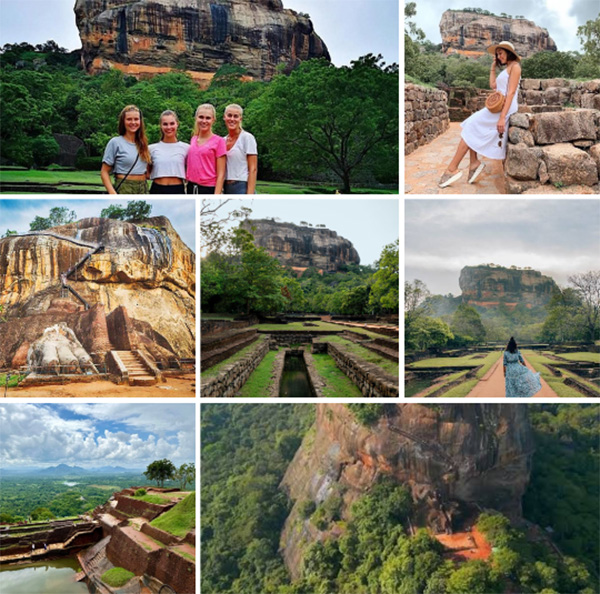
What Is Sigiriya Rock?
Sigiriya goes by several names: Lion Rock, Lion’s Rock and Sinhagiri. It’s an ancient rock fortress and palace complex in central Sri Lanka, rising around 180 to 200 metres above the plains. Besides the rock summit itself, the site has formal gardens, terraces, frescoes, inscriptions, reservoirs and the remains of royal buildings.
UNESCO inscribed Sigiriya as a World Heritage Site in 1982, citing its urban planning, landscape architecture, hydraulic engineering and artistic achievement. UNESCO describes it as the remains of a capital built by King Kashyapa I (also spelled Kassapa), who reigned from 477 to 495 CE.
You’ll often hear it called the “Eighth Wonder of the World.” That’s a popular nickname, not an official UNESCO title, but it shows how people react to the place. Sigiriya isn’t just a rock with a few ruins on top. It was a carefully designed capital. You walk through gardens, climb past protected paintings, pass the scribbles of ancient visitors and finally reach a hilltop palace area.
https://www.aboutceylon.com/common-mistakes-to-avoid-at-sigiriyasri-lanka-visitor-tips/
Where Is Sigiriya?
Sigiriya sits in the Matale District of Sri Lanka’s Central Province, inside the Cultural Triangle. It’s an inland area of forest, farmland, villages, reservoirs and other ancient sites.
That location matters when you plan your route. Sigiriya lies between Dambulla, Polonnaruwa, Anuradhapura, Kandy and Habarana, so most people visit it as part of a wider Cultural Triangle trip, not on its own. Common bases include:
- Sigiriya village: the closest option, ideal for sunrise visits and slower stays.
- Dambulla: a handy town with accommodation, transport links and the Dambulla Cave Temple.
- Habarana: popular for combining Sigiriya with Minneriya or Kaudulla national parks.
- Kandy: a common starting point for day trips or overnight Cultural Triangle tours.
- Polonnaruwa: often paired with Sigiriya on a heritage-focused route.
Why Sigiriya Is Famous
Few places pack so much into one site: a fortified royal palace, sophisticated gardens, ancient paintings, early poetry and a lion-shaped gateway. The Central Cultural Fund calls it a masterpiece of urban planning, hydraulic engineering and landscape architecture.
Part of the charm is how the visit unfolds. You start in the gardens at ground level, then climb through shaded boulder pathways to the frescoes and the Mirror Wall. After that come the Lion’s Paws, and finally the summit ruins. Every stage adds something new.
Visiting Sigiriya with Kids, Older Relatives, or Limited Mobility
The Water Gardens
At the western base of the rock, the water gardens are some of the site’s most impressive features. Expect symmetrical pools, water channels, islands, fountains and landscaped spaces laid out with striking precision.
The Central Cultural Fund notes that parts of the ancient hydraulic system still work in the rainy season. That tells you the designers cared about more than looks. They were managing water in a hot, seasonal climate. Go early, when the light is softer and the air cooler. The gardens also remind you that Sigiriya was a planned capital, not just a fortress on a convenient rock.
The Frescoes
Halfway up the rock face you’ll meet the famous Sigiriya frescoes, often called the “Sigiriya Maidens.” They show women wearing jewellery and flowers. Nobody is certain who they depict. Suggestions include celestial beings, royal women, dancers and religious figures.
Only 22 frescoes survive, sheltered inside a rock cavity. They rank among the most important surviving examples of ancient Sinhalese painting, and they’re a big part of why Sigiriya matters worldwide. Access to the fresco gallery can be restricted for conservation reasons, and the rules may change. Follow staff instructions and the signs, especially on photography and barriers.
The Mirror Wall
Below the frescoes runs the Mirror Wall, a polished plastered wall that once gleamed so brightly that visitors could apparently see their reflections in it. Between the sixth and fourteenth centuries, people wrote poems, comments and observations on it.
That writing is known as the Sigiri graffiti, and more than 1,800 inscriptions have been documented. They give a rare look at medieval literary culture and at how earlier visitors reacted to the place. Even if archaeology isn’t your thing, the wall adds a human touch. People have been admiring and writing about this spot for well over a thousand years.
The Lion’s Gate
The Lion’s Gate is the most iconic stop on the climb. The original entrance was built as a gigantic lion, and visitors walked between its paws and up through its mouth. The paws survive today, and they give the site its name, Sinhagiri, or Lion Rock.
This is also where the climb gets dramatic. The final stretch uses metal staircases bolted to the rock face, leading up to the summit plateau. The paws are among the most photographed parts of the site, and they hint at the scale of Kashyapa’s ambitions.
The Summit Palace
At the top you’ll find foundations and remains, not a rebuilt palace. Terraces, water tanks, foundations and a carved throne platform show how the summit served as a royal residence and ceremonial space.
The payoff is a wide view over forest, reservoirs, villages and distant hills, especially atmospheric on a clear morning. It also explains why the spot was so valuable strategically: the rock shoots up from the plain and commands views in every direction.
Sigiriya Dress Code: What to Wear at Lion Rock and Nearby Temples
Is the Sigiriya Climb Worth It?
For most able-bodied visitors, yes. The climb is the Sigiriya experience, because it strings the main attractions together in a natural order: gardens, frescoes, Mirror Wall, Lion’s Paws and summit ruins.
The Central Cultural Fund estimates the ascent takes about 1.5 to 2 hours and involves roughly 1,200 steps, some of them steep. It isn’t technically difficult, but heat and humidity can make it a real workout.
You’ll probably love it if you:
- want to see one of Sri Lanka’s most important UNESCO World Heritage Sites
- enjoy ancient history, archaeology, architecture or landscape design
- like panoramic views and good photos
- are fine with stairs, narrow passages and some exposure to heights
- can spare at least half a day
You may find it less rewarding if you:
- have serious knee, hip, heart, breathing or heat-related health concerns
- get significant vertigo or a strong fear of heights
- are going in extreme heat or heavy rain
- prefer beaches, wildlife safaris or relaxed sightseeing to historical sites
- have very little time in Sri Lanka and must choose between several major attractions
Things to Do in Sigiriya
Climbing to the top is only part of it. Here’s what’s on offer, whether you do the full ascent or stick to the lower site.
- Walk the water gardens. Start at the base and take in the pools, channels, fountains and symmetrical layout before you climb.
- Explore the boulder and terraced gardens. They link the lower gardens to the rock and include natural boulders, brick structures and former monastic spaces.
- See the frescoes. These protected paintings are among the site’s most important artistic and historical features.
- Read up on the Mirror Wall inscriptions. Centuries of visitor writing give a rare record of medieval reactions to the site.
- Climb to the Lion’s Paws. One of the most iconic and photogenic sections of the route.
- Reach the summit. Wander the palace foundations, cisterns, terraces and throne platform, then enjoy the view.
- Visit the Sigiriya Museum. It adds context on the site’s history, archaeology and conservation, but check opening arrangements locally.
- Climb Pidurangala Rock. Many travellers go up for a view of Sigiriya itself, especially at sunrise or sunset.
- Pair it with Dambulla or Minneriya. The Dambulla Cave Temple and Minneriya National Park are common add-ons to a Cultural Triangle trip.
- Spend time in the village. The surrounding area has lakeside walks, local food, cycling routes and a quieter pace than Sri Lanka’s big cities.
Best Time to Visit and Sigiriya Weather
You can visit Sigiriya all year, but the weather decides how comfortable you’ll be. The region is generally hottest and most humid from March to May, and rain can be heavier from October to December. December to April is commonly seen as the drier, more comfortable window, though conditions vary from year to year.
Time of day matters too:
| Time | Advantages | Drawbacks |
|---|---|---|
| Early morning | Cooler temperatures, softer light, fewer crowds at opening | Needs an early start |
| Late morning to early afternoon | Convenient timing and full daylight | Hottest and often busiest |
| Late afternoon | Cooler light, attractive views, possible sunset atmosphere | Less time if you arrive late; the site closes in the evening |
The Central Cultural Fund lists ticket counters and visiting hours as 7:00 AM to 5:00 PM. Some official and local sources give slightly different timings, so confirm current hours shortly before you go. Arriving near opening time is usually the most comfortable choice.
How to Get to Sigiriya
You’ve got a few options:
- From Colombo: private car, taxi, bus, or a mix of train and road transfer. It generally takes several hours, depending on traffic and route.
- From Kandy: a popular day trip or overnight stop, usually reached by car, bus or organised tour.
- From Dambulla: one of the closest practical bases, with local buses, taxis and tuk-tuks making fairly short hops.
- From Habarana: another convenient base, especially if you’re combining Sigiriya with Minneriya or Kaudulla national parks.
- From Polonnaruwa: Sigiriya is often paired with Polonnaruwa on a Cultural Triangle route.
If time is tight, a private driver is the easiest way. Public buses cost less but are slower and may need changes. A guided tour can simplify transport and add historical context, though independent visitors can easily explore on their own.
Where to Stay Near Sigiriya: Village vs Habarana vs Dambulla
Tickets, Opening Hours and Costs
Prices, payment methods and opening arrangements can change, so treat any figure here as a guide, not a promise. The Central Cultural Fund lists visiting hours and ticket-counter hours as 7:00 AM to 5:00 PM.
Recent official price listings and current travel guides commonly show about US$35 for a full foreign-adult ticket, and about US$20 for a half ticket for eligible children and certain visitor categories. The rupee equivalent shifts with the exchange rate.
Before you go, check:
- current foreign and local ticket prices
- whether you can book online through the Central Cultural Fund e-ticketing portal
- whether the counter accepts cards
- the last entry time
- any restrictions on the fresco gallery
- weather warnings or temporary closures
Budget at least three hours for a comfortable visit. If you want to take your time in the gardens, take photos, rest on the climb and see the museum, plan closer to four.
What to Wear and Bring
Yes, you can wear shorts. It’s an outdoor archaeological site, not a temple that demands full coverage. Still, lightweight long trousers or longer shorts protect better against sun, insects and rough surfaces.
Pack:
- breathable, lightweight clothing
- comfortable walking shoes or trainers with grip
- a hat and sunscreen
- a refillable water bottle
- insect repellent
- a small towel or tissues
- a light rain jacket in wetter months
- cash or a card, depending on current payment arrangements
- a camera or phone with enough storage
Skip flip-flops, high heels and smooth-soled shoes. With stone steps, metal staircases and uneven ground, solid footwear makes the climb safer and easier.
Is Sigiriya Scary or Hard to Climb?
If you dislike heights, it can feel intimidating, especially near the Lion’s Paws and on the last metal staircase. The route has railings, but parts of it are steep, exposed and crowded at peak times.
It isn’t a technical climb. You don’t need ropes, experience or special gear. Most people manage it at a steady pace with breaks at the gardens, frescoes and Lion’s Paws.
If you’re nervous, start early, go slowly, avoid looking down on the exposed stretches and don’t feel pushed to continue if the height gets too much. The lower gardens are still worth seeing, and you can enjoy the site without reaching the top.
Sigiriya vs Pidurangala Rock
Plenty of travellers wonder whether to climb Sigiriya, Pidurangala or both. They give you different things.
| Feature | Sigiriya | Pidurangala Rock |
|---|---|---|
| Main appeal | Ancient palace, gardens, frescoes, UNESCO heritage | View of Sigiriya and the surrounding landscape |
| Historical depth | Very high; major archaeological complex | Moderate; temple and monastery associations |
| Climb | About 1,200 steps, with steep and exposed sections | Rougher trail with boulders; shorter but less developed |
| Best for | History, culture, architecture, first-time visitors | Photography, sunrise or sunset, viewing Lion Rock |
| Ticket | Separate paid entry; check current price | Separate entry; check current price |
Pick Sigiriya if you want the historical site itself. Pick Pidurangala if your main goal is photographing Lion Rock from a distance. Many people do both, but fitting them into one day takes an early start and decent fitness.
Suggested Sigiriya Itineraries
Half-day visit
- 6:45 AM: arrive shortly after opening.
- 6:45–7:30 AM: walk through the water gardens.
- 7:30–9:30 AM: climb to the summit, explore the ruins and head back down.
- 9:30–10:15 AM: rest, photograph the rock and see the remaining garden areas.
Full Cultural Triangle day
- Early morning: Sigiriya Rock Fortress.
- Late morning: travel to the Dambulla Cave Temple.
- Afternoon: Minneriya or Kaudulla National Park for wildlife, depending on season and safari availability.
- Evening: back to Sigiriya, Habarana or Dambulla.
Quick Tips
- Start early to beat the heat and the crowds.
- Carry plenty of water, especially outside the cooler months.
- Wear shoes with good grip.
- Use sunscreen and a hat. The upper sections have little shade.
- Take the descent slowly, because stone and metal steps can be slippery.
- Respect signs, barriers and conservation areas.
- Confirm ticket prices and hours before you arrive.
- Allow at least three hours.
- Consider a guide if you want deeper historical context.
- Combine Sigiriya with Pidurangala only if you have the energy and time.
FAQ
Is Sigiriya worth visiting in Sri Lanka?
Yes. It combines dramatic scenery, ancient engineering, rare frescoes and a major UNESCO World Heritage Site. It’s especially rewarding if you like history, culture, photography or iconic Sri Lankan landscapes.
What is Sigiriya famous for?
Its ancient rock fortress, water gardens, fifth-century frescoes, Mirror Wall inscriptions, Lion’s Gate and summit palace ruins. It’s also known as Lion Rock or Sinhagiri.
Can you wear shorts to Sigiriya?
Yes. It’s an outdoor archaeological site. Choose comfortable, breathable clothes and proper walking shoes for the climb.
Is Sigiriya scary to climb?
It can be uncomfortable if you fear heights, particularly on the final metal staircases near the summit. It’s a managed visitor route with railings, and you don’t need climbing experience.
How long does it take to climb Sigiriya?
The Central Cultural Fund estimates 1.5 to 2 hours for the full ascent and visit, covering about 1,200 steps. Allow extra time for the gardens, photos, rests and queues.
What is the best time to visit Sigiriya?
Early morning is usually best for cooler weather and fewer people. Late afternoon is another good option for softer light. December to April is often considered a drier sightseeing period, though weather varies.
Is Sigiriya a UNESCO World Heritage Site?
Yes. It was designated in 1982 and is recognised for its ancient urban planning, hydraulic engineering, landscape architecture and artistic heritage.
Can you visit Sigiriya without climbing?
Yes. You can explore the water gardens, boulder gardens and lower areas without going up. But the frescoes, Mirror Wall, Lion’s Paws and summit palace are all on the ascent route, so you need to climb to see the whole site.
If you want to experience one of Sri Lanka’s most remarkable historical landscapes, Sigiriya is worth your time. The water gardens, frescoes, Mirror Wall, Lion’s Paws and summit views make it far more than a box to tick.
Go early, wear proper shoes, bring water and give yourself enough time to enjoy it instead of rushing the climb. If ancient history, clever engineering and big scenery appeal to you, put Sigiriya on your Sri Lanka list.
External link
Editor – Jursika sewwandi