
Pack for Sri Lanka the way you’d pack for two climates and one dress code: lightweight, quick-dry clothes for the tropical coasts, one real warm layer for the hill country, modest coverage for the temples — and the confidence to buy the rest locally. The two mistakes first-timers make are opposites: bringing too much (jeans, towels, a pharmacy’s worth of extras) and forgetting the one thing the island punishes you for skipping — a fleece for Nuwara Eliya, where December nights drop toward 8–10°C and nobody heats a room. Everything else on this list is negotiable; those two errors are not.
This guide gives you the complete category-by-category checklist, direct answers for the months people actually ask about (February and September), exact quantities for a two-week trip, separate lists for women and men, the backpacking version, what to buy there instead of carrying it, and a printable checklist at the end. It’s built from current on-the-ground advice, cross-checked against what travelers actually report regretting.
The Short Answer
If you read nothing else, pack these ten:
- Lightweight, quick-dry clothing — 4–5 tops, 2–3 bottoms, natural or technical fabrics
- One warm layer — a fleece or packable down jacket for the hills (non-negotiable)
- A real rain shell — waterproof with a hood, not a poncho
- A sarong — temple skirt, beach mat, towel, bus blanket, the most versatile item you’ll ever pack
- Sturdy sandals plus one pair of trainers — the classic Sri Lanka footwear combo
- DEET-based insect repellent — morning and dusk, for dengue’s daytime mosquito
- Reef-safe SPF 50 sunscreen — bring your own; local choice is thin and expensive
- Universal adapter + power bank — Type D/G/M sockets, 230V
- Motion-sickness tablets — for the mountain roads and the scenic train
- Your documents — passport (6+ months validity), approved ETA, and travel insurance
The Complete Packing List, by Category
Clothing
The climate logic first: the coasts and the Cultural Triangle are hot and humid year-round (28–33°C by mid-morning); Kandy is mild; the hill country above 1,000 meters is genuinely cool at night. You’re packing layers for one trip, not one climate.
- 4–5 lightweight tops (cotton, linen, or quick-dry synthetics — see the real-talk section on this debate)
- 2–3 bottoms, at least one of them long (temples require covered knees)
- 1 pair of shorts (beach and town — not for temples)
- 1 swimsuit (two, if you’re beach-based — one dries while one’s wet)
- 1 warm layer: fleece or packable down jacket
- 1 packable rain jacket with a hood
- 1 sarong — buy it there if you like, but arrive with one
- Underwear and socks for 5–7 days (quick-dry fabrics make hand-washing easy)
- Sleepwear (something warm for the hills)
- 1 smart-casual outfit — Galle Fort and Colombo have genuinely good restaurants
- A light scarf or shawl — shoulder coverage for temples, sun protection on boats
The temple rule that shapes all of it: covered shoulders and covered knees, at every Buddhist and Hindu site, every time. You don’t need a temple-specific wardrobe — you need at least two outfits that satisfy the rule, and a sarong that solves the days you don’t. White and light colors are the traditional choice for temple visits; nobody will turn you away in colors, but light clothing is the respectful norm. And shoes come off at every temple — pack slip-ons for those days.
Footwear
- Sturdy sandals — the daily driver: beaches, towns, temples (easy on-off)
- One pair of trainers or trail runners — for Sigiriya’s 1,200 steps, Little Adam’s Peak, Horton Plains
- Reef shoes or water shoes — if snorkeling or rocky beaches are on the list
- Flip-flops for guesthouse evenings — optional; the sandals cover it
Toiletries and Health
- Reef-safe sunscreen, SPF 50+, full-size bottle per adult — the single most-recommended bring-your-own item; pharmacy shelves in Sri Lanka stock limited ranges at $8–15 a bottle, double Western prices
- Insect repellent with DEET (20–30%) or picaridin — the other bring-your-own; dengue is carried by a daytime-biting mosquito, so the morning application matters as much as the evening one
- A small first-aid kit: plasters, antiseptic, painkillers, antihistamines, oral rehydration salts, anti-diarrheal tablets
- Prescription medications in original packaging — with a copy of the prescription; some drugs restricted elsewhere are controlled in Sri Lanka
- Hand sanitizer, lip balm with SPF, motion-sickness tablets
- A plug-in mosquito device or coils for the room — or buy them locally (cheap everywhere)
- Tampons and menstrual products — worth carrying; local availability is improving but inconsistent outside cities
Electronics
- Universal adapter — Sri Lanka uses Type D, G, and M sockets at 230V/50Hz; UK-style three-pin G is most common in hotels, round-pin D appears in older buildings
- Power bank — long safari days, train days, and the occasional rural power cut make a 10,000–20,000mAh bank genuinely useful
- A dry bag — 10 liters — for boat trips (whale watching sprays), waterfall hikes, and monsoon downpours
- Headlamp or torch — for Adam’s Peak pre-dawn climbs, power cuts, and beach nights
- Camera with a zoom lens (200mm+) and binoculars if safari is on the itinerary — the difference between “leopard-shaped shadow” and “leopard”
Documents
- Passport — valid six months beyond arrival, one blank page
- Approved ETA — free for 40 nationalities since May 2026, but mandatory and checked before boarding; our visa guide covers the details
- Travel insurance details — printed and digital
- Cash strategy — Sri Lanka is cash-first outside cities; arrive with a card plan and the knowledge that ATMs are the answer (bank machines, not street ones)
- Copies of everything, stored digitally and on paper
Extras That Earn Their Space
- A wide-brimmed or any sun hat — the equatorial sun is fierce year-round
- Sunglasses
- A reusable water bottle — many hotels and guesthouses offer free filtered-water refills; bottled water is cheap but the refill habit saves hundreds of bottles
- Electrolyte tablets — humidity + activity = quiet dehydration
- A dust-proof bag or dry bag for camera gear — safari drives are genuinely dusty
- An eSIM or local SIM plan — cheap and fast; sort it at the airport
- A lightweight daypack — for daily excursions; the big bag stays at the hotel
The One Item Everyone Forgets: The Hill-Country Layer
This deserves its own section because it fails every trip that skips it. The math of Sri Lankan elevation: Nuwara Eliya sits at nearly 2,000 meters, and its December–February nights drop to 8–12°C — with no heating anywhere, because it’s Sri Lanka and nobody expects to need it. Ella and Horton Plains sit a notch warmer but the same rule holds. Travelers in beach clothes shiver through World’s End at dawn every single morning of the year.
The fix is one fleece or packable down jacket, one pair of long trousers, and warm sleepwear — roughly a kilogram of luggage that converts the hill-country third of your trip from misery to the highlight it’s meant to be. If you take one thing from this article: check the elevation map before you pack.
What to Pack for Sri Lanka in February
February is the classic-route packing list at its simplest: peak dry season, peak sun, and the coldest hill-country nights of the year. Direct answer, month by month:
- The coast and Cultural Triangle: the full tropical kit — lightweight everything, sunscreen as the daily ritual, swimwear front and center. February is whale season off Mirissa, so seas are calm and beach days are the point.
- The hill country: this is the month the warm layer matters most. Nights in Nuwara Eliya drop toward 8–10°C. Fleece, long trousers, warm sleepwear, and socks — the full cold-kit, because February is the coldest month at altitude.
- Rain gear: a light shell for the one odd shower, but February is the driest month on the classic route — the jacket mostly earns its keep as a wind layer on Horton Plains at dawn.
- What to skip in February: the poncho debate (unnecessary), the umbrella (hotels lend them), and any monsoon-specific extras.
- Crowds note: February is high season — nothing to pack differently, but book the trains and hotels before you pack.
What to Pack for Sri Lanka in September
September is a two-island packing problem: the tail of the southwest monsoon on the classic route, and the best weather of the year on the east coast. The direct answer depends on your itinerary:
- If you’re doing the classic loop (south and west coasts, hills): you’re traveling at the end of the southwest monsoon. Expect short, heavy downpours rather than all-day rain — the packing response is quick-dry everything, a proper rain shell (not a poncho — monsoon rain defeats ponchos), a dry bag for electronics, and sandals that can get soaked. The seas are still rough on the south and west coasts — pack for beach walks, not confident swimming.
- If you’re doing the east coast (Arugam Bay, Trincomalee): pack like it’s peak season — because it is. September is the east coast’s best month: calm seas, sunshine, the full tropical kit, swimwear in heavy rotation. The rain shell stays in the bag.
- The hills in September: post-monsoon green and moody; the warm layer still earns its space (nights are cool rather than cold), and the mist makes a waterproof layer for phones and cameras worthwhile.
- The one September trap: the inter-monsoon is approaching — late September and October bring the year’s least predictable weather to either coast. Build flexibility, and if your dates straddle October, read our best-time guide before committing to a coastal order.
The Two-Week Packing List: Quantities and Laundry Logic
The question “how much for two weeks?” has a short answer: not two weeks’ worth of clothes. Laundry in Sri Lanka is cheap, fast, and everywhere — guesthouses and hotels across the island will wash a bag of clothes for a few dollars, often overnight. The packing logic: bring 4–5 days of clothing and wash it twice.
| Item | Quantity for 14 days |
| Tops | 4–5 |
| Bottoms | 2–3 (at least one long) |
| Underwear and socks | 5–7 sets |
| Swimwear | 1–2 |
| Warm layer | 1 |
| Rain shell | 1 |
| Sarong | 1 |
| Smart-casual outfit | 1 |
| Shoes | 2 pairs (sandals + trainers) |
That’s a carry-on-sized list, and that’s the point: a two-week Sri Lanka trip wants a soft duffel or backpack plus a daypack, not a checked suitcase. You’ll move hotels every few days on most itineraries — every kilogram you pack is a kilogram you carry up Sigiriya-adjacent staircases and into tuk-tuks. For couples and families, the same logic scales: one shared first-aid kit, one shared adapter (plus one backup), and the 30kg total that a family of four can move comfortably.
Sri Lanka Packing List for Women
Everything in the core list, plus the additions women travelers consistently flag:
- Dresses and skirts: knee-length or longer, in light fabrics — comfortable in the heat and temple-appropriate, which shorts never are
- The shawl or scarf, doing triple duty: shoulder coverage for temples, sun protection on boats and tuk-tuks, and a layer for aggressive air-conditioning
- A modest swimsuit option or rash guard — Sri Lankan beaches are local spaces too; the tourist beach towns are easygoing, but a cover-up earns respect everywhere
- Menstrual products to carry — availability outside cities is inconsistent; a menstrual cup or the supplies you prefer, packed for the trip, removes the question
- A dressier dress or outfit — Galle Fort’s restaurant scene rewards it
- The harassment reality, packed for: this is a preparation item, not a clothing item — see our solo female travel guide for the honest picture and the strategies (app-based transport, reviewed accommodations, the 1912 hotline). The packing version: clothing that lets you move through public spaces comfortably is a strategy, not a concession.
Sri Lanka Packing List for Men
Everything in the core list, plus the male-specific notes:
- Two long-trouser options — the temple rule applies to men identically (covered knees), and long, loose trousers in linen or light cotton are cooler than shorts in the dry-zone heat anyway
- A collared shirt or two — the smart-casual answer for nicer dinners, and the respectful default for temple visits beyond the minimum
- Shorts for the beach towns — Mirissa and Weligama are easygoing; the Cultural Triangle villages less so; read the room, or default to trousers
- The sarong, unisex and ancient — men wear sarongs throughout Sri Lanka; it’s the correct answer to temple days, house evenings, and beach mornings alike
- Rash guard or swim shirt — for long surf-lesson days; the equatorial sun doesn’t negotiate
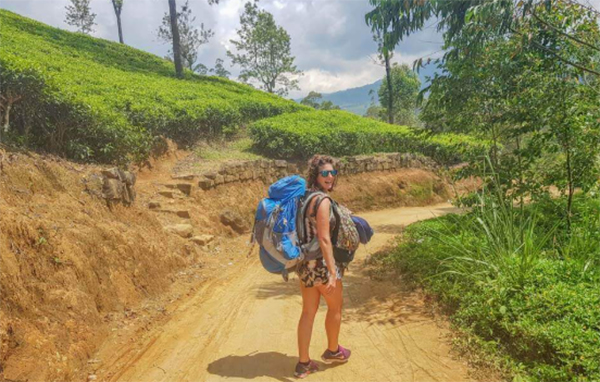
The Backpacking Version
The backpacker’s Sri Lanka list is the core list with three modifications:
- One bag, 35–40 liters, plus a daypack — the carry-on logic from the two-week section, applied as doctrine. Laundry makes it possible; the guesthouse network makes it easy.
- Quick-dry everything — the cotton-versus-synthetic debate (see the real-talk section) matters most when you’re hand-washing in guesthouse sinks; synthetics dry in hours, cotton in days.
- The backpacker extras: a padlock (guesthouse lockers), a sleeping liner (for the occasional basic room), a headlamp (power cuts), earplugs (roosters are universal), and a clothesline — the ten-gram item that unlocks the wash-as-you-go system.
What backpackers skip: the smart-casual outfit (a clean shirt covers it), the second pair of shoes (sandals + trainers is already the minimum), and anything they can buy on arrival — which is most of the list, cheaply, in Colombo or Kandy.
What Not to Pack
The other half of a packing list:
- Jeans — the single most-packed, least-worn item in tropical travel. Heavy, slow-drying, hot.
- A towel — virtually every guesthouse provides them; a quick-dry travel towel only if your itinerary includes hostels without.
- An umbrella — hotels lend them; a rain shell beats them in monsoon rain.
- A poncho — the same verdict, plus the local experience of watching ponchos fail in real monsoon downpours.
- A first-aid pharmacy — the full home medicine cabinet travels badly; the small kit from the list above covers Sri Lanka, where pharmacies are common and good.
- Books for the flight — one, max; every guesthouse runs a book exchange.
- Hair dryers and grooming appliances — provided at mid-range and above, unnecessary below.
- More than 5 days of clothing — the laundry truth again, because it’s the mistake that defines overpacked trips.
- Anything you’d be upset to lose — jewelry beyond the sentimental minimum; hotel safes exist, but packing light on valuables is the better system.
What to Buy in Sri Lanka Instead
The list of things that are cheaper and better bought there:
- The sarong — the obvious one; every market sells beautiful ones for a few dollars, and buying yours there beats packing one
- Mosquito coils and plug-in repellent devices — a fraction of Western prices, in every shop
- Laundry service — not an item, but the system that shrinks your packing list
- King coconuts and Ceylon tea — the daily costs of tropical life, priced in cents
- Sarong-style lounge clothes, cheap flip-flops, and beachwear — the tourist-town markets are stocked
- Sim cards and data — airport counters, cheap, fast, setup in minutes
- Ayurvedic balms and herbal remedies — genuinely good, genuinely local, and a lovely thing to bring home
What you should NOT plan to buy there: the sunscreen (thin choice, high price), the repellent (bring the DEET brand you trust), proper walking shoes, and any prescription medication.
The Real-Talk Notes
The things travelers tell each other in forums, assembled — because they’re true and no checklist captures them:
- The laundry thing is real. Pack five days of clothes for any length of trip. Everyone who packs two weeks’ worth regrets it by day four.
- The fleece changes everything. The single most common “I wish I’d known” from the hill country: nights are cold, rooms are unheated, and the person with the jacket wins.
- The cotton-versus-synthetic debate has two right answers. Cotton and linen are cooler and more comfortable in the humid coasts; synthetics dry fast and win for hand-washing and monsoon legs. The local answer: a mix, weighted by your itinerary.
- Buy the sarong there. Every list says pack one; the better advice is arrive without one and choose yours from a market stall on day two. It’s the best $5 of the trip.
- One pair of good sandals is the footwear of the country. Everything else is specialization.
- The temples will reorganize your wardrobe. If your packing list is all shorts and tanks, you’ll buy a sarong anyway — pack one long outfit and save yourself the market trip.
- Motion-sickness tablets earn their space on the Kandy–Ella line. The most beautiful train in the world is also the windiest; medicate before you board.
- Power cuts happen. Not the crisis-era schedule — just the rural reality. A power bank and a headlamp are the difference between an inconvenience and an early night.
The Printable Checklist
The whole list, condensed for screenshot or save — a downloadable one-page PDF version is worth adding at publish time, since it’s exactly what the “packing list PDF” searcher wants:
Clothing: 4–5 tops · 2–3 bottoms (1+ long) · shorts · 1–2 swimwear · fleece/down jacket · rain shell · sarong · 5–7 underwear/socks · sleepwear · 1 smart-casual · scarf/shawl
Footwear: sturdy sandals · trainers/trail runners · reef shoes (optional)
Health: DEET repellent · reef-safe SPF 50+ · first-aid kit · rehydration salts · motion-sickness tablets · prescriptions (original packaging) · sanitizer
Electronics: universal adapter (D/G/M) · power bank · dry bag · headlamp · camera + binoculars (safari)
Documents: passport (6+ months) · approved ETA · insurance · card plan + ATM strategy
Extras: sun hat · sunglasses · reusable bottle · electrolytes · eSIM plan · daypack · padlock · earplugs
Two climates, one dress code, and the discipline to leave the jeans at home: light quick-dry clothes, the warm layer, the rain shell, the sarong, the repellent, and the sunscreen — everything else is negotiable and most of it is buyable there for less. Pack five days of clothes for a two-week trip, put the fleece where you can’t forget it, and save the luggage space for what you’ll bring home.
For what happens after the bag is packed — the routes, the seasons, and the costs — our complete Sri Lanka travel guide is the companion to this list.
FAQ
What should I pack for Sri Lanka in February?
The full tropical kit for the coasts and Cultural Triangle (peak dry season, peak sun — sunscreen daily), plus the cold-weather essentials for the hill country: February is the coldest month at altitude, with Nuwara Eliya nights near 8–10°C. Fleece, long trousers, warm sleepwear. Whale season is on, so swimwear and seasickness tablets for the Mirissa boats.
What should I pack for Sri Lanka in September?
It depends on the coast. On the classic south-and-west route, pack for the tail of the southwest monsoon: quick-dry clothes, a proper rain shell, a dry bag, and sandals that can get wet. On the east coast, pack for peak season — September is Arugam Bay and Trincomalee’s best month, calm seas and full sun.
How much should I pack for two weeks in Sri Lanka?
Four to five days of clothing, washed twice. Laundry service is cheap and available at virtually every guesthouse, so the two-week quantity list is 4–5 tops, 2–3 bottoms, 5–7 sets of underwear and socks, one warm layer, one rain shell — a carry-on-sized load.
Do you need warm clothes for Sri Lanka?
Yes, if the hill country is on your itinerary. Nuwara Eliya and Horton Plains sit at high elevation with unheated rooms and December–February nights of 8–12°C. One fleece or packable down jacket is the most-forgotten essential in Sri Lankan packing.
Can you buy sunscreen and repellent in Sri Lanka?
You can, but you shouldn’t plan on it. Sunscreen is available at pharmacies with a limited range at roughly double Western prices ($8–15), and repellent quality varies. Bring a full-size reef-safe SPF 50+ bottle and the DEET repellent you trust; buy mosquito coils and room devices locally.
What should women pack for Sri Lanka?
The core list plus: knee-length or longer dresses and skirts (temple-appropriate and cooler), a shawl or scarf for shoulder coverage, menstrual products to carry (availability is inconsistent outside cities), a modest swimsuit option or cover-up, and one dressier outfit for Galle Fort’s restaurants. See our solo female travel guide for the safety strategies that pair with the clothing choices.
What should you NOT pack for Sri Lanka?
Jeans (hot, heavy, slow-drying), towels (guesthouses provide them), a poncho (real monsoon rain defeats them), umbrellas (hotels lend them), more than five days of clothing (laundry is cheap everywhere), and hair dryers (provided or unnecessary).
Can you do Sri Lanka with carry-on only?
Yes, easily. The two-week quantity list fits a 35–40 liter backpack plus a daypack — laundry makes it possible and the guesthouse network makes it comfortable. The only carry-on constraint is liquids: buy your sunscreen locally (at a price) or make room in the toiletry bag.
. EXTERNAL SOURCE RECOMMENDATIONS
Claims in the article that should carry (or be verified against) authoritative outbound links at publish time:
- ETA requirements (passport validity, 6 months, free 40-country scheme): Sri Lanka ETA portal — https://eta.gov.lk
- Plug types and voltage (Type D/G/M, 230V): a standards reference (e.g., the IEC World Plugs database — https://www.iec.ch/world-plugs) or a well-maintained plug-guide page.
- Dengue prevention guidance (daytime biting, repellent): CDC Travelers’ Health — https://wwwnc.cdc.gov/travel/destinations/traveler/none/Sri-lanka
- Temple dress norms and cultural etiquette: Sri Lanka Tourism — https://www.srilanka.travel (official visitor guidance)
- Sunscreen and repellent local pricing ($8–15, limited range): corroborate at publication against current pharmacy pricing in traveler reports — frame as a band, and verify before printing.
- Prescription medication rules (original packaging, restricted drugs): Sri Lanka Customs — http://www.customs.gov.lk and the State Department’s Sri Lanka page (local laws section) — https://travel.state.gov/en/international-travel/travel-advisories/sri-lanka.html
- Climate and seasonal bands (monsoon windows, hill-country temperatures): Sri Lanka Department of Meteorology — http://www.meteo.gov.lk; the temperature bands should be cross-checked against the best-time article to keep the site internally consistent.
- Water safety (tap water not potable; filtered refill availability): CDC guidance (above).
Do not link shopping guides or affiliate roundups for these claims — official and standards sources only.
Related Articles
- Travel Checklist: Essential Packing and Trip Preparation Guide
- Sri Lanka Packing List: What to Pack for Any Trip (2026)
- Is Sri Lanka Safe to Visit? A Straight Answer for 2026
- Getting Around Sri Lanka: Transport Guide (Trains, Drivers, Apps)
- Travel Checklist: Essential Packing and Trip Preparation Guide
- Sri Lanka Cultural Triangle Itinerary: 3, 4 or 5 Days (2026)
- Sri Lanka Honeymoon Itinerary: 5, 7 or 10 Days (2026 Guide)
- what to see in sri lanka in 7 days
- How much money to take to Sri Lanka for 2 weeks: Sri Lanka Travel Budget (2026 Costs)
- Best Time to Visit Sri Lanka: A Month-by-Month Guide for Every Trip
- Sri Lanka Visa for US Citizens: The Complete 2026 ETA Guide
- how to be a travel guide in sri lanka : Itineraries, Costs, Visas & Tips
Editor – Jayamanna