
Yes, US citizens need a visa for Sri Lanka — but it’s one of the easiest in Asia. Americans don’t apply for a traditional visa at an embassy. Instead, you fill out a ten-minute online form called an Electronic Travel Authorization (ETA), and since 25 May 2026 the 30-day tourist ETA is free of charge for US passport holders. The catch that trips people up: you must apply and be approved before you fly, and the old on-arrival ETA option at Colombo airport is gone.
This guide walks through the whole process the way a friend who’s done it would explain it: what the ETA actually is, exactly what you get, the application step by step, how long approval takes, what it costs (and what still costs money), how to extend your stay, and the handful of mistakes that cause rejections and double payments.
Sri Lanka visa for US citizens
For the skimmers, here’s the whole picture in one block:
- Do you need a visa? Every foreign visitor — US citizens included — must have an approved ETA before boarding their flight to Sri Lanka.
- What does it cost? Since 25 May 2026, the 30-day tourist ETA is free for nationals of 40 countries, including the United States. (Before that date it was US$50.)
- How long can you stay? 30 days from your arrival date, with double entry allowed within that window.
- How do you apply? Online at the official government portal, gov.lk. It takes about ten minutes.
- How long does approval take? Usually minutes to 24 hours; officially allow 24–72 hours, and a small share of applications get referred for review and take longer.
- Can you extend? Yes, in stages, up to 270 days total from your arrival date.
- When should you apply? At least a week or two before your flight — earlier is better.
One honest caveat before we go further: the free-fee scheme took effect by gazette notification on 25 May 2026 and, as of this writing, no end date has been published. Fee waivers like this can be changed or withdrawn by future government decisions, so confirm the fee shows zero when you apply, and check the official site before relying on this for a trip months out.
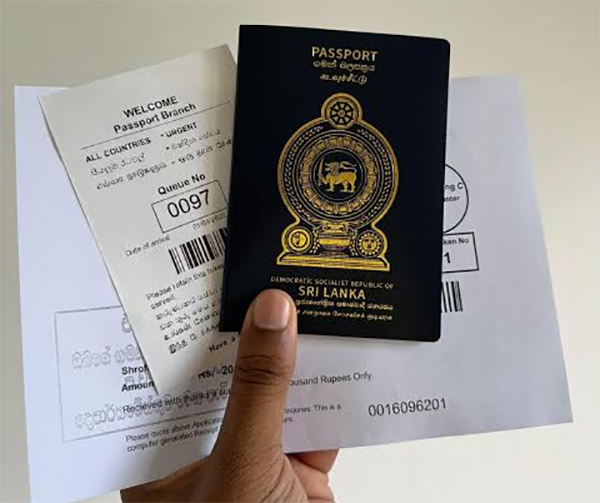
Do US Citizens Need a Visa for Sri Lanka?
Yes — there’s no visa-free or visa-on-arrival arrangement for ordinary US passport holders. What Americans use is not a sticker visa but the Electronic Travel Authorization, Sri Lanka’s online pre-clearance system run by the Department of Immigration and Emigration (DI&E).
The terminology confuses people, so let’s clean it up:
- “ETA” and “visa” refer to the same permission in Sri Lanka’s tourist context. When your ETA is approved, what you actually receive on arrival is a 30-day short-visit visa stamped or recorded at the border. Travelers, airlines, and even some official pages use the two words interchangeably.
- “Visa on arrival” is no longer a plan you can rely on. Historically, travelers could sort out an ETA at a counter inside Bandaranaike International Airport after landing. Current official guidance from multiple governments is explicit: apply online before you travel, because you can no longer obtain an ETA on arrival at Colombo. Airlines now typically check for your ETA approval before letting you board.
- An approved ETA is not a guaranteed entry. It’s pre-clearance. The immigration officer at the port of entry makes the final call, which is why you should carry the same supporting documents (more on this below).
Diplomatic and official passport holders from certain countries, including the US, follow different rules for official visits — but if you’re reading this for a holiday, that’s not you.
What Changed in May 2026: The Free ETA Scheme
For years, the standard tourist ETA cost US$50 for Americans. On 25 May 2026, following a cabinet decision and a gazette notification, Sri Lanka removed the fee entirely for nationals of 40 countries — and the United States is on the list, alongside the UK, Canada, Australia, most of the EU, India, China, Japan, and others.
The mechanics of the scheme, straight from the official notices:
- The free ETA covers tourist purposes, is valid for 30 days, and is double entry.
- It applies to ordinary, diplomatic, official, and service passports from the 40 listed countries.
- The application is still mandatory — the scheme removes the fee, not the paperwork. There is no automatic or implied authorization.
- Travelers from the 40 countries who want to stay beyond 30 days pay the applicable extension fee when they extend.
- Fees paid before 25 May 2026 were not refunded.
Three neighboring countries have their own arrangements: Maldives nationals get a free 90-day ETA under a bilateral agreement, and Seychelles and Singapore nationals also process free of charge.
Why does this matter for planning? Beyond the obvious US$50 saved, it removes the last financial friction from booking a spontaneous trip. It’s also worth knowing that the scheme is, by some accounts, a tourism-recovery measure announced without a fixed end date — one more reason to apply reasonably close to your travel dates rather than assuming today’s rules hold forever.
What the Tourist ETA Allows
30 Days, Double Entry — Explained
The tourist ETA grants 30 days of stay, counted from your arrival date in Sri Lanka — not from the date your ETA is approved or issued. Two details matter:
- Double entry means you can enter Sri Lanka twice within the 30-day window. This is genuinely useful in a region where travelers pair Sri Lanka with the Maldives, India, or a Southeast Asia leg. Fly into Colombo, travel Sri Lanka for two weeks, hop to the Maldives for five days, and come back for your remaining days — one ETA covers both entries.
- The second entry only gets the balance of your 30 days. You don’t get a fresh 30 days on re-entry. If you used 20 days before your Maldives hop, you return with 10 days left.
Your Three-Month Entry Window
An approved ETA lets you enter Sri Lanka within three months of its issue date. In other words, don’t apply six months before your trip expecting the authorization to sit ready — apply within the window where your travel dates are firm. The 30-day clock starts when you actually arrive.
Sri Lanka Visa Requirements for US Citizens
The good news: the requirements are minimal. Here’s the full checklist.
For the application itself:
- A valid US passport — valid for at least six months from your arrival date, with at least one blank page
- Your travel details — an estimated arrival date is acceptable; you do not need confirmed tickets at application time
- An email address — your approval notice is sent there
- A credit or debit card (Visa, Mastercard, or Amex) — needed for the payment step even when the total is zero, to validate the transaction
- For the form: your name exactly as printed on your passport, passport number, nationality, date of birth, and contact details
To have ready for entry (the ETA terms require you to be able to show these):
- A round-trip or onward ticket if you’re arriving by air
- Evidence of sufficient funds to cover your stay
- The same passport you used to apply — the ETA is tied to it
You do not need: passport photos or scans (the ETA system requires no document uploads for standard tourist applications), hotel bookings, travel insurance (not required by immigration, though it’s unwise to travel without it), or an invitation letter.
How to Apply for the Sri Lanka ETA: Step by Step
Before You Start
Have your passport open beside you. The single most common cause of problems is a mismatch between the application and the passport — the system warns that incorrect passport details, nationality, or date of birth can lead to rejection or to being charged for the visa again on arrival.
The Application
- Go to the official portal: gov.lk. Check the address ends in .gov.lk before you type anything. This matters — a small industry of lookalike sites charges US$50 or more for exactly what the government now provides free, and some are outright scams. The official site is run by the Department of Immigration and Emigration.
- Select the Tourist ETA (there are also Business and Transit options with different rules).
- Fill in your details exactly as they appear on your passport’s biographic page — full name, passport number, nationality, date of birth, passport expiry. Triple-check these three fields; they’re the ones that cause re-payment problems.
- Enter your travel details — estimated arrival date, address in Sri Lanka (your first hotel is fine), and flight information. Approximate dates are acceptable.
- Confirm the fee is zero. For US citizens under the current scheme, the payment step should show no charge. If a site is asking you for around US$50, you are not on the official portal.
- Submit and save your reference number. You’ll get an acknowledgment immediately.
- Watch your email for the approval notice. Most approvals arrive within minutes to a day. Download and save the approval notice, and bring a printed or digital copy with you — the advice from the official site is to carry it, even though your authorization is electronic and tied to your passport.
You can also apply through third parties — travel agents, airlines, or a friend — using the same official system on your behalf. There’s no advantage for a straightforward tourist application, and the official guidance specifically warns to make payments only through arrangements on the official website to avoid repaying at the port of entry.
How Long Does ETA Approval Take?
Here’s the realistic 2026 picture:
- Most applications are approved within minutes to a few hours. A large share of travelers report near-instant approval emails.
- Official guidance is to allow 24–72 hours. The system’s own sample notices promise a response within 48 hours.
- Referred applications take longer. A small percentage of applications are flagged for additional checks — dual nationality, travel history questions, data mismatches. A referral notice means the system has sent your case for review, not that you’ve been denied. These can take from a few days up to a week or more in rare cases.
- System outages happen. The portal has had occasional downtime, and during high season (December–April) volume can slow things marginally.
The practical rule: apply at least a week or two before your flight, and ideally once your dates are firm within the three-month entry window. Applying the night before a departure is the one genuinely risky move in an otherwise forgiving process — if your application gets referred, you may not have it resolved before boarding. If you’re already inside 72 hours to departure and haven’t applied, do it now and check the application status page, which the system provides for exactly this purpose.
What It Costs: Free for Americans (and What Isn’t)
| Item | Cost for US citizens |
| 30-day tourist ETA (since 25 May 2026) | Free |
| 30-day tourist ETA (before 25 May 2026) | US$50 — historical, non-refundable |
| Children under 12 (any nationality) | Free for 30 days |
| Transit ETA (up to 2 days, with proof of onward travel) | Free |
| Visa extension beyond 30 days | Fee applies, varies by nationality (see below) |
| For comparison: paid-nationality tourist ETA | US$50 online / US$60 on arrival |
Two footnotes worth knowing:
- The child exemption is broad: children of any nationality under 12 get a free 30-day ETA, so families only complete applications for travelers 12 and older.
- The transit provision is genuinely useful for Americans routing through Colombo to the Maldives or India: a transit ETA of up to two days is free with documentary proof of your onward journey.
Seven Mistakes That Cause Rejections and Double Payments
- Using a third-party site. Search results for “Sri Lanka visa” are full of official-looking sites charging US$50-plus for a free service. The only official portal is gov.lk. Verify the domain before entering payment details.
- Name, passport number, or date-of-birth mismatches. The system explicitly warns that inconsistencies between your application and your passport can cause rejection — or being charged for the visa again on arrival. Enter your details exactly as printed, including middle names as they appear.
- Applying with one passport, traveling on another. If you hold two passports, apply with the exact passport you’ll present at Colombo immigration. Using a different travel document than the one in the application means paying again on arrival.
- Waiting until the last minute. Referrals and outages are rare but real. A two-week buffer makes them non-events.
- Assuming visa on arrival still exists. Airlines may deny boarding without an approved ETA, and the on-arrival counter at BIA is no longer a fallback.
- Losing your approval notice. Your authorization is electronic, but officials advise carrying a copy of the approval notice. Save the PDF to your phone and print one for good measure.
- Confusing entry rules with stay rules. Your ETA lets you enter within three months of issue; your 30-day stay starts when you arrive. Booking a trip that assumes the issue date starts the clock is how people overstay accidentally.
Extending Your Stay: The 270-Day Ladder
Plenty of travelers fall for Sri Lanka hard and want more time. The system is more generous than most people realize — but it works in stages, not one big renewal.
How the staged extensions work. A short-visit visa can be extended, in consecutive instances, to a maximum of 270 days from your date of arrival, granted as: 30 days on entry, then 60 days at the first extension, then 90 days at the second, and 90 days at the third. You apply through the online e-Visa extension portal after you arrive in Sri Lanka, or in person at the Department of Immigration and Emigration head office in Battaramulla (a Colombo suburb) — or through an authorized agent. Apply before your current permission expires; the standard guidance is to file at least several days ahead of expiry.
What it costs. Extension fees apply and vary by nationality — you pay when you apply, through the e-services system. For US citizens, the official fee schedule includes a quirk worth knowing: certain extension windows for US nationals are listed as free under reciprocity arrangements (the published schedule shows US extensions in the 90-to-180-day range at no charge). Extension fee schedules are exactly the kind of detail that changes without fanfare, so verify the current fee on the official extension portal before budgeting — treat this paragraph as a reason to check, not as a quote.
Two honest warnings about long stays. First, the 270-day ladder is the theoretical maximum, and later extensions are granted, not automatic — the department can ask for reasons. Second, a tourist ETA does not permit employment of any kind, paid or unpaid, or running a business. Remote work for a foreign employer exists in a gray zone that Sri Lanka has not cleanly regulated; if you’re planning a work-cation measured in months, read the rules carefully and don’t rely on blog summaries — including this one.
Arriving at Colombo Airport: What to Expect
Bandaranaike International Airport (BIA) is Sri Lanka’s main gateway, about an hour north of Colombo. With an approved ETA, arrival is usually smooth:
- At immigration, present the passport you applied with. The officer sees your electronic authorization in the system and grants your 30-day short-visit visa.
- Have ready in your bag, not your checked luggage: your onward or return ticket and evidence of sufficient funds. The ETA terms make these checkable, and while most travelers are never asked, the ones who are asked are the ones without them.
- Carry your ETA approval notice — printed or on your phone. It’s your proof if the system has a hiccup.
- Your passport gets a stamp or electronic record with your permitted stay date. Check it before you walk away from the counter; overstaying carries fines, and “I didn’t check” is not a defense.
- After baggage claim, the arrival hall has SIM counters, ATMs, and the taxi and pickup zones. Our Sri Lanka travel guide covers what to do in the first 24 hours, including getting into the city.
If anything is wrong with your authorization at the counter, stay calm and polite — counter staff deal with third-party-site disasters daily, and most issues (like a mismatched passport) resolve faster with cooperation than with volume.
Special Situations
Families and Children
Every traveler needs their own ETA — but children under 12 of any nationality receive the 30-day ETA free. Parents complete applications on behalf of kids using the same portal. Bring the children’s passports with the same six-month validity rule in mind.
Dual Citizens
If you’re a US citizen who also holds Sri Lankan citizenship, different rules apply — Sri Lanka requires its citizens to enter on a Sri Lankan passport. Dual citizens and those with claims to Sri Lankan citizenship should sort their status with the DI&E or a Sri Lankan mission before booking, because the ETA route may simply not apply to you.
Business Visits
The business ETA also runs 30 days with double entry, but business ETAs are obtained through Sri Lanka Overseas Missions (embassies and consulates) or the DI&E head office rather than purely through the tourist portal, and require documentary proof of your business purpose. If you’re attending a conference or meeting clients, get the right category — working on a tourist ETA is a violation.
Transit Through Colombo
A transit ETA of up to two days is free with proof of your onward journey. If your layover is short and you stay airside, you may not need anything at all — but check your airline’s rules and whether you’ll need to collect bags and re-check them, which pushes you through immigration.
Remote Work and Long Stays
Sri Lanka has no formal digital-nomad visa as of this writing. Long-stay travelers use the extension ladder described above, keep their tourist status clean, and keep work for foreign employers discreet — but “discreet” is not “authorized,” and the rules could formalize or tighten at any time. Watch the DI&E announcements if this is your plan, and consider talking to the Sri Lankan embassy in Washington before committing to a months-long stay.
What If Your ETA Is Rejected or Referred?
Rejections are rare for straightforward US tourist applications. When they happen, they’re usually data mismatches or security-screening referrals. Here’s the process:
- A referral notice means your application has been sent for additional review — it is not a denial. Follow the instructions in the notice and contact the nearest Sri Lanka Overseas Mission (for Americans, the Sri Lankan Embassy in Washington, DC, or the consulates) for assistance.
- A rejection triggers a referral notification through the system, and the guidance is the same: contact the nearest Sri Lankan mission. There is no appeal through the website itself.
- The fee is non-refundable — one more reason the free scheme is a genuine gift, and one more reason to get your details right the first time.
- If you’re rejected close to travel dates, call your airline’s requirements desk and the Sri Lankan mission in the same day. Do not fly without resolved authorization — airlines deny boarding, and immigration can refuse entry even with a boarding pass.
Final Thoughts
The Sri Lanka visa for US citizens has gone from a US$50 chore to a free, ten-minute online form — with the one non-negotiable being that you do it before you fly. Apply on the official portal (eta.gov.lk, and nothing that doesn’t end in .gov.lk), match your details to your passport exactly, give yourself a two-week buffer, and keep your approval notice. Beyond thirty days, the extension ladder is there, and it goes further than most people expect.
Visa sorted, the fun decisions are next: how many days to give the island, whether to ride the Kandy–Ella train, and which coast matches your month. Our complete Sri Lanka travel guide picks up exactly where this one leaves off.
FAQ
Do US citizens need a visa for Sri Lanka?
Yes. Every US passport holder needs an approved Electronic Travel Authorization (ETA) before travel. It’s applied for online at the official government portal, eta.gov.lk, and airlines typically verify it before boarding. There is no longer a reliable on-arrival option at Colombo airport.
Is the Sri Lanka visa free for US citizens?
Yes, since 25 May 2026, the 30-day tourist ETA is free of charge for US citizens under a 40-country fee-waiver scheme. The application is still mandatory — the waiver removes the fee, not the paperwork. The scheme has no published end date, so confirm the fee shows zero when you apply.
How long does the Sri Lanka ETA take to approve?
Most approvals arrive within minutes to a few hours; official guidance is to allow 24–72 hours. A small share of applications are referred for extra review and can take several days. Apply at least a week or two before your flight.
How long can US citizens stay in Sri Lanka?
The tourist ETA grants 30 days from your arrival date, with double entry allowed within that window. Stays can be extended in stages — 60 days at the first extension, then 90 days twice more — up to a maximum of 270 days from arrival.
Can I enter Sri Lanka twice on one ETA?
Yes. The tourist ETA is double entry within the 30-day validity. The second entry grants only the balance of your 30 days, not a fresh period — useful for pairing Sri Lanka with the Maldives or India.
Do children need a visa for Sri Lanka?
Children of any nationality under 12 receive the 30-day tourist ETA free of charge. Travelers 12 and older apply normally — also free for US citizens under the current scheme.
Can I work in Sri Lanka on a tourist ETA?
No. The tourist ETA prohibits employment of any kind, paid or unpaid, and running a business. Remote work for a foreign employer sits in a regulatory gray area with no formal digital-nomad visa; long-stay remote workers should verify current rules with Sri Lankan authorities before committing.
What if my Sri Lanka ETA application is rejected?
Rejections are rare for straightforward US tourist applications. If your application is rejected or referred for review, contact the nearest Sri Lankan Overseas Mission — for Americans, the Embassy of Sri Lanka in Washington, DC. Fees are non-refundable, so enter your passport details exactly as printed.
Related Articles
- Travel Checklist: Essential Packing and Trip Preparation Guide
- Sri Lanka Packing List: What to Pack for Any Trip (2026)
- Is Sri Lanka Safe to Visit? A Straight Answer for 2026
- Getting Around Sri Lanka: Transport Guide (Trains, Drivers, Apps)
- Travel Checklist: Essential Packing and Trip Preparation Guide
- Sri Lanka Cultural Triangle Itinerary: 3, 4 or 5 Days (2026)
- Sri Lanka Honeymoon Itinerary: 5, 7 or 10 Days (2026 Guide)
- what to see in sri lanka in 7 days
- How much money to take to Sri Lanka for 2 weeks: Sri Lanka Travel Budget (2026 Costs)
- Best Time to Visit Sri Lanka: A Month-by-Month Guide for Every Trip
- Sri Lanka Visa for US Citizens: The Complete 2026 ETA Guide
- how to be a travel guide in sri lanka : Itineraries, Costs, Visas & Tips
Editor – Jayamanna