How Much Money Do I Need for Sri Lanka? A Realistic Travel Budget
Planning a trip and wondering how much money you actually need for Sri Lanka? Fair question — and the honest answer is there’s no single number that works for everyone.
A backpacker staying in simple guesthouses, eating local food and hopping trains is going to spend very differently from someone in boutique hotels using private drivers and booking safaris left and right. Both are “traveling Sri Lanka.” The budgets don’t look remotely alike.
For most people, the easiest way to plan is to think in terms of a daily budget, then multiply it by however many days you’re actually spending on the ground. As a practical starting point, current travel-budget guides tend to put budget travel somewhere around US$30–50 per person per day, with a comfortable or mid-range trip landing closer to US$60–120 per person per day. Go higher-end and you can easily blow past that — luxury hotels, private transport, and premium experiences add up fast.
These are planning ranges, not fixed price tags. Your actual spending will shift quite a bit depending on where you stay, when you go, your route, how you get around, and how many paid attractions you end up doing.
So if you’re genuinely asking “how much money do I need for Sri Lanka,” this guide will help you land on a realistic figure for your trip specifically.
Quick answer: Budget travelers should plan around US$30–50 per person per day; mid-range travelers, roughly US$60–120. Luxury travel can easily top US$200 a day. Keep international flights budgeted separately — they’re too variable to fold in.
How Much Money Do You Actually Need?
The simplest starting point is picking the travel style that matches how you actually like to travel.
| Travel style | Approximate daily budget | Typical travel style |
|---|---|---|
| Budget | US$30–50 | Guesthouses, local food, buses and trains |
| Mid-range | US$60–120 | Comfortable hotels, restaurants, mixed transport |
| Comfortable | US$120–200+ | Better hotels, private transfers, more activities |
| Luxury | US$200–400+ | Luxury resorts, private transport, premium experiences |
Treat these as planning ranges, not an official Sri Lankan price list — accommodation, transport and activities swing a fair bit by destination and season.
A few days of public transport and mostly local food will keep your costs genuinely low. Add private drivers, luxury hotels, several safaris and high-end dining, though, and that budget climbs fast. So the real question isn’t “is Sri Lanka cheap?” It’s “what kind of Sri Lanka trip do I actually want?” That answer is what actually determines your number.
What Does the Daily Budget Actually Cover?
Before comparing figures across guides, check what’s actually baked into them.
A useful daily budget typically includes accommodation, breakfast and other meals, drinks and snacks, local transport (trains, buses, tuk-tuks, the occasional taxi), entrance fees, activities, small purchases, tips, and general miscellaneous spending.
It’s usually smarter to calculate international flights separately — airfare depends so heavily on your departure city and dates that folding it in just muddies the picture. Travel insurance, visas or entry costs should also sit outside the daily figure when they apply.
This, honestly, is why two websites can publish wildly different “cost of Sri Lanka” numbers and both be reasonable. One’s including accommodation and activities. Another is only talking about daily spending money. Always check what’s inside the number before comparing.
How Much Does 7 Days Cost?
For a one-week trip, your on-the-ground budget could look something like this:
| Travel style | Approx. daily budget | Approx. 7-day budget |
|---|---|---|
| Budget | US$30–50 | US$210–350 |
| Mid-range | US$60–120 | US$420–840 |
| Comfortable | US$120–200 | US$840–1,400 |
| Luxury | US$200–400+ | US$1,400–2,800+ |
Treat these as useful starting points, not fixed package prices. A budget traveler might stay in hostels, guesthouses or simple rooms, eat locally, and lean on public transport. A mid-range traveler tends toward comfortable private rooms, a mix of trains, tuk-tuks, taxis and the occasional private transfer, plus a handful of paid attractions. Luxury travelers can spend serious money on accommodation alone.
What can push a 7-day budget higher? Short trips can actually end up pricier per day than you’d expect, simply because there’s less time to spread certain costs across the trip. Things like a private airport transfer, several long-distance private-car legs, a safari, multiple pricey entrance tickets, premium accommodation, domestic flights, or private guides can make a compressed week considerably more expensive than a slower two-week trip.
How Much Does 10 Days Cost?
Ten days is one of the more useful trip lengths for a first visit, since it gives you enough runway to combine several different parts of the country — something like Sigiriya → Kandy → Nuwara Eliya → Ella → Yala → South Coast.
A rough planning budget:
| Travel style | Approx. daily budget | Approx. 10-day budget |
|---|---|---|
| Budget | US$30–50 | US$300–500 |
| Mid-range | US$60–120 | US$600–1,200 |
| Comfortable | US$120–200 | US$1,200–2,000 |
| Luxury | US$200–400+ | US$2,000–4,000+ |
Your actual total can land above or below this. Someone spending several nights in inexpensive guesthouses and sticking mostly to trains can keep things tight. Someone else following the exact same route but adding a private driver, boutique hotels and a safari will spend a lot more.
If you’re specifically planning ten days, budget the major expenses first: accommodation, long-distance transport, major entrance fees, safari or wildlife experiences, food, local transport, and miscellaneous spending. Once you’ve laid those out, you can see whether the total actually fits what you’ve got to spend.
How Much Does 14 Days Cost?
Two weeks gives you more room to breathe, and it can genuinely make your daily budget easier to manage.
| Travel style | Approx. daily budget | Approx. 14-day budget |
|---|---|---|
| Budget | US$30–50 | US$420–700 |
| Mid-range | US$60–120 | US$840–1,680 |
| Comfortable | US$120–200 | US$1,680–2,800 |
| Luxury | US$200–400+ | US$2,800–5,600+ |
A two-week traveler also has more room to lean on slower, cheaper transport. Instead of hiring a private car for every leg, you could mix trains, buses, tuk-tuks, taxis and the occasional private transfer — a hybrid approach that keeps you flexible without paying for private transport the entire trip.
How Much Does Accommodation Cost?
Accommodation is often the single biggest chunk of a Sri Lanka travel budget. You’ve got everything from basic hostels and guesthouses to boutique hotels, beach resorts and full-on luxury properties.
What you pay depends on location, season, room type, hotel category, how many people are sharing, when you book, whether breakfast’s included, the facilities on offer, and whether you’re beachfront or central.
Budget accommodation: hostels, homestays, guesthouses, simple family-run hotels, basic private rooms — usually the easiest lever to pull if you want to cut costs.
Mid-range accommodation: comfortable guesthouses, boutique hotels, three- or four-star properties, smaller resorts — often the sweet spot if you want comfort without luxury-resort pricing.
Luxury accommodation: five-star hotels, beach resorts, heritage properties, luxury villas, private-pool stays, premium safari lodges.
Don’t assume every destination costs the same, either. A room in Colombo can run very differently from the same category of room in Ella, Galle, Yala, or a popular beach town.
How Much Does Food Cost?
Food is one area where your travel style really moves the needle. Eating mostly local food is genuinely cheap compared to international restaurants or high-end hotel dining.
Budget food: rice and curry, kottu, hoppers, string hoppers, roti, local snacks, street food, small local restaurants.
Mid-range food: a mix of local restaurants, cafés, tourist-oriented restaurants, hotel dining, and the occasional nicer meal.
Luxury food: resort restaurants, fine dining, premium cafés, international restaurants, private dining experiences.
Drinks add up too — coffee, bottled water, soft drinks, alcohol, cocktails. None of it looks expensive in the moment, but several purchases a day, every day, genuinely changes your total.
A more useful question than “how much does food cost in Sri Lanka” is simply “how much do I want to spend on food each day?” Set yourself a daily food allowance and adjust your restaurant picks around it.
How Much Does Transport Cost?
Transport is another big variable. Sri Lanka gives you plenty of ways to get around: train, public bus, tuk-tuk, taxi, ride-hailing where it’s available, private car, private driver, or tourist transfers.
Public transport is generally the play if you’re keeping costs low. Private transport earns its cost when you’re short on time, traveling with kids, carrying a lot of luggage, want genuine door-to-door transfers, are moving between several destinations, want more say over your stops, or are traveling as a group.
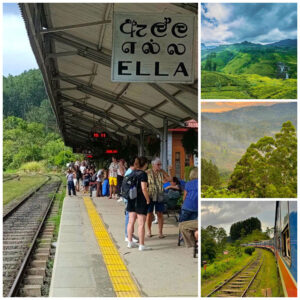
Trains are a genuinely useful way to see the island while keeping costs relatively controlled — and the famous hill-country stretch between Kandy and Ella is an experience in its own right. That said, trains can run considerably slower than a private vehicle on some routes, so factor time into the decision, not just the ticket price.
Buses work well for budget travelers and shorter local hops, though they’re not the most convenient choice with lots of luggage or a tightly scheduled itinerary.
Tuk-tuks are great for short journeys, especially around towns and tourist spots — just confirm the fare (or the booking/app price) before you get in.
Private drivers can meaningfully raise your transport budget, but they also save time and simplify a multi-stop trip. You don’t need one for the whole journey, though — a hybrid strategy (train for the scenic stretches, private car for the tricky transfers, tuk-tuk for local hops) often works better than committing fully to one option.
How Much Does a Private Driver Cost?
There’s no single standard rate here. The final price depends on vehicle type, number of passengers, route, number of days, distance, driver accommodation, fuel, parking, highway charges, airport transfers, whether the driver’s also a guide, and what’s actually included in the quote.
Current 2026 guides tend to slot private transport into the mid-range-to-higher-budget category, but quoted prices vary a lot between operators and itineraries. Before booking, ask directly: Does the price include fuel? Driver accommodation? Highway tolls? Parking? Is this a driver, or a driver-guide? These questions save you from unpleasant surprises later.
For a first trip, it’s also worth considering hiring a driver only for the legs where it actually adds the most value, rather than the whole route.
How Much Do Attractions and Activities Cost?
This is where a lot of Sri Lanka budgets go sideways. Accommodation and food might look cheap on paper, but major attractions and experiences can add up fast.
Think Sigiriya, ancient cities, temple visits, national parks, safaris, whale watching, guided tours, hiking, cultural experiences, cooking classes, adventure activities — some of these represent a surprisingly large chunk of a budget traveler’s daily spending.
That’s exactly why it’s worth building a separate activity budget before you go. Say your itinerary includes Sigiriya, a safari, several heritage sites, whale watching, and a guided experience — don’t just assume your food and accommodation numbers will absorb the rest. List the major paid activities out separately and add them up.
How Much Should You Budget for a Safari?
Wildlife experiences can meaningfully change the cost of your trip. Yala, Udawalawe, Minneriya and other parks can involve several separate costs depending on how you do it — park fees, jeep, driver, guide, transfers, food, accommodation.
The final price can end up quite different from the headline number advertised for “a safari.” If wildlife’s a big part of why you’re visiting, price the safari out before you lock in the rest of your accommodation.
How Much Spending Money Should You Actually Bring?
This is a slightly different question than “how much does a Sri Lanka trip cost.” Your spending money is what you need day-to-day once the big bookings are already handled.
If your hotels, airport transfer, major tours, some transport and flights are already paid for, your actual spending-money need can be a lot smaller. A practical spending-money budget usually covers meals, drinks, tuk-tuks, small taxi rides, snacks, entrance fees, tips, souvenirs, small purchases, and a cushion for the unexpected.
Cash still matters a lot in Sri Lanka, though larger hotels, restaurants and stores in tourist areas will generally take cards. The smart move isn’t carrying your entire trip budget in cash — go with a mix of cash, card, and ATM access, and keep some emergency funds separate from your everyday wallet.
Cash or Card: What Should You Actually Use?
Sri Lankan rupees (LKR) are the local currency, and having some cash on hand for everyday spending genuinely helps.
You’ll likely need cash for small restaurants, tuk-tuks, local shops, markets, small guesthouses, rural areas, tips, and smaller entrance or service payments. Cards work better at larger hotels, established restaurants, shopping centers, some tourist-facing businesses, and most online bookings.
Don’t assume every business takes cards just because you’re in a tourist area. A sensible approach: carry roughly what you expect to spend that day, and keep the rest stored securely.
Is Sri Lanka Expensive or Cheap?
Depends what you’re comparing it to and how you travel.
Sri Lanka can be genuinely affordable if you’re using public transport, staying in guesthouses, eating local, moving slowly, and choosing free or low-cost activities. It gets a lot more expensive once you add luxury hotels, private drivers, premium beach resorts, safaris, whale watching, multiple pricey entrance tickets, fine dining, or private guides.
So “Sri Lanka is cheap” is a bit too simplistic. A more accurate description: Sri Lanka gives travelers an unusually wide range of ways to control their own spending. You can build a genuinely affordable trip, or you can spend heavily on accommodation, transport, and experiences. Both are on the table.
How Much Does a Couple Need?
Couples have a real advantage: some costs are shared. One hotel room fits two people; a private car can often be split between two travelers. A mid-range couple’s combined budget won’t simply be double a solo budget.
That said, food, attraction tickets and most activities are typically charged per person. For a 10-day trip, a couple might work it out like this: accommodation × 10 nights, plus food × 2 people × 10 days, plus transport, plus activities × 2 people, plus an emergency/miscellaneous buffer. That approach beats just picking an arbitrary total out of thin air.
How Much Does a Family Need?
Family travel is trickier to estimate, since the kids’ ages matter a lot. A family budget might need to account for larger or family rooms, extra beds, child attraction fees, private transport, more comfortable transfers, food preferences, car-seat needs, and child-friendly activities.
Families often find private transport delivers more value, since moving around with luggage and kids gets complicated fast. On the flip side, families with older children might get by just fine on trains and buses. The right family budget really comes down to the actual ages and needs of the people traveling.
How Much Does a Backpacker Need?
Backpacking Sri Lanka on a genuinely controlled budget is completely doable — hostels, guesthouses, local food, trains, public buses, shared experiences, free attractions, fewer expensive tours.
The biggest mistake backpackers make is assuming everything will be cheap. Even someone tightly controlling accommodation and food can watch their budget jump fast once several major entrance fees, safaris and tours get added in. A solid backpacking strategy: save aggressively on everyday costs, and spend deliberately on the experiences that actually matter to you.
How to Cut Your Sri Lanka Travel Costs
You don’t need to make the trip uncomfortable to trim the budget.
Eat local regularly — this alone can meaningfully lower your daily food spend.
Mix your transport types — you don’t need a private car for every leg. Combine train, bus, tuk-tuk, taxi and private transfers where each one actually makes sense.
Stay outside the priciest areas — a hotel a few streets from a major tourist center can offer noticeably better value.
Slow down — switching hotels every night pushes up transport costs and makes the trip less efficient overall.
Be selective with paid attractions — you don’t have to pay for everything. Pick the experiences that genuinely matter to you.
Book strategically — compare accommodation and transport before locking in your route.
Skip unnecessary private transport — if a train’s practical and you actually want that experience, you may not need a private vehicle for that leg.
Build an activity budget — set money aside for safaris, entrance fees and tours instead of treating them as surprise expenses.
Costs Travelers Often Forget
People tend to remember hotels and flights, then forget the smaller stuff. Keep these on your radar: airport transfers, visa or entry costs where applicable, travel insurance, a SIM or eSIM, ATM fees, currency-exchange costs, tips, laundry, drinks, snacks, souvenirs, luggage storage, private transfers, parking, highway charges, last-minute taxis, extra hotel nights, and unexpected itinerary changes.
None of these makes a trip expensive on its own. The problem is they quietly pile up.
How to Build Your Own Budget
Rather than copying someone else’s total, run this quick calculation yourself.
Step 1 — Pick your daily travel style. For example: Budget at US$40/day, Mid-range at US$80/day, Comfortable at US$150/day.
Step 2 — Multiply by your number of days. For a 10-day trip: US$80 × 10 = US$800.
Step 3 — Add accommodation, if your daily figure doesn’t already include it. Always check what a published budget actually covers.
Step 4 — Add major activities. Sigiriya, a safari, whale watching, guided tours, any special experiences.
Step 5 — Add long-distance transport. Work out the major transfers separately.
Step 6 — Build in a buffer. Keep some money aside for the unexpected.
Step 7 — Add flights separately. International airfare varies too much to fold into a universal daily figure.
That gives you a much more realistic, personal number to work with.
A Simple Budget Formula
Total Sri Lanka budget = accommodation + food + transport + activities + miscellaneous expenses
Then add: international flights + insurance + entry/visa costs where applicable.
If you’re traveling with someone else, work out which expenses are shared and which are charged per person.
Example: A 10-Day Mid-Range Trip
Imagine two travelers planning a comfortable but not luxurious ten days — comfortable hotels, a mix of local and international food, some train travel, several tuk-tuk or taxi rides, one or two private transfers for longer routes, Sigiriya, a wildlife safari, and a few other attractions.
Rather than starting with one big number, they break it into categories:
| Expense | Planning approach |
|---|---|
| Accommodation | Cost per room × nights |
| Food | Daily food budget × people × days |
| Transport | Add major routes individually |
| Activities | List each paid activity |
| Local transport | Add a daily allowance |
| Shopping | Personal allowance |
| Emergency | Separate reserve |
| Flights | Calculate separately |
That level of detail gives you a lot more control over the final figure than a single guessed number ever will.
What’s the Best Budget for a First-Time Visitor?
For most first-timers, mid-range travel hits a solid balance: comfortable accommodation, local food mixed with restaurant meals, scenic train journeys, the occasional private transfer, major attractions, a safari, some beach time, and genuine flexibility.
You don’t need a luxury budget to have a great trip here — but an extremely tight budget will mean real compromises on accommodation, transport and activities. The right budget, honestly, is the one that lets you actually enjoy the trip without stressing over every small purchase.
Final Answer: How Much Money Do You Need?
If you want a simple starting point:
Budget travel: roughly US$30–50 per person per day Mid-range travel: roughly US$60–120 per person per day Comfortable travel: roughly US$120–200+ per person per day Luxury travel: roughly US$200–400+ per person per day
For a 10-day trip, that roughly translates to US$300–500 (budget), US$600–1,200 (mid-range), US$1,200–2,000+ (comfortable), or US$2,000–4,000+ (luxury).
These are planning ranges, not guaranteed prices. Your actual number depends on where you sleep, how you move around, what you eat, and which experiences you choose to pay for.
If keeping costs under control matters to you, focus on four decisions: where you sleep, how you get around, which attractions you actually pay for, and how often you reach for the premium option. Get those four right, and you can build a genuinely good Sri Lanka trip around almost any reasonable budget.
Frequently Asked Questions
How much money do I need for Sri Lanka? For planning purposes, budget travelers might allow US$30–50 per person per day; mid-range travelers, US$60–120. Comfortable and luxury travel can run considerably higher.
How much does 10 days in Sri Lanka cost? A rough range: US$300–500 for budget travel, US$600–1,200 for mid-range, and US$1,200–2,000+ for something more comfortable. Luxury travel can exceed US$2,000 for ten days.
How much money do I need per day in Sri Lanka? Depends on your style — plan around US$30–50 a day for budget travel, or roughly US$60–120 a day mid-range.
How much spending money should I take to Sri Lanka? Depends on what’s already paid for. If hotels, major tours and some transport are booked in advance, you mainly need cash for food, local transport, entrance fees, drinks, tips and personal spending.
Is Sri Lanka expensive to visit? It can be genuinely affordable with local food and public transport, but luxury accommodation, private drivers, safaris and major attractions can push the total up significantly.
How much does food cost in Sri Lanka? Heavily dependent on where you eat — local restaurants and street food run considerably cheaper than tourist-oriented spots, hotel restaurants, and fine dining.
Is it cheaper to travel by train or private driver? Trains are generally the lower-cost option; private drivers buy you convenience and flexibility. The right call depends on your time, route, group size, and personal preferences.
How much cash should I bring to Sri Lanka? Enough for everyday spending — small shops, local restaurants, tuk-tuks — but avoid carrying your whole travel budget in cash. A mix of cash, cards, and ATM access is the practical approach.