
If you’re heading to Sri Lanka, sort out your transport plan early. The island looks small on a map, but anyone who’s tried it will tell you the journeys take longer than you’d guess. Mountain roads twist, town centres clog up, and coastal routes wind along every bend of the shore. All of that eats into your day.
The good news? Once you know what’s on offer, getting around is pretty easy. Want a scenic train ride through tea country? Done. A cheap public bus between cities? Sure. A tuk-tuk through a crowded town, or a private car and driver for a bit of comfort? Also fine. There’s something for nearly every kind of traveller.
Here’s the full list: trains, government and private buses, tuk-tuks, taxis, ride-hailing apps like PickMe and Uber, and chauffeur-driven vehicles.
My advice for first-timers is to mix and match rather than lean on a single option. In this guide I’ll walk through how to get around Sri Lanka, which options suit tourists best, how the local apps work, what to look for when you hire a driver, and a few ways to make the whole trip less stressful.
What Is the Best Way to Get Around Sri Lanka?
Honestly, it depends on your travel style, your budget, where you’re going and how much time you’ve got. Here’s the short version:
- Trains: best for scenic rides, especially in the hill country.
- Public buses: best if you’re watching your money and want to see how locals get around.
- Private drivers: best for families, couples and groups covering several destinations.
- Tuk-tuks: best for short hops around towns and tourist areas.
- PickMe and Uber: handy for booking taxis and tuk-tuks wherever the services run.
- Rental cars: fine for experienced drivers who know the local road conditions and licensing rules.
Most international visitors end up blending trains, private drivers and tuk-tuks. It keeps the trip comfortable and gives you room to change plans.
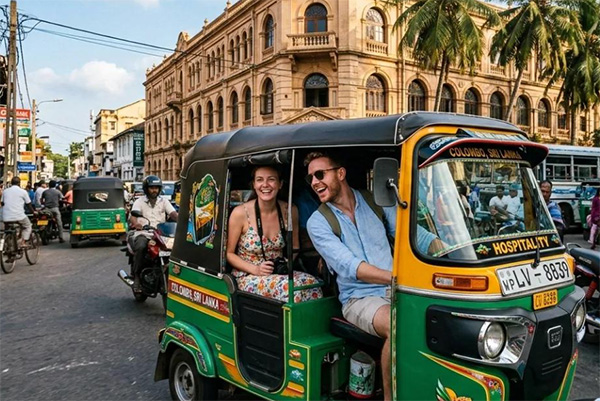 Tuk-tuk three-wheeler transportation in Sri Lanka
Travelling Around Sri Lanka by Train
If I had to pick the most memorable way to see the island, it’d be the train. The network links a good number of important towns and cities, it’s cheap, and you get a proper look at the countryside while you’re at it.
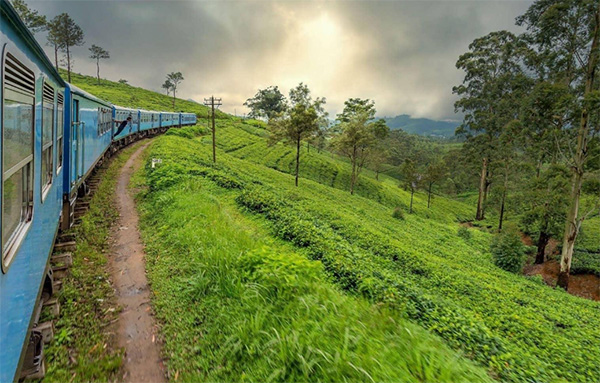
The real stars are the central highlands. The tracks run past tea plantations, misty mountains, forests, villages and waterfalls. For plenty of visitors, that hill-country ride is a highlight of the whole trip.
Popular Train Routes in Sri Lanka
- Colombo to Kandy: links the commercial capital with the cultural capital. You’ll pass villages and green landscapes, and the scenery shifts as you approach the highlands.
- Kandy to Nanu Oya: Nanu Oya is the closest station to Nuwara Eliya, an area known for tea estates, cool weather and mountain views.
- Nanu Oya to Ella: one of the best-known scenic stretches in the country, running through tea country, mountain landscapes and small railway stations.
- Ella to Badulla: more hill-country views, plus access to several well-known attractions around Ella and Badulla.
- Colombo to Galle: a coastal run with views of the Indian Ocean, connecting Colombo to popular southern spots.
Heads up: train services can change because of maintenance, landslides and weather damage. In November 2026, the Up-Country line saw further disruption after a landslide reported on 4 November. Don’t assume the whole Kandy–Ella trip runs as one direct train. Check the latest announcements and the timetable before you travel.
How to Book Train Tickets in Sri Lanka
You can buy ordinary unreserved tickets at the station. Reserved seats go through the official Sri Lanka Railways online reservation platform.
- Official train reservation website: seatreservation.railway.gov.lk
- Official railway timetable: eservices.railway.gov.lk
Reserved seats can usually be booked up to 30 days before departure, depending on availability and booking rules. Popular scenic journeys can sell out in busy periods, so book as early as you can. Stick to the official site, and double-check the details before you pay.
Which Train Class Should You Choose?
Classes vary by service, but here’s the general picture:
- First class: the comfier choice on selected services, with air-conditioned compartments on some trains.
- Second class: a favourite with tourists, since it balances comfort and cost. Reserved and unreserved options exist on selected trains.
- Third class: the cheapest, and what most local commuters use. It can get crowded, especially at busy times.
For a scenic ride, reserved second class is usually a smart pick when it’s available.
Pros and Cons of Train Travel
Pros
- Affordable
- Beautiful scenery
- A chance to experience local culture
- Convenient links between selected destinations
- A great experience for photographers and nature lovers
Cons
- Some trips take longer than going by road
- Trains don’t reach every tourist spot
- Popular reserved seats can sell out
- Delays and disruptions happen
- Big luggage is awkward in crowded carriages
My take: pick the train when the ride itself is part of the holiday. For places the railway doesn’t reach, go with a private driver or a bus.
Travelling Around Sri Lanka by Public Bus
Buses are about as cheap as it gets. They link the big cities, the smaller towns, the villages and plenty of tourist spots.
There are two main kinds: Sri Lanka Transport Board (SLTB) buses and privately run buses. The government ones are usually red, while private buses come in all sorts of colours and designs.
Local Buses
Local buses run on routes all over the country and work best for short trips between nearby towns. You can use them to get between:
- Kandy and Peradeniya
- Galle and Unawatuna
- Ella and Bandarawela
- Matara and Mirissa
- Colombo and Negombo
They’re cheap, and they give you a real taste of everyday Sri Lankan life. The catch is that they get packed during the morning and evening commute, and some have little room for big suitcases.
Long-Distance and Expressway Buses
For longer trips, expressway buses tend to be more comfortable and convenient than ordinary local ones. They connect selected destinations over the expressway network. Popular routes include:
- Colombo to Galle
- Colombo to Matara
- Colombo to selected southern coastal destinations
- Colombo to the airport area, via connecting transport services
Air-conditioned buses run on selected routes.
Pros and Cons of Bus Travel
Pros
- Very affordable
- Covers most of the country
- Frequent services on popular routes
- A good way to see local culture
- Expressway services can cut travel time on selected routes
Cons
- Crowded at peak hours
- Limited luggage space
- Journey times can be unpredictable
- Some services are uncomfortable on long trips
- Routes and bus stops can be confusing for first-timers
My take: buses are great for budget travellers and short hops. If you’re hauling several suitcases, travelling with kids or working to a tight sightseeing schedule, a private vehicle will probably suit you better.
Hiring a Private Driver in Sri Lanka
If you’re covering several destinations on a short holiday, a private driver is probably the most convenient way to do it. Lots of international tourists go for a chauffeur-driven car or van because it’s flexible, comfortable and door to door.
Instead of trekking to a bus or railway station, your driver picks you up at your hotel, the airport or your accommodation. That matters a lot when you’re carrying luggage or heading somewhere public transport doesn’t reach easily.
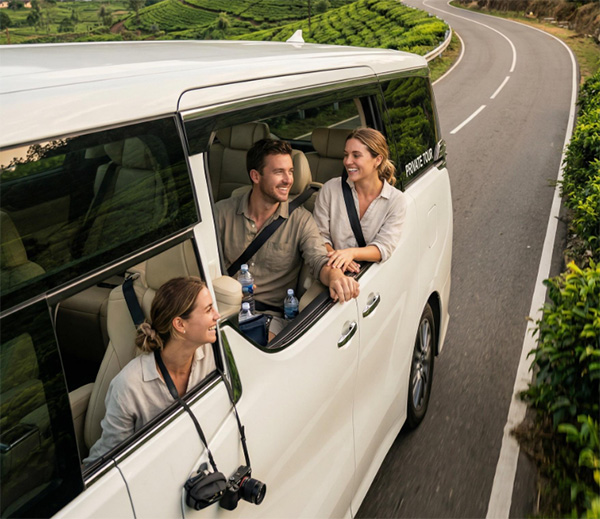 Private car and driver travelling through Sri Lanka
Why Tourists Hire Private Drivers
- Flexible plans. You set the schedule. Stop for photos, visit local attractions, wander through villages, take a break when you need one. Say you’re going from Sigiriya to Kandy and fancy seeing Dambulla Cave Temple or grabbing lunch at a local restaurant on the way. With a driver, adding those stops is easy.
- Comfortable long journeys. Some trips mean hours on the road. An air-conditioned vehicle makes that far more bearable, especially for families and anyone with big bags.
- Easy hotel transfers. Your driver can collect you at the airport and take you straight to your hotel. After a long international flight, that beats figuring out unfamiliar public transport.
- Better access to attractions. Some popular sites sit far from the main railway stations and bus terminals. A driver makes places like Sigiriya, Pidurangala, national parks and remote viewpoints much easier to reach.
- Efficient itineraries. If time is short, a private vehicle lets you fit several attractions into one day without arranging new transport each time.
How Much Does a Private Driver Cost?
The price depends on a handful of things:
- Type and size of the vehicle
- Distance
- Number of travel days
- Fuel and parking arrangements
- Driver accommodation and meals
- Whether you need a specialist tour or an airport transfer
A small car usually costs less than a roomy minivan or a luxury vehicle. Don’t just grab the cheapest quote, though. Ask for a written breakdown of what’s included, and check whether the price covers fuel, tolls, parking, driver accommodation, waiting time and extra stops. For a longer holiday, a package quote for the whole route can be easier than booking each transfer separately.
How to Choose a Reliable Driver
Before you confirm a booking:
- Read recent reviews from other international travellers.
- Confirm the vehicle type and passenger capacity.
- Get the driver’s contact details.
- Agree on the itinerary and daily schedule.
- Confirm all extra charges.
- Talk through luggage space.
- Keep the booking confirmation and agreed price in writing.
A good driver knows the tourist routes, communicates clearly and respects your plan.
My take: a private driver is especially useful for first-time visitors, families, couples and groups exploring several regions. You don’t need one for the whole holiday. Mixing a driver with scenic train rides and local tuk-tuks can give you better value.
Exploring Sri Lanka by Tuk-Tuk
Tuk-tuks, also called three-wheelers, are part of daily life here. You’ll find them in almost every town, and they’re ideal for short distances. One can take you from your hotel to a restaurant, a railway station, a beach, a temple or a nearby attraction. Plenty of visitors also enjoy the ride itself as a way to see local life up close.
When to Use a Tuk-Tuk
They work well for:
- Short journeys within towns
- Hotel-to-restaurant transfers
- Exploring local attractions
- Hopping between nearby beaches
- Reaching spots that bigger vehicles struggle to access
Visitors regularly use them in Ella, Mirissa, Unawatuna, Galle and other popular tourist areas.
How Much Does a Tuk-Tuk Cost?
Prices depend on distance, location, traffic and availability. Where ride-hailing apps operate, you can check the estimated fare before you book. If you flag down a street tuk-tuk without a meter, agree on the total fare before you set off. It also helps to ask your hotel or guesthouse what a fair local price looks like.
Tuk-Tuk Tips
- Agree on the price first if there’s no meter.
- Use a ride-hailing app when you can.
- Skip vehicles that look unsafe or poorly maintained.
- Keep your belongings secure.
- Don’t assume every driver takes cards.
- Confirm the destination before you leave.
My take: tuk-tuks are brilliant for short trips and local exploring, but they’re not usually the comfiest choice for long distances with large suitcases.
Best Travel Apps to Use in Sri Lanka
The right apps save you from haggling over every ride or hunting for directions by hand. You can arrange transport, check routes and message drivers from your phone. Here are the ones worth having.
PickMe: A Handy Local Ride-Hailing App
PickMe is a Sri Lankan ride-hailing platform. Depending on where you are, you may be able to book:
- Tuk-tuks
- Small cars
- Standard cars
- Minivans
- Larger vans
The app gives fare estimates and driver details, tracks your ride, and offers cash or cashless payment depending on availability. Official website: pickme.lk. It’s especially useful in Colombo and other areas where its driver network operates, but availability varies between cities and rural tourist spots.
Uber: Another Way to Book a Ride
Uber also runs in parts of Sri Lanka and can be useful for booking a car or other available vehicle, depending on the location. You enter your destination, check the fare on screen and request a ride. Official website: uber.com.
Both PickMe and Uber are good alternatives to bargaining with a street taxi or tuk-tuk driver. Just don’t assume they cover the same areas across the island.
Google Maps: Essential for Navigation
Google Maps is probably the most useful app you’ll have here. It helps you:
- Find hotels and restaurants
- Check driving directions
- Estimate journey times
- Locate tourist attractions
- Identify nearby railway stations
- Find petrol stations and other services
Treat its time estimates as a guide, not a promise. Traffic, road conditions, weather and temporary closures all change how long a trip takes. If you’re heading somewhere remote, download offline maps first.
WhatsApp: Useful for Staying in Touch With Drivers
Everyday communication in Sri Lanka runs on WhatsApp. Many hotels, guesthouses, tour operators and private drivers use it with international visitors. You can use it to:
- Confirm pickup times
- Share your hotel location
- Send your itinerary
- Contact your driver
- Arrange changes to your journey
If you already use it to talk to travel providers, install it before you arrive.
Should You Rent a Car and Drive Yourself in Sri Lanka?
Self-driving is an option, but it isn’t for everyone. Traffic drives on the left, city roads are busy, rural roads are narrow and mountain routes wind a lot. You also have to watch for buses, tuk-tuks, motorcycles, pedestrians and animals that can turn up out of nowhere.
If you want to drive, sort out the correct driving authorisation before you set off. Don’t assume an ordinary foreign licence is enough. Check the latest requirements with Sri Lanka’s Department of Motor Traffic and the relevant authorised bodies.
Advantages
- Freedom to set your own schedule
- Flexibility to explore different destinations
- No need to rely on public transport timetables
- Privacy during your journey
Disadvantages
- Unfamiliar traffic conditions
- Challenging mountain roads
- Parking trouble in busy areas
- Licensing and insurance requirements
- Extra responsibility for navigation and vehicle upkeep
My take: if you haven’t driven much in South Asian traffic, hiring a professional driver is usually the more relaxing choice.
How to Travel Between Popular Destinations in Sri Lanka
Picking the right transport for each leg saves time and makes the trip more enjoyable. Here’s how I’d handle some of the common routes.
Colombo to Sigiriya
Sigiriya is one of the country’s most famous attractions, and the railway doesn’t connect it directly to Colombo, so you’ll generally travel by road. Your options are:
- Private car and driver
- Public bus services with connections
- A mix of train and road transport where suitable
For first-timers, a private vehicle is often the easiest, since you get a direct transfer and space for your luggage.
Sigiriya to Kandy
Kandy is an important cultural destination and a popular next stop after Sigiriya. A private vehicle lets you visit attractions along the way. Public buses also run, though you may need to change services depending on the route.
Kandy to Ella
The Kandy–Ella train ride is famous for its scenery. However, railway restoration and service disruptions have affected the route during 2026. Before you book, check which sections are operating and whether you’ll need a road transfer. If the full train trip isn’t available, you could travel by road to Nanu Oya and see whether trains are running on the Nanu Oya–Ella section.
Ella to Yala National Park
Ella is a popular mountain destination and Yala is famous for wildlife safaris. There’s no convenient direct railway link for the whole journey, so a private car or arranged transfer is generally the easiest way.
Yala to Mirissa
Mirissa is a popular spot on the south coast. You can use private transfers or a combination of buses, depending on your budget and schedule.
Mirissa to Galle
Galle is fairly easy to reach from Mirissa. You can take:
- Public buses
- Trains, where suitable services are running
- Tuk-tuks for shorter transfers
- Private cars
The best choice comes down to your luggage, departure time and how comfortable you want to be.
Is It Easy to Get Around Sri Lanka Without a Private Driver?
Yes, it is. The country has a large public transport network, and you can reach many popular tourist spots by train and bus. Budget travellers and backpackers do it all the time.
You just need to plan a bit more. Expect to:
- Check train and bus timetables
- Change buses between destinations
- Carry your luggage between stations
- Arrange separate transfers to your hotels
- Allow extra time for delays
- Organise transport to attractions outside town centres
For a relaxed holiday, mix public transport with the odd private transfer. For example, take a train through the hill country, use buses between nearby towns, and book a private vehicle for days with several attractions.
How Much Should You Budget for Transport?
Your budget depends on your travel style, how many destinations you visit and how often you use private vehicles. Ordinary buses and standard train tickets are usually the cheapest. Tuk-tuks suit short trips, while private drivers cost more but add convenience. Here’s a rough comparison:
| Transport method | Relative cost | Best for |
|---|---|---|
| Ordinary public bus | Very low | Budget travellers |
| Train | Low | Scenic journeys |
| Tuk-tuk | Low to moderate | Short journeys |
| PickMe / Uber | Varies | Convenient city travel |
| Private car and driver | Moderate to high | Multi-destination holidays |
| Rental car | Varies | Independent travellers |
There’s no single fixed transport price for the whole country. Fares shift with fuel costs, route, vehicle type, demand and other operating conditions. When you plan your budget, think about the whole journey, not just the ticket. A cheap train fare can still mean a tuk-tuk from the station to your accommodation.
Practical Tips for Getting Around Sri Lanka
A bit of prep goes a long way.
- Don’t underestimate travel times. Distances look short on a map, but winding roads and traffic stretch them out. Skip the urge to cram too many stops into one day.
- Download your apps before you arrive. Install PickMe, Uber, Google Maps and WhatsApp, and make sure your phone has mobile data so you can reach transport services when you need them.
- Keep some Sri Lankan rupees on you. Digital payments exist, but cash still comes in handy for buses, small tuk-tuk rides and local purchases.
- Book popular train journeys early. If you want reserved seats, check availability as soon as your dates are confirmed.
- Use a private driver for complicated routes. Multiple stops, big suitcases or family travel are all good reasons.
- Confirm tuk-tuk fares before you go. If there’s no app or meter, agree the price before departure.
- Check the weather and road conditions. Heavy rain can hit roads and railways, especially in the mountains.
- Keep your belongings secure. Passports, cash, phones and other valuables should stay somewhere safe while you travel.
- Don’t rush. Sri Lanka has plenty of beautiful places. You’ll enjoy fewer of them properly far more than a lot of them in a blur.
What Is the Best Transport Combination for a Sri Lanka Holiday?
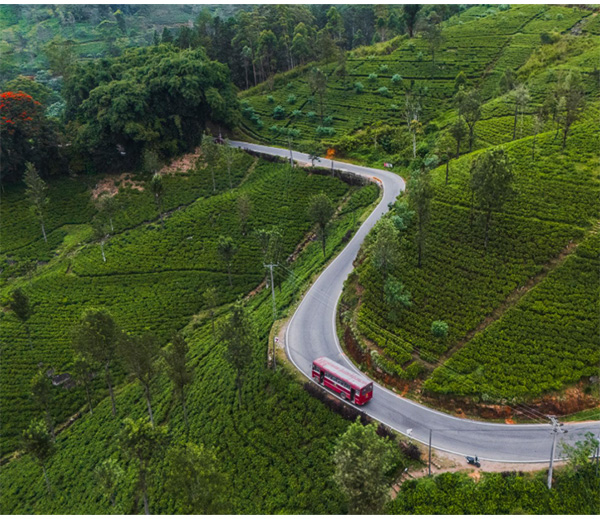 Public bus transportation in Sri Lanka
For most international visitors, mixing transport options works best. Here’s one way to organise a 10-day trip:
- Days 1–2, Sigiriya and the Cultural Triangle: use a private driver for Sigiriya, Dambulla and nearby attractions.
- Days 3–4, Kandy: travel by road to Kandy, then use local tuk-tuks or taxis for short trips around the city.
- Days 5–6, Nuwara Eliya and Ella: check current railway operations before planning the scenic hill-country train ride, and use road transfers where sections are unavailable.
- Days 7–8, Yala National Park: arrange a private transfer to the Yala region and book a suitable safari vehicle.
- Days 9–10, Mirissa and Galle: use buses, trains where they’re running, or private transfers along the southern coast.
This plan balances comfort, cost and memorable experiences.
Frequently Asked Questions About Getting Around Sri Lanka
What is the best way to get around Sri Lanka?
It depends on your budget and itinerary. Trains suit scenic journeys, buses suit budget travellers, tuk-tuks work for short trips and private drivers give you comfort and flexibility.
Is it easy to travel around Sri Lanka as a tourist?
Yes. Tourists can use trains, buses, tuk-tuks, taxis and private vehicles. It helps to understand the local options and plan your journey times in advance.
Is Uber available in Sri Lanka?
Yes, Uber operates in parts of the country. Vehicle availability and coverage depend on the location. PickMe is another popular local ride-hailing option.
Is PickMe available for tourists in Sri Lanka?
Yes. Visitors can use PickMe where its services are available. The app offers different vehicle options, fare estimates and ride tracking.
Is it better to hire a private driver in Sri Lanka?
A private driver is convenient if you’re visiting several destinations, travelling with family or carrying large luggage. You get flexibility and door-to-door transport.
Can I travel around Sri Lanka by train?
Yes. The railway network connects several major destinations. However, not every tourist attraction has a rail link, and temporary disruptions can affect particular routes.
Are public buses safe for tourists in Sri Lanka?
Many tourists use them without trouble. Buses can be crowded, though, and the driving style may feel unfamiliar. Keep your belongings secure and pick suitable services for longer trips.
Are tuk-tuks expensive in Sri Lanka?
Generally affordable for short journeys. Prices vary with location, distance and demand. Use a ride-hailing app or agree the fare before you start.
Can I explore Sri Lanka without hiring a driver?
Yes. Plenty of popular destinations are reachable by bus, train and tuk-tuk. A private driver can still save time and simplify complicated journeys.
Do I need a local SIM card to use transport apps in Sri Lanka?
You need a working internet connection to book and track rides on most transport apps. A local SIM or a suitable eSIM makes it easier to stay connected.
Can tourists drive their own rental cars in Sri Lanka?
Yes, provided they get the required driving authorisation and meet the licensing and rental conditions. Check the current requirements before you drive.
What is the cheapest way to travel around Sri Lanka?
Ordinary public buses and unreserved train tickets are generally among the cheapest options. They suit travellers with flexible schedules and light luggage.
Choose the Right Way to Explore Sri Lanka
Getting around Sri Lanka doesn’t have to be a headache. The island has a mix of transport options, so you can travel to suit your budget, schedule and preferences.
Take the train when you want those hill-country views. Use public buses when saving money is the priority. Hop in a tuk-tuk for local towns and beaches. Hire a private driver when you want flexibility, comfort and easy access to several destinations. For most first-timers, combining them is the most practical approach.
From the ancient wonders of Sigiriya and the culture of Kandy to the tea plantations of the hill country and the beaches of the south coast, the journey is part of discovering Sri Lanka.
Plan ahead, check what’s running, and leave enough time between destinations. Do that, and you’ll have a more comfortable, flexible and unforgettable trip. Welcome to Sri Lanka, the island where the journey is just as beautiful as the destination.
Related articles:
- 10-day Sri Lanka itinerary
- Is 10 days enough for Sri Lanka?
- Kandy to Ella train journey
- Hiring a private driver in Sri Lanka
- Travelling Sri Lanka without a driver
- Sri Lanka travel costs
- Best time to visit Sri Lanka
- Best Restaurants in Kandy
References:
Editor – Jayamanna dissanayake