
Most people make the drive from Colombo to Kandy for the scenery, and fair enough. The road winds up into the central highlands with views that make you forget the traffic. But if you look beyond the windscreen, the route is also a history lesson, and one of its best chapters is a tall, slim tower in Kadugannawa.
Dawson Tower honours Captain William Francis Dawson, a British Royal Engineers officer who helped plan and build the Colombo–Kandy Road during the colonial period. Thousands of travellers pass it every day, and surprisingly few know who he was or why the tower is there. If you’re studying history, architecture or engineering, or you just like knowing the story behind a place, it’s worth a few minutes of your time.
Where Is Dawson Tower?
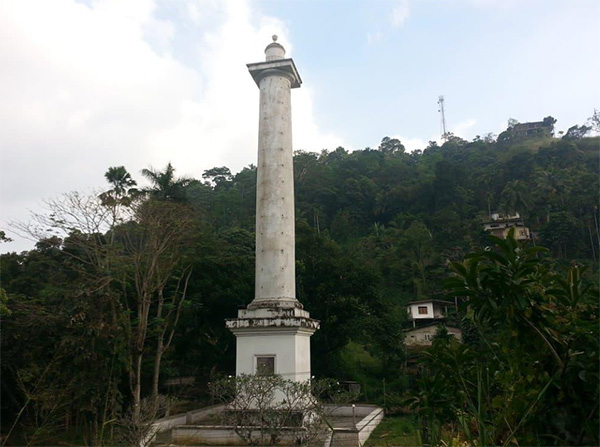 Dawson Tower in Kadugannawa Sri Lanka
The tower is in Kadugannawa, a historic town in the Kandy District of the Central Province. It sits beside the Colombo–Kandy Road (A1), close to the Kadugannawa Pass and the old rock tunnel.
Kadugannawa works as a gateway to the hill country. Drive up from Colombo and this is where the land begins to climb, with steep hills, thick greenery and valley views opening up around every bend. It’s also a handy base for other sights in the Kadugannawa and Kandy areas.
Quick facts
- Attraction: Dawson Tower
- Town: Kadugannawa
- District: Kandy
- Province: Central Province
- Country: Sri Lanka
- Main road: Colombo–Kandy Road (A1)
- Nearby landmark: Kadugannawa Rock Tunnel
- Approximate coordinates: 7.2566° N, 80.5170° E
Who Was Captain William Francis Dawson?
To make sense of the tower, you need to know the man behind it. Dawson was a British military engineer with the Royal Engineers in Ceylon, the name Sri Lanka went by under British rule. He planned and supervised road-building work, most notably the route linking Colombo with Kandy.
Think about how things stood in the early nineteenth century. Getting from the coast to the highlands was slow and awkward, and the existing routes weren’t suited to moving large loads of goods, military supplies or passengers. The colonial administration wanted a practical link between Colombo, the island’s main administrative and commercial centre, and Kandy. Dawson was given major engineering responsibilities on that project.
It was no easy job. Steep slopes, dense vegetation and huge rock formations stood in the way. Even so, the work moved forward and eventually tied the western coast to the central highlands.
Sadly, Dawson died on 28 March 1829, before he could see the full result of the work. The tower, built later, is how he came to be remembered.
The History Behind Dawson Tower
The tower was built in 1832 in his memory. After his death, a memorial was set up to recognise his engineering contribution and his work on the Colombo–Kandy Road. It was paid for by contributions from friends and admirers in Ceylon.
The spot was chosen with care. It stands near the Kadugannawa Pass, one of the toughest stretches of the historic road. So the monument isn’t just about one engineer; it also marks a real milestone in the growth of Sri Lanka’s transport network. The inscription credits Dawson’s scientific knowledge and engineering skill in planning and carrying out the road and other public works.
Today it’s an important historical landmark in the Kandy District, and it’s also an archaeological protected monument, declared so through a government Gazette notification in July 2007.
How the Colombo–Kandy Road Came to Be
You can’t really separate the tower from the road, so a little background helps. Today the A1 is one of Sri Lanka’s key routes, running from Colombo to Kandy through towns, villages, farmland and hills. Back in the early nineteenth century, the same journey was slow and tiring.
The British administration saw the value of a more direct route into the highlands. Under Governor Sir Edward Barnes, work on the project began in 1820, and Dawson was closely tied to the engineering needed to deal with the terrain. The builders had to contend with:
- Steep mountain slopes
- Large natural rock formations
- Thick forests and rough ground
- Rivers and streams
- Difficult weather
- Limited equipment and technology
The climb through the Kadugannawa Pass was among the hardest parts, because of its steep gradients and rocky ground. The road that came out of all this changed travel between the western coast and the hill country, and it later became a major route for trade, administration and ordinary travel. Landmarks like Dawson Tower and the Kadugannawa Rock Tunnel are how that history is remembered.
The Kadugannawa Rock Tunnel
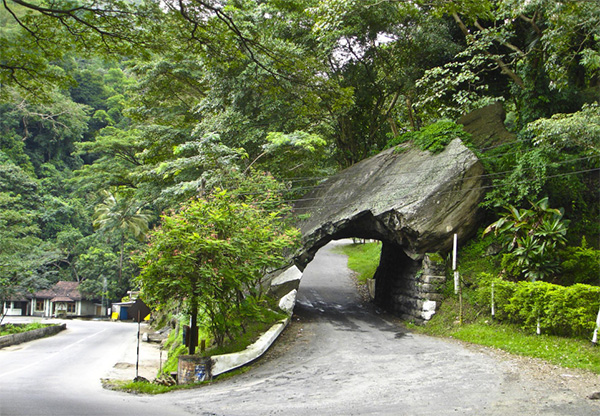 Kadugannawa Rock Tunnel near Dawson Tower
Right next to the tower is one of the area’s most curious sights, the Kadugannawa Rock Tunnel. It’s linked to the early days of the road and the problem of getting through the Kadugannawa Pass. Unlike a typical tunnel bored deep into a mountain, this passage was formed through a natural rock formation.
There’s a popular local legend about the rock. The story goes that the Kandyan Kingdom was protected by this natural barrier, and that outsiders would have to cut through the rock to enter the kingdom. The British passage through the rock got tangled up with that belief. Keep in mind it’s folklore, not established history, which is a useful distinction for any history student.
The original passage is no longer the normal route for modern traffic, as an alternative road was built to suit changing needs. Still, the tunnel shows how hard it was to build routes through Sri Lanka’s mountainous interior. Together with the tower, it explains why Kadugannawa matters so much in the story of the country’s roads.
Architecture and Significance
The tower stands out because of its odd shape and prominent position. It looks like a tall, narrow lighthouse or commemorative column, about 38 metres (125 feet) high, which makes it a striking landmark for the area. Its plain look contrasts nicely with the green hills around it.
Unlike many elaborate colonial buildings, it’s quite simple in design. Its value comes mainly from the person it honours and the engineering achievement tied to its location. An inscription honours Captain Dawson, linking the tower, the engineer and the road. Its protected status makes it part of Sri Lanka’s architectural and archaeological heritage, and photographers will enjoy it against the hills.
What You Can See at Dawson Tower
It isn’t a big tourist complex, but there’s plenty of reason to stop.
1. The monument itself. Take in the design and read up on Dawson’s life and his role in Sri Lankan road development. It’s especially good for anyone who likes historical landmarks and colonial-era engineering.
2. The mountain landscape. Kadugannawa has high ground and lovely surroundings, a real change from busy Colombo. You can watch the scenery shift as the road climbs towards Kandy.
3. The historic rock tunnel. It adds another layer to the area’s story, so find out how it was built and how it fits into the Colombo–Kandy route. Respect any restrictions around the protected structure and stay out of closed areas.
4. Photography. The tall structure, its history and the landscape make a good travel shot. Pick a safe spot away from moving traffic.
5. A look at colonial-era history. For international visitors, it’s a way to see a lesser-known side of Sri Lanka beyond beaches, temples and wildlife.
How to Get to Dawson Tower
Since it sits beside the A1, it fits easily into a Colombo–Kandy road trip.
From Colombo: Follow the Colombo–Kandy Road towards Kegalle and Mawanella, then carry on to Kadugannawa. You’ll pass through several towns as the land rises from the western lowlands into the highlands. Travel time depends on traffic, road conditions and where you start in Colombo.
From Kandy: Take the A1 towards Peradeniya and Pilimathalawa, then on to Kadugannawa. The tower is roughly 15 kilometres from central Kandy, depending on your starting point and route.
By public transport: Buses run between Colombo and Kandy along the A1, so ask about services that stop at Kadugannawa. If you come by train, note that the railway station and the tower are in different spots, so you may need local transport or a walk.
With a private driver: This is handy if you want to cover several attractions between Colombo and Kandy, since a driver makes it easier to stop at landmarks and viewpoints and to manage luggage. That said, independent travellers can do the trip on public transport too.
Best Time to Visit
You can visit throughout the year, but clear weather makes the scenery nicer. Morning and late afternoon are pleasant, especially for photos. The central highlands have changeable weather, and rain can affect visibility and road conditions, so check the forecast first. If you’re planning a longer trip through Kandy and the hill country, make Dawson Tower a short historical stop on the way.
Nearby Attractions
Kadugannawa is a good starting point for exploring the Kandy region.
- Kadugannawa Rock Tunnel: The closest link to the tower, and a good look at the challenges of building the road.
- Kadugannawa Railway Museum: A good pick for anyone curious about transport history, with a look at how the island’s railway developed and connected different regions. Check current visitor arrangements before you go.
- Kandy City: One of Sri Lanka’s major cultural destinations, home to the Temple of the Sacred Tooth Relic and beautiful Kandy Lake, plus other historical sights. You can easily combine a Kadugannawa stop with a wider Kandy trip.
- Temple of the Sacred Tooth Relic (Sri Dalada Maligawa): One of the most significant Buddhist sites in Sri Lanka, welcoming pilgrims and international visitors all year.
- Peradeniya Royal Botanical Gardens: Near Kandy and known for large plant collections, lovely landscapes and impressive tree-lined avenues. Great for nature and garden lovers.
Why Dawson Tower Matters
Let’s be honest: Dawson Tower isn’t as famous as Sigiriya Rock Fortress, the Temple of the Sacred Tooth Relic or Galle Fort. But it marks an important chapter in the country’s development. The Colombo–Kandy Road created a more effective link between the coast and the highlands, and it shaped transport, trade, administration and the movement of people.
Dawson’s work also shows what early road builders were up against in a country with such varied geography. And the tower is a reminder that Sri Lankan history isn’t only about ancient kingdoms, religious sites and colonial buildings. Roads, bridges and other infrastructure helped shape the country too. That’s reason enough to give this landmark its due.
Travel Tips
- Treat the tower as a short stop on a Colombo–Kandy road trip.
- Read up on Captain Dawson beforehand, so the monument makes more sense.
- Look into the history of the nearby Kadugannawa Rock Tunnel.
- Take photos only from safe, permitted areas, and never step into the busy road for a shot.
- Respect the monument, and don’t damage or mark the structure.
- Check whether you’re allowed inside the tower before planning to climb it.
- Fit in other Kadugannawa and Kandy attractions on the same trip.
- Remember it’s a protected monument, so follow any restrictions set by the authorities.
Conclusion
Dawson Tower is much more than an old structure by the roadside. It tells the story of one of the major engineering projects in Sri Lanka’s transport history. Built in 1832 in memory of Captain William Francis Dawson, it honours the engineer tied to the hard job of building the road from Colombo to Kandy.
Its spot near the Kadugannawa Pass and the historic rock tunnel makes it a rewarding stop for anyone who wants the lesser-known stories behind Sri Lanka’s landscapes and heritage. Whether you’re heading from Colombo to Kandy or exploring the Central Province, take a few minutes to appreciate it. Some of the best travel moments turn up beside the roads we use every day.
Discover the history of Sri Lanka with AboutCeylon, your guide to the island’s remarkable destinations, culture and heritage.
Historical accuracy and references
Central Province Tourism Department – official tourism information about Captain Dawson Tower and the Kadugannawa Rock Tunnel. Read official tourism information.
Lanka Pradeepa – historical information, tower inscription, protected status and architectural details. Read historical research.
Institution of Civil Engineers – biography of Captain William Francis Dawson. Read engineer’s biography.
Daily FT – historical background of Kadugannawa and the Colombo–Kandy road. Read historical article.
- Daily Mirror – additional historical reporting publis
- hed in November 2025. Read the article.
Frequently asked questions (FAQ)
Add this section at the end of the article to target long-tail searches and Google’s People Also Ask questions.
What is Dawson Tower in Sri Lanka?
Dawson Tower is a historic monument in Kadugannawa, Kandy District. It was built in 1832 in memory of Captain William Francis Dawson, who was involved in constructing the Colombo–Kandy Road.
Where is Dawson Tower located?
Dawson Tower is located beside the Colombo–Kandy Road (A1) in Kadugannawa, Central Province, Sri Lanka.
Who was Captain William Francis Dawson?
Captain William Francis Dawson was a British Royal Engineers officer responsible for important engineering work associated with the construction of the Colombo–Kandy Road during the nineteenth century.
When was Dawson Tower built?
Dawson Tower was built in 1832, following Captain Dawson’s death in 1829.
Why was Dawson Tower constructed?
The tower was erected as a memorial to Captain Dawson in recognition of his engineering contribution to the Colombo–Kandy Road and other public works.
How tall is Dawson Tower?
Dawson Tower is approximately 38 metres (125 feet) tall.
Is Dawson Tower near Kandy?
Yes. Dawson Tower is approximately 15 kilometres from central Kandy, depending on the starting point and route.
Can tourists visit Dawson Tower?
Visitors can view the historic monument from its surroundings. However, access to the interior and upper levels should be confirmed with the relevant authorities before visiting.
What other attractions are near Dawson Tower?
Nearby attractions include Kadugannawa Rock Tunnel, Kadugannawa Railway Museum, Peradeniya Royal Botanical Gardens and the Temple of the Sacred Tooth Relic in Kandy.
Related articles
- 10-day Sri Lanka itinerary
- Best time to visit Sri Lanka
- Travel without a driver
- Private driver guide
- Kandy to Ella train guide
- Best Restaurants in Kandy
Editor – Jayamanna dissanayake